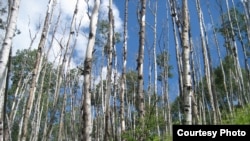
Aspen, the most widespread tree in North America, is suffering from what scientists call sudden drought-induced death from climate change. (Credit: Kimberly Pham)
Hot and dry conditions triggered by climate change are killing the world's trees, according to a new report which examines dozens of scientific articles on the subject.
Stanford University graduate student William Anderegg has seen this forest die-off firsthand.
His doctoral thesis documents the impact of drought on trembling aspen, the most common tree in North America.
“These are complete hillsides of trembling aspens that are dying off," Anderegg says. "And when the main tree in a forest goes, you tend to see a lot of the other species, especially the grasses and the wild flowers, tend to disappear as well. But you lose a lot of those species from those forests.”
Changing ecology
With colleagues from Stanford and North Arizona State University, Anderegg co-authored the new report which presents a picture of accelerating worldwide tree deaths that appear to be linked to changes in the global climate.
Anderegg says these changes, triggered by rising levels of heat-trapping gases in the atmosphere, are stressing the world’s forests.
“One of the ways that we expect climate change to increasingly play out in forests is through these widespread tree mortality events where you stress the trees enough that you essentially push a whole region of them off the edge and in fact what happens afterwards, after a forest dies from drought is every bit as important and in some sense matters more to humans who rely on forests.”
Tree Deaths Linked to Climate Change
1/9Bug infestations like the mountain pine beetle in this lodgepole pine forest in British Columbia, Canada may be in response to a changing climate. Photo credit: Northern Forest Products Association
Hot and dry conditions triggered by climate change are killing the world's trees, according to a new report which examines dozens of scientific articles on the subject.
Show moreShow less
2/9A healthy aspen stand in the San Juan Mountains in western Colorado is at risk as the climate changes. Photo credit: William Anderegg
Hot and dry conditions triggered by climate change are killing the world's trees, according to a new report which examines dozens of scientific articles on the subject.
Show moreShow less
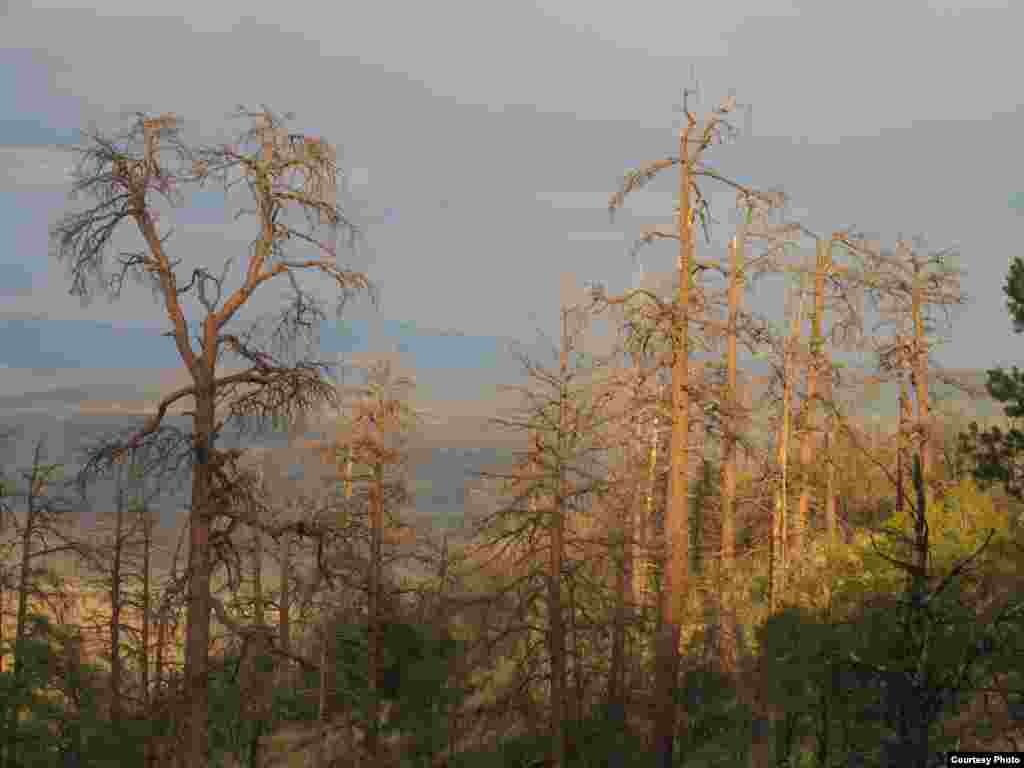
3/9Heat stress kills ponderosa pine in New Mexico. Photo credit: Craig Allen, USGS
Hot and dry conditions triggered by climate change are killing the world's trees, according to a new report which examines dozens of scientific articles on the subject.
Show moreShow less
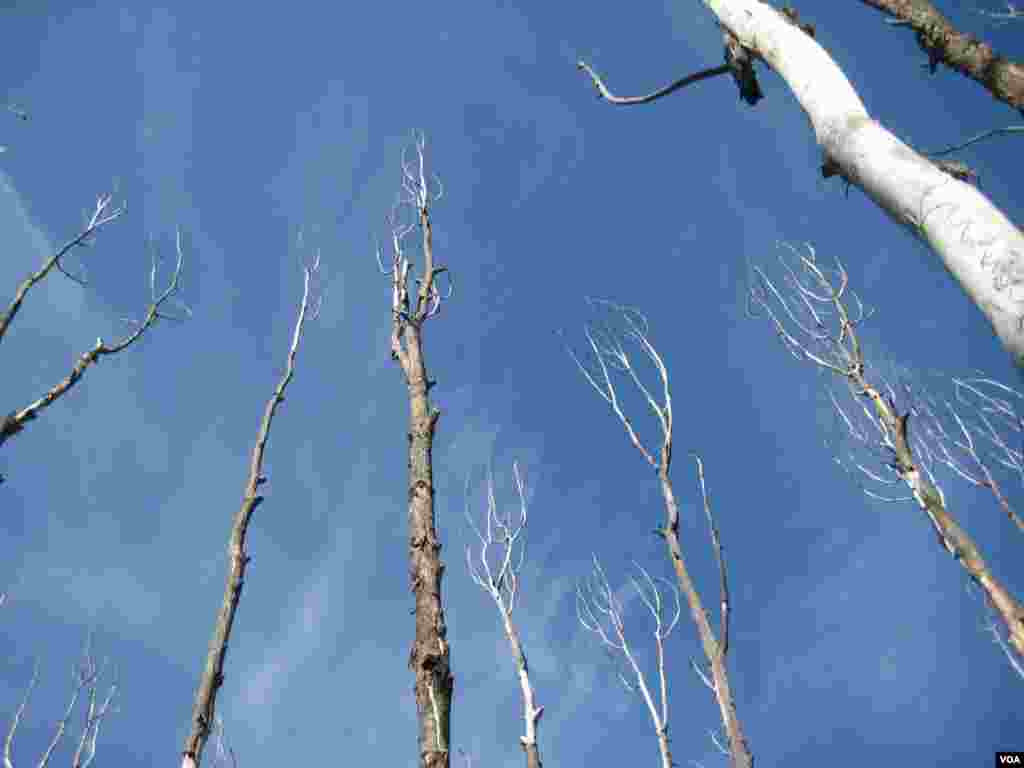
4/9The sudden Colorado aspen tree die-off near Fairplay, Colorado in 2009 has been linked to climate change. Photo credit: William Anderegg
Hot and dry conditions triggered by climate change are killing the world's trees, according to a new report which examines dozens of scientific articles on the subject.
Show moreShow less
5/9Scientists seek more data to better predict climate impacts on this pinyon pine grove in New Mexico and forests elsewhere around the globe. Photo credit: Craig Allen, USGS
Hot and dry conditions triggered by climate change are killing the world's trees, according to a new report which examines dozens of scientific articles on the subject.
Show moreShow less
6/9 Drought triggered this forest die-off in Argentina in 2004. Photo credit: Thomas Kitzberger
Hot and dry conditions triggered by climate change are killing the world's trees, according to a new report which examines dozens of scientific articles on the subject.
Show moreShow less
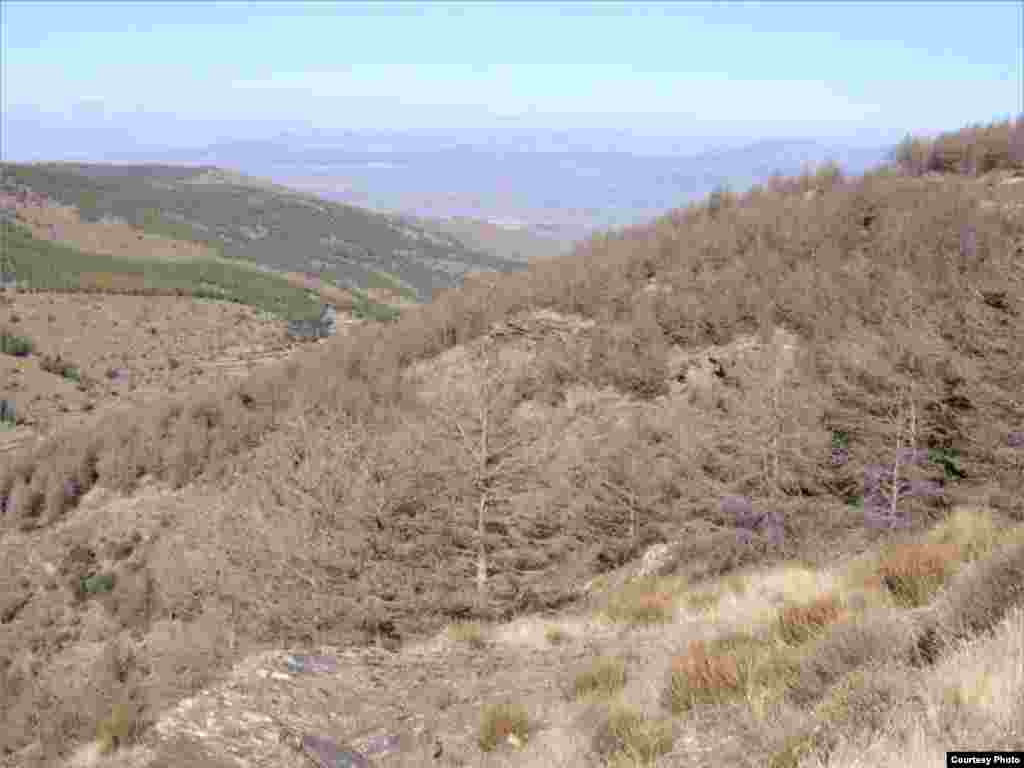
7/9Forests around the globe are at risk from climate change like this forest die-off in Spain because of a drought. Photo credit: Rafael Navarro-Cerrillo
Hot and dry conditions triggered by climate change are killing the world's trees, according to a new report which examines dozens of scientific articles on the subject.
Show moreShow less
8/9Aspen, the most common tree in North America, is suffering from what scientists call sudden drought-induced death from climate change. Photo credit: Kimberly Pham
Hot and dry conditions triggered by climate change are killing the world's trees, according to a new report which examines dozens of scientific articles on the subject.
Show moreShow less
9/9Scientists are monitoring this grove of Aspen in western Colorado to see how the trees respond to increasingly warmer temperatures. Photo credit: Kimberly Pham
Hot and dry conditions triggered by climate change are killing the world's trees, according to a new report which examines dozens of scientific articles on the subject.
Show moreShow less
Previous slide
Next slide
Trees provide a range of ecological services. They hold soil in place, help purify water and shelter species. They are valued for timber and tourism. When trees die, the ecology and hydrology of a forest change, which in turn promotes insect infestation and fire.
This can result in long-term shifts in the area’s dominant species and may even trigger a transition to a different ecosystem, such as grass land.
Devastating consequence
Anderegg says the most devastating consequence may be that the changing forests, in turn, will start affecting the global climate.
“Because forests do a lot to stabilize the climate and to store carbon and when they start to die off, you can actually have forest die-off accelerate climate change," he says. "You get into a vicious cycle.”
This is especially troubling for Anderegg because trees, which cover 30 percent of the earth’s surface, absorb 25 percent of the climate-changing gases emitted into the atmosphere from cars, buildings and factories.
Forest monitoring
While scientists are getting better at tracking the effects of climate change on forests, data is still sparse. Anderegg says his study urges governments and specialists from many disciplines to support wide-scale forest monitoring.
“It is not just ecologists, but we also need people working with satellites. We need people in government agencies. We need people on the ground to do this as well. It’s unfortunately not something that just the scientific research community can pull off on their own.”
Anderegg, whose research is published in Nature Climate Change, says a better understanding of how climate change is killing off the world’s forests can help shape better forest management, business decisions and policies.