Afghanistan's intelligence agency says it has defused a massive truck bomb that could have destroyed a whole area of the capital.
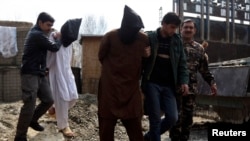
The National Directorate of Security said Friday the eight tons of explosives were found early in the week in eastern Kabul in a night raid. A resulting firefight killed five suspected plotters. Two other people were arrested.
The NDS said the bomb scheme was planned by the Pakistan-based Haqqani network.
Shafiqullah Tahiri, a spokesman for the spy agency, said the detonation of the explosives would have been a "catastrophe" for people living in the city, destroying everything within 1,500 meters of the blast.
The National Directorate of Security said Friday the eight tons of explosives were found early in the week in eastern Kabul in a night raid. A resulting firefight killed five suspected plotters. Two other people were arrested.
The NDS said the bomb scheme was planned by the Pakistan-based Haqqani network.
Shafiqullah Tahiri, a spokesman for the spy agency, said the detonation of the explosives would have been a "catastrophe" for people living in the city, destroying everything within 1,500 meters of the blast.