



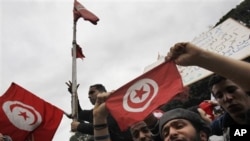
Tunisia’s President Zine El Abidine Ben Ali was ousted in an uprising last week, ending more than two decades of authoritarian rule. The anti-government protests in the North African country were generally fueled by high unemployment and a popular yearning for democracy and basic freedoms.
|
Listen to the full interview with VOA’s Lamia Gritli:
|
The ouster of Ben Ali, who fled to Saudia Arabia, has laid the ground for Tunisians to take steps towards free elections and the establishment of a government representative of its people. Is the country ready for it, especially if one takes into account possible regional repercussions? VOA’s Susan Yackee posed that question to Lamia Gritli, a native of Tunisia and journalist at VOA’s French-to-Africa Service.

According to Gritli, Tunisians have been waiting for this moment for years, but were only talking about it in private for fear of repressions.
Quoting Maya Jeridi, the general secretary of Tunisia's opposition Progressive Democratic Party, with whom she spoke, Gritli says that the recent protests demanding democracy, freedom of speech and other basic liberties are proof that Tunisians are ready for democracy.
Asked about the challenges Tunisians face in their attempt to build a new country, Gritli believes that the most serious among them, aside from conducting free elections, will be restoring order and tackling the current high unemployment rate.
Describing the new mood in the country as “happy,” Gritli is particularly encouraged about some of the immediate changes that have followed Ben Ali’s ouster. Among the most momentous, says she, has been the government’s loss of control over the media. According to Gritli, mundane glorifications of the country’s leaders in print and on television have been replaced by spontaneous and unfettered reporting.
Gritli does acknowledge that the change came unexpected and that it might not have happened at all had it not been for a desperate act by one lone man. She was referring to 26-year-old unlicenced street merchant Mohamed Bouazizi who set himself ablaze after police confiscated his cart. His self-immolation last December is widely believed to have triggered the riots that removed Ben Ali from power.
Regarding the lack of media coverage recent events in Tunisia have received in some other Arab countries, Gitli says she is not surprised as some regional strongmen might fear that these events could be a prelude to a larger revolution.