


U.S. Secretary of State John Kerry has denounced suggestions that Washington was involved in Friday's failed coup in Turkey.
"We think it's irresponsible to have accusations of American involvement," Kerry told CNN on Sunday.
Turkish President Recep Tayyip Erdogan has accused Fethullah Gulen, a reclusive cleric now living in Pennsylvania, of orchestrating the violence and demanded that Gulen be extradited.
Erdogan frequently refers to "masterminds" who he says are bent on breaking up Turkey, in what appears a veiled reference to the West in general, and more specifically, the United States. On Saturday, Labor Minister Suleyman Soylu accused Washington of being behind the coup attempt.
WATCH: Fethullah Gulen discusses Turkey attempted coup in impromptu news conference
In a phone call on Saturday Kerry told Turkish Foreign Minister Mevlut Cavusoglu “public insinuations or claims about any role by the United States in the failed coup attempt are utterly false and harmful to our bilateral relations,” according to a report of the call released by the State Department.
Kerry also told CNN that Turkey has made no formal request for Gulen's extradition, and that he'd asked the country's foreign minister to make the official request, saying that "the United States is not harboring anybody."
Gulen has denied being behind the failed coup and denied knowledge of who might be responsible.
IN PICTURES - Sunday's events
In Pictures: Developments Sunday in Turkey

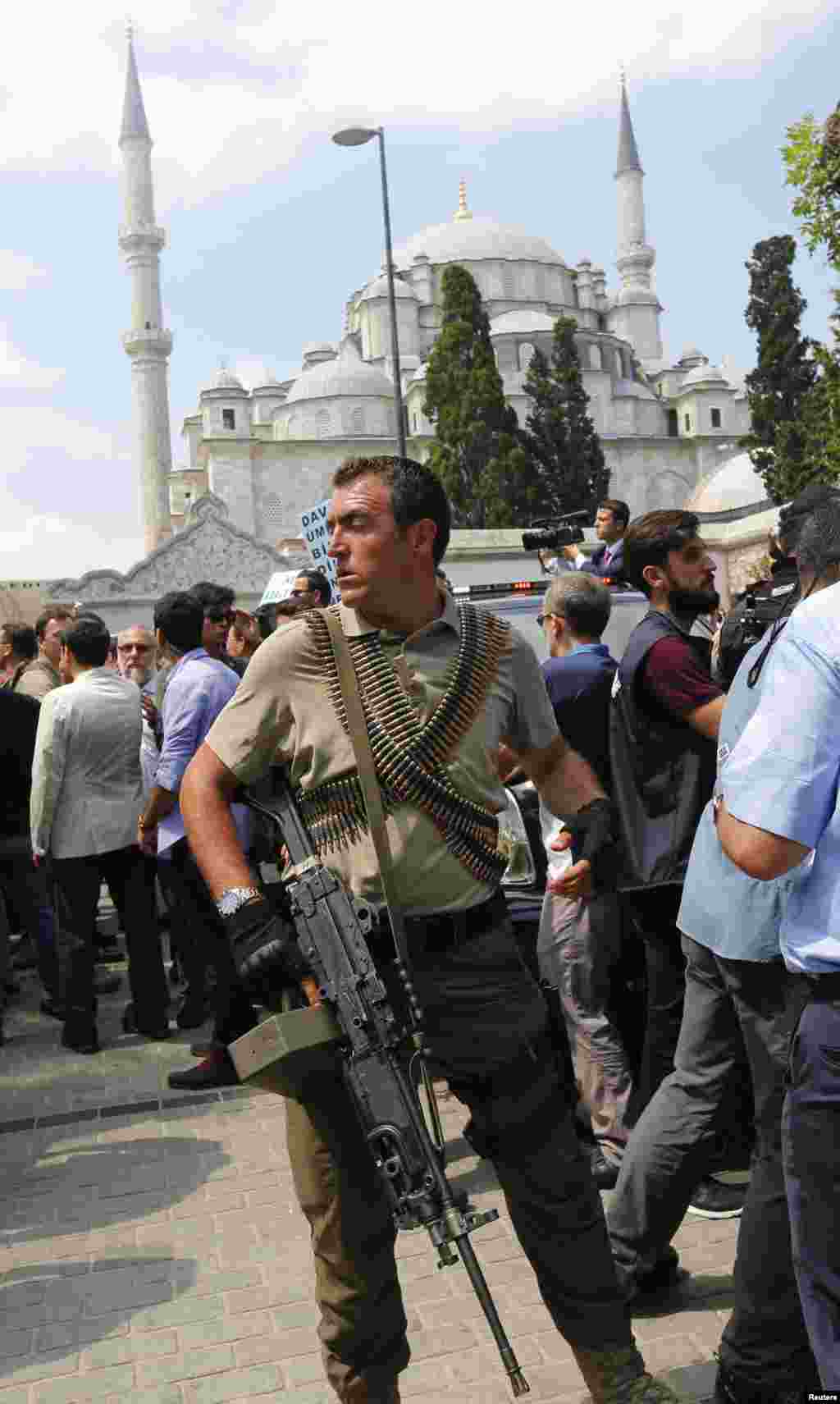


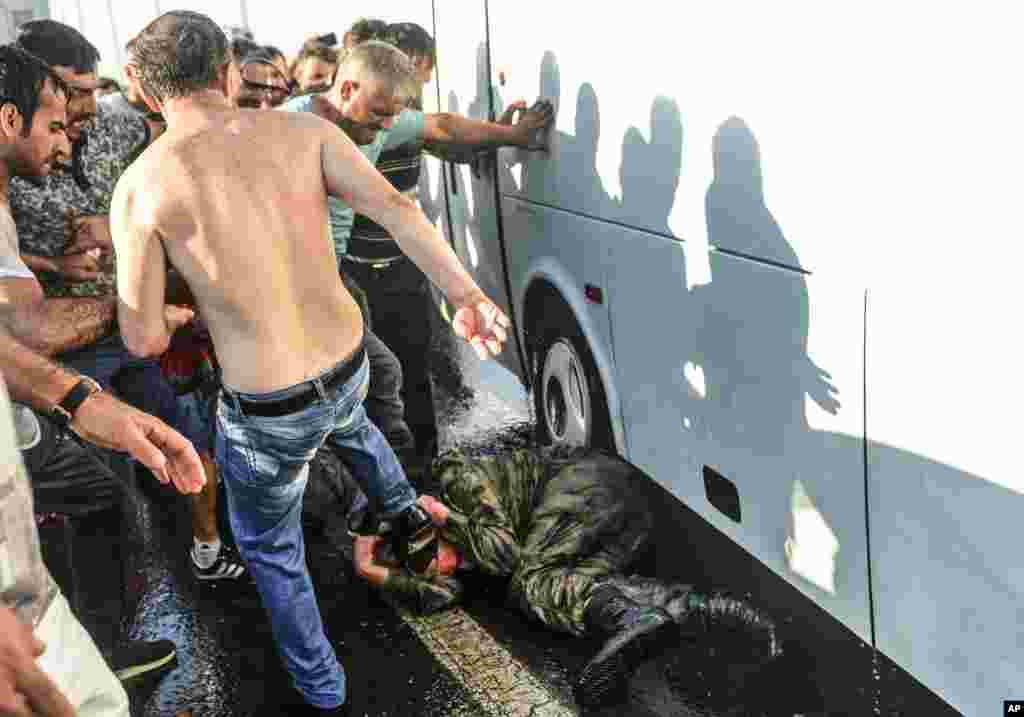

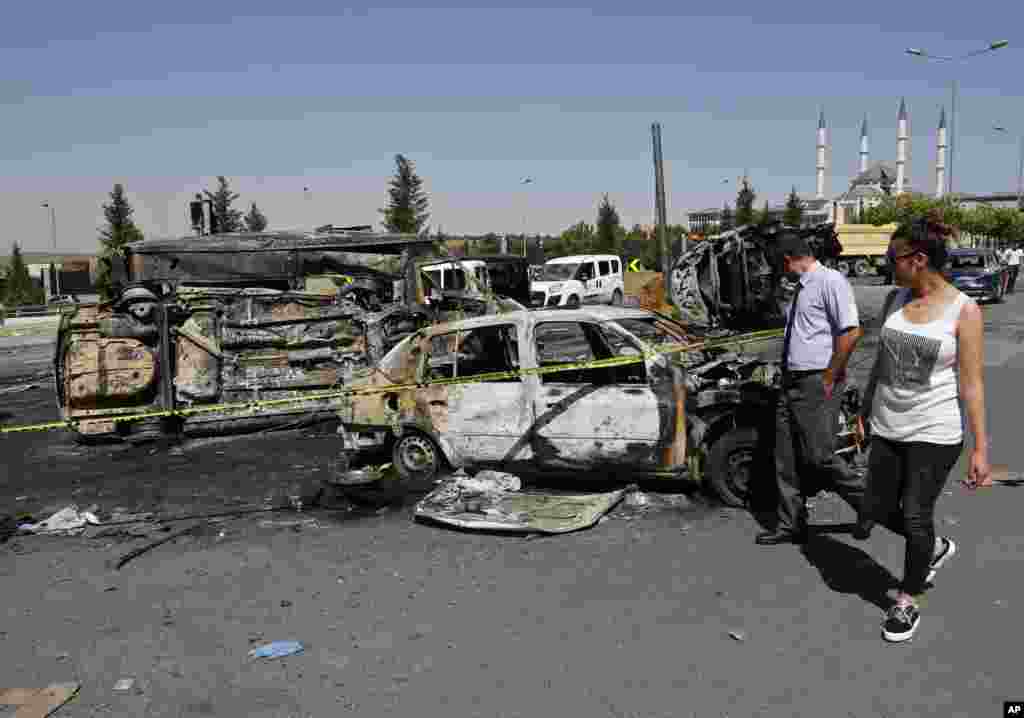
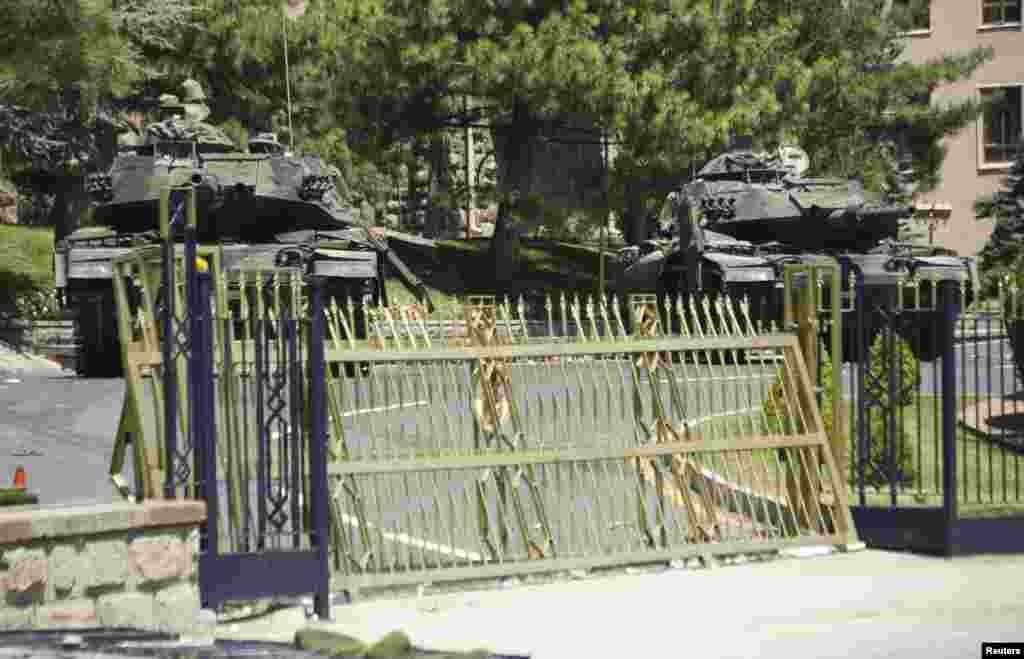


Crackdown continues
Meanwhile in Turkey, Erdogan promised to rid Turkey of people involved in the coup attempt. "At every level of government, the period of cleaning this virus will continue," said Erdogan. "Like the cancer virus, it spreads all around the government."
Around 6,000 people have been detained. State-run media reports an aide to Erdogan is among those in custody, and a warrant has been issued for the arrest of Erdogan's top military aide, Colonel Ali Yazici. It was not immediately clear what role, if any, Yazici had in the failed coup attempt.
Justice Minister Bekir Bozdag says Turkish authorities are accelerating arrests of people, which have included judges, military officers and soldiers. Those in custody include the commander of the Third Army Corps, General Erdal Ozturk, who could face charges of treason.
Other high-ranking military officials flew to neighboring Greece by helicopter and requested political asylum. Turkish media reports say some of those who fled are believed to be among the architects of the coup.
European leaders have expressed concern over the wide number of detentions, warning against actions that would damage constitutional order. EU foreign policy chief Federica Mogherini said the rule of law "needs to be protected for the sake of the country," at a meeting with other EU foreign ministers in Brussels Monday.
Death penalty considered
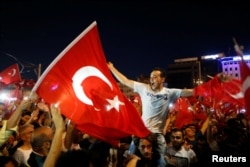
Speaking Sunday to people who called for the death penalty outside his home in Istanbul, Erdogan said the use of capital punishment cannot be delayed, saying "We cannot ignore this demand."
His speech was punctuated by frequent calls of "we want the death penalty'' from the large crowd, to which Erdogan responded: "We hear your request. In a democracy, whatever the people want they will get.''
Erdogan said he would discuss it with opposition parties but that "We will not delay this decision for long. Because those who attempt a coup in this country must pay.''
Turkey hasn't executed anyone since 1984, and capital punishment was legally abolished in 2004 as part of its bid to join the European Union.
Austrian foreign minister Sebastian Kurz said the reintroduction of the death penalty would be "absolutely unacceptable" in an interview with state media ahead of his meeting with his European counterparts Monday.
Funerals
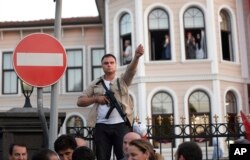
Meanwhile, thousands of people attended funerals Sunday in Istanbul and Ankara for those killed. Prayers were read simultaneously from Turkey's 85,000 mosques at noon to honor those who died.
Erdogan openly wept on Sunday at the funeral for his top campaign manager and his teenage son who were killed when renegade soldiers opened fire on protesters at the Bosporus bridge in Istanbul on Friday night.
The president was overpowered by emotions and cried. He used a handkerchief to wipe away the tears and turned around as he continued to weep.
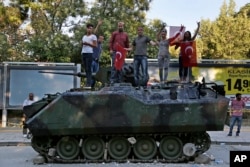
Reports about how many people were killed in clashes during the coup attempt varied, but by Sunday 265 were reported dead, including many civilians. Conditions remained tense in Istanbul, Ankara and some other provincial cities, and there were reports of sporadic violence.
US military operations
Turkey on Sunday also reopened its airspace to military aircraft, allowing the U.S.-led coalition to resume air operations against Islamic State militants.
Turkey had closed its airspace following the attempted coup.
Turkey, a NATO member, is a key partner in U.S.-led efforts to defeat the Islamic State group and has allowed American jets to use its Incirlik air base to fly missions against the extremists in nearby Syria and Iraq.
VOA's National Security Correspondent Jeff Seldin, White House Correspondent Mary Alice Salinas, VOA's Turkish service, VOA's Georgian service, and reporters Ken Schwartz and Isabela Cocoli were among those who contributed to this story.