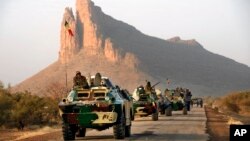
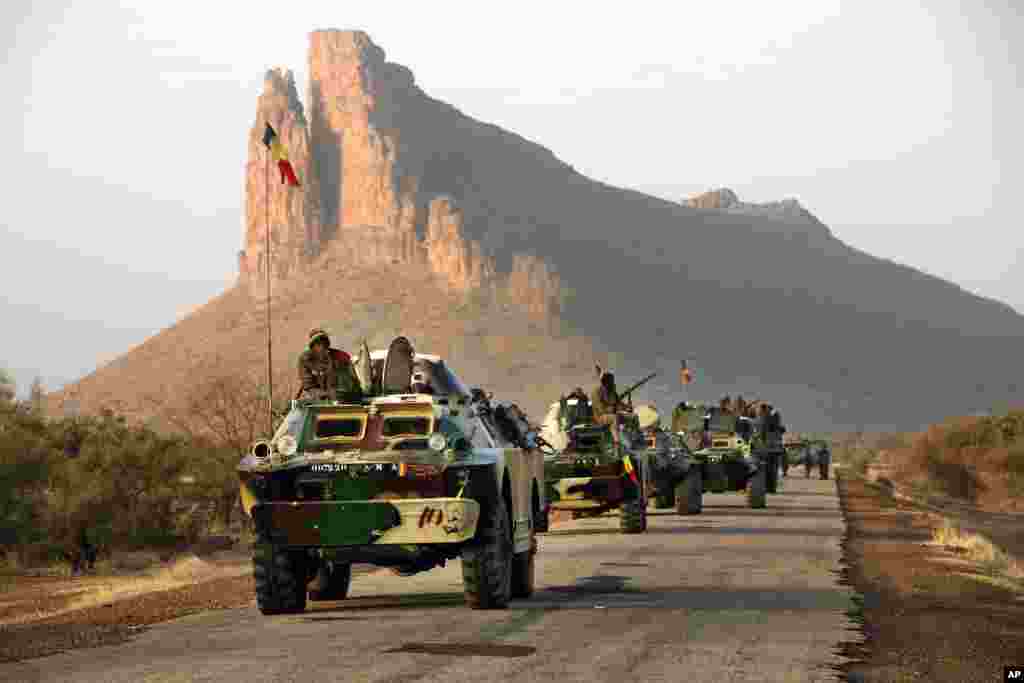
A convoy of Malian troops makes a stop to test their weapons near Hambori, northern Mali, on the road to Gao, February 4, 2013.
Two senior Islamist militants have been captured in northern Mali, including a top leader of radical group Ansar Dine.
The Tuareg separatist group MNLA says it arrested Mohamed Moussa Ag Mohamed and Oumeini Ould Baba Akhmed on Saturday near Mali's border with Algeria.
Ag Mohamed is the number-three leader of Ansar Dine and helped impose a harsh form of Islamic law on the city of Timbuktu.
Baba Akhmed is believed to be a member of the Movement for Unification and Jihad in West Africa, also known as MUJAO.
Developments in Mali
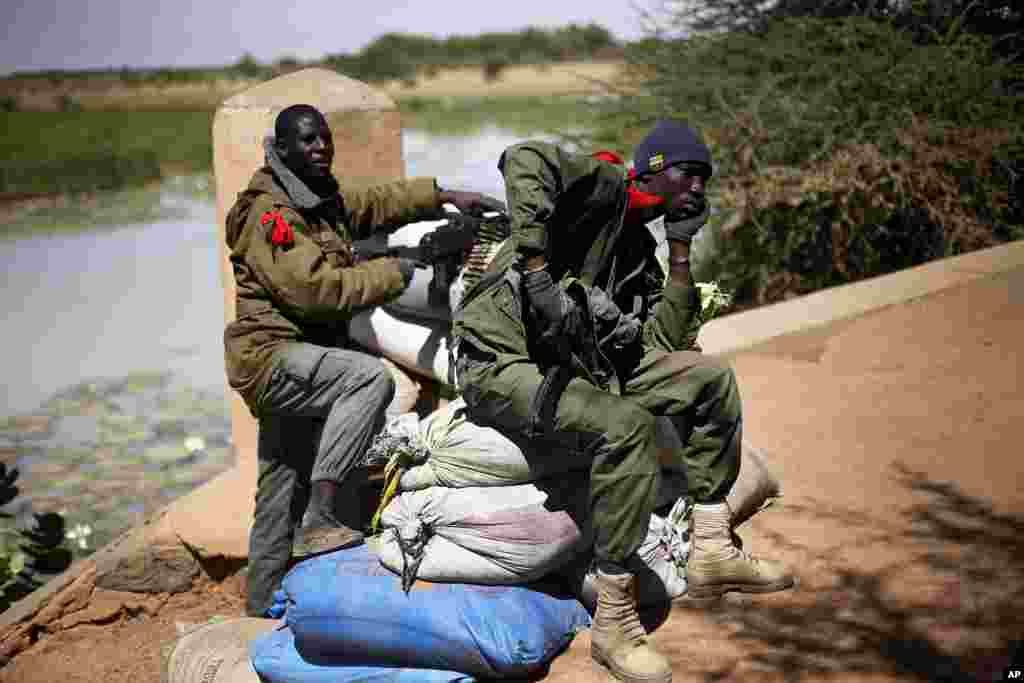
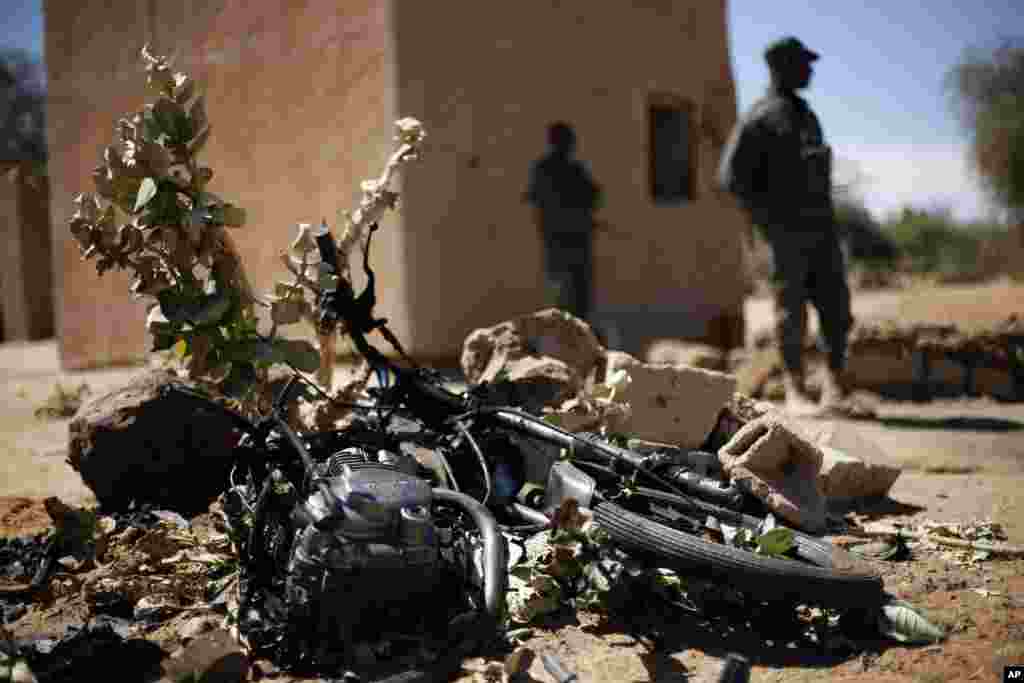
1/11Malian soldiers man a bridge at the entrance of Gao, northern Mali where a suicide bomber on a motorcycle killed himself attempting to blow up an army checkpoint, Feb. 8, 2013.
Show moreShow less
2/11Vehicles navigate a flooded Highway 64 as wind pushes water over the road as Hurricane Arthur passes through Nags Head, North Carolina, July 4, 2014.
Show moreShow less
3/11Malian soldiers inspect an explosive they found after residents notified authorities of suspicious bags left by radicals when they fled Gao, northern Mali, February 6, 2013.
Show moreShow less
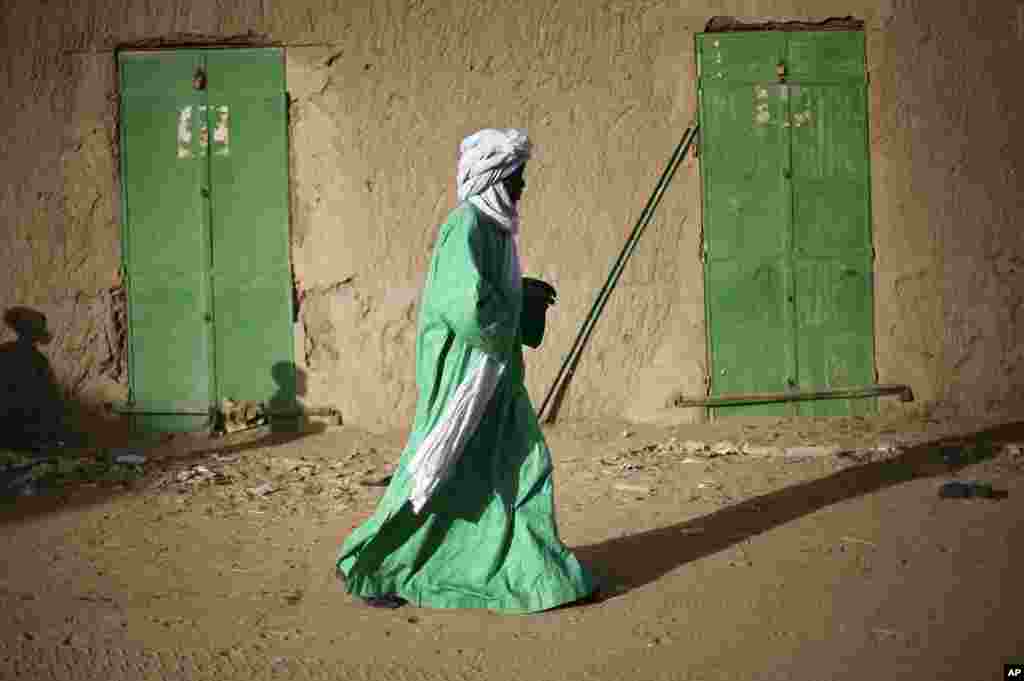
4/11A Malian man walks between doors of closed shops in Gao, northern Mali, February 5, 2013.
Show moreShow less
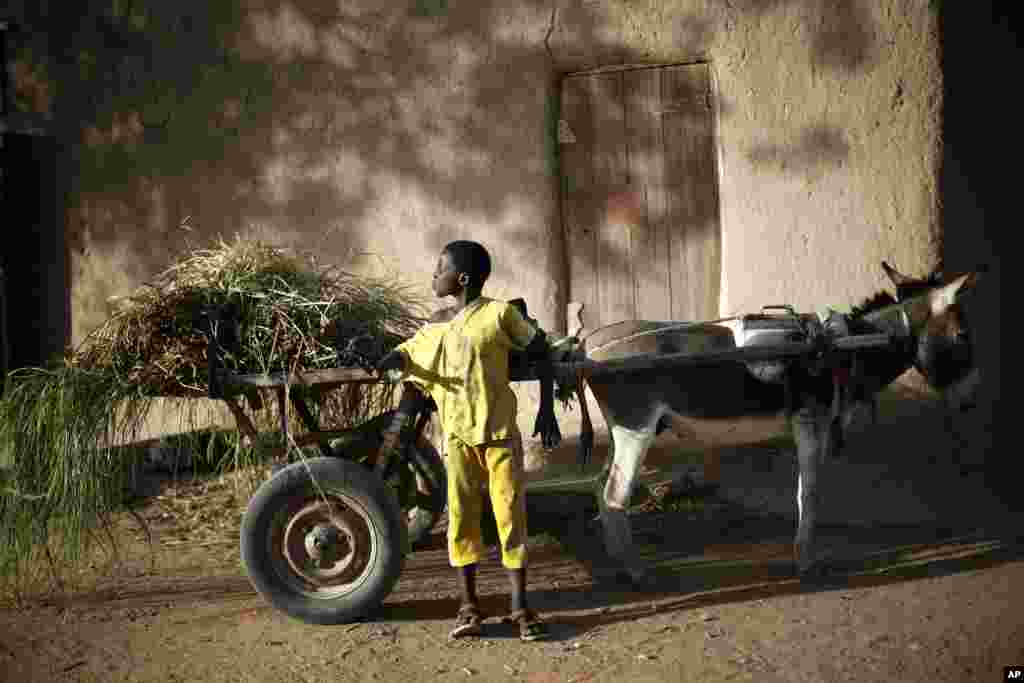
5/11A child stands by his donkey cart, in Gao, northern Mali, February 5, 2013.
Show moreShow less
6/11Men carry humanitarian food aid toward boats, Mopti, Mali, February 4, 2013.
Show moreShow less
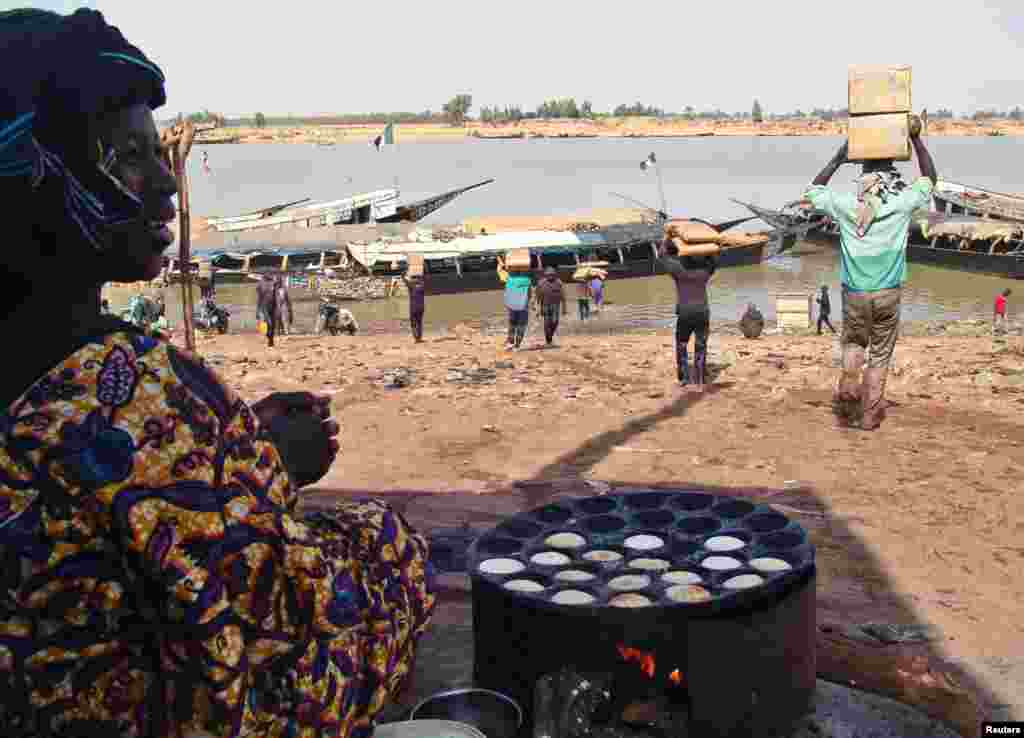
7/11A Malian woman looks at men carrying humanitarian food aid, Mopti, Mali, February 4, 2013.
Show moreShow less
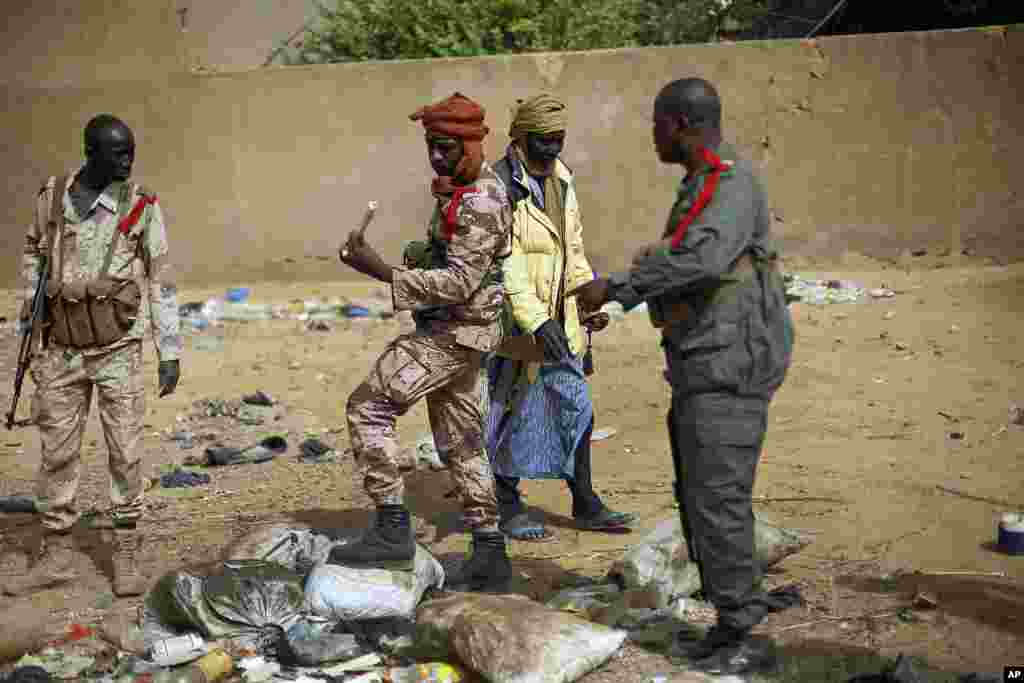
8/11Malian soldiers escort prisoners, who are suspected al-Qaida-allied fighters, in front of a military cell in Mopti, Mali, February 4, 2013.
Show moreShow less
9/11A convoy of Malian troops on the road to Gao, northern Mali, February 4, 2013.
Show moreShow less
10/11French President Francois Hollande holds hands with Mali's interim President Dioncounda Traoré in Timbuktu, Mali, February 2, 2013.
Show moreShow less
11/11A man takes a close look at a burned-out truck in Timbuktu, Mali, January 31, 2013.
Show moreShow less
Previous slide
Next slide
Ansar Dine
Ansar Dine
Name means "Defenders of the Faith"
Follows a puritanical form of Islam known as Salafism
Wants to impose strict Sharia law
Took control of parts of northern Mali after a March coup in Bamako
Led by Ag Ghali, a former senior rebel military commander
The two groups along with al-Qaida in the Islamic Maghreb controlled the major towns of northern Mali for about nine months before being driven out by the French and Malian armies.
French Foreign Minister Laurent Fabius said Monday that French warplanes were continuing bombing raids on supply routes and training centers in the remote desert of northeastern Mali. He told French radio that the objective is to make it impossible for the rebels to stay in northern Mali long-term.
Also Monday, U.S. Vice President Joe Biden met with French President Francois Hollande in Paris and praised the French operation in Mali, calling it "decisive."
Biden also backed France's call for U.N. peacekeepers to be deployed to Mali
Hollande is pushing for African forces to take over for French troops that have been battling the militants for the past three weeks. He made a one-day visit to Mali on Saturday, making brief stops in Sevare, Timbuktu and the capital, Bamako.
He told a cheering crowd in Bamako that French forces are fighting so people in Mali, a former French colony, can live in peace and have democracy.
Mali was plunged into crisis last year when soldiers overthrew the president, allowing the MNLA and Islamist groups to take control of the north. The Islamists then seized full control of the region and imposed strict Sharia law with measures that included a ban on music and forcing women to wear veils.
The groups also carried out public executions, floggings, and amputations for alleged criminals, drawing strong condemnation for human rights groups and the United Nations.
The Voice of America provides news and information in more than 40 languages to an estimated weekly audience of over 326 million people. Stories with the VOA News byline are the work of multiple VOA journalists and may contain information from wire service reports.