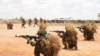



The Ugandan military has been put on heightened alert following an attack by a Ugandan rebel group in nearby eastern Congo that left 16 people dead. Ugandan officials put the blame on fighters from the Allied Democratic Forces.
Ugandan army spokesman Lieutenant Colonel Felix Kulayigye said troops in the western border areas are closely monitoring the rebel group's activities, following the attack Monday on Mutwanga village - about 50 kilometers from Uganda's border with Congo Kinshasa.
The army has deployed 15,000 reservists on standby to respond to any attempts by Allied Democratic Forces militia to enter Uganda.
"The attack does not come as a surprise to us," said army spokesman Kulayigye. "Probably, they are beginning now active operations in an attempt to gain more food and more resources. The last time they tried to operate inside our country, they were given a bad blow. This was in March 2007, and they have been trying to recover from that blow and maybe [they are] trying to capture or kidnap more people to beef up their numbers," Colonel Kulayigye said.
The rebel group emerged as a localized threat in 1996, setting up bases in western Uganda. Core members include fundamentalist Tabliq Muslims and remnants of another now-defunct rebel group called the National Army for the Liberation of Uganda.
The rebels have long claimed that they are fighting the government of President Yoweri Museveni to protest political and economic marginalization of Muslims in Uganda. But the group is best known for committing atrocities and kidnapping local civilian populations, and carrying out a string of bombings, particularly in the capital, Kampala, in the late 1990s.
Between 1997 and 1999, the Allied Democratic Forces foot soldiers numbered up to 3,000. But a joint Ugandan and Congolese operation against the group in 2004 is thought to have reduced the number to around 100.
Colonel Kulayigye suggests the rebels staged the attack to create a climate of fear before Uganda's presidential race in February.
Meanwhile, the military is trying to determine who killed at least 10 Ugandan troops last month in Central African Republic during an operation against another Ugandan rebel group, the Lord's Resistance Army said Colonel Kulayigye.
"Yes, there was an incident, where a squad that was pursuing the LRA was ambushed, and we are still trying to confirm who exactly this group is. We are sure it was not the LRA because these people were mounted on donkeys and horses. The LRA does not have those animals," the army spokesman said.
Media reports in Uganda say the death toll could be as high as 18, including five officers.
Ugandan troops have been deployed across Sudan, eastern Congo, and Central African Republic for nearly two years in pursuit of LRA leader Joseph Kony, who has eluded capture for more than 20 years. Kony is wanted by the International Criminal Court on charges of war crimes and crimes against humanity.