



The U.N. Special Investigator on the freedom of religion says the massacres in the central Nigerian city of Jos could have been prevented had the authorities heeded early warning signs of discrimination and violence in the name of religion. The investigator has submitted a report on abusive religious practices around the world to the U.N. Human Rights Council.
U.N. Special Investigator on freedom of religion, Pakistani lawyer Asma Jahangir, says discrimination and violence suffered by members of religious minorities is a worldwide phenomenon.
She says there are many examples of the harm caused by the misuse of discrimination and violence in the name of religion or belief. She says she is particularly alarmed by the recent flare-up of religious tensions and violent clashes in Jos, Plateau State, Nigeria.
Jahangir says the deadly clashes that reportedly killed hundreds of Christians and Muslims during the past weeks were predictable.
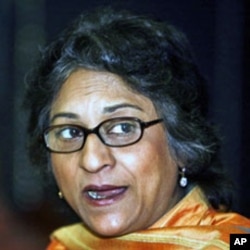
"You cannot have surgical divisions on introducing legislation for one set of believers as against another set of believers because it does have a spillover effect," she said. "And, in the report I did talk about how that is going to affect the non-Muslim minority in some of these States where Sharia was imposed. Not only would it affect non-Muslim minorities, but it has a way of silencing a majority of Muslims as well, who might not otherwise agree to the very rigid interpretation of Sharia that the State may have adopted," she added.
Jahangir says there were a number of early warning signs that should have alerted the authorities to the growing tensions.
"What was interesting for me, and this is a common pattern, is the denial of it all," she said. "The denial that there are no tensions, the assertion that it is a secular State, that the constitution is secular, that people all throughout the centuries have lived side-by-side. But, the cracks that were so apparent were being, in a way, ignored," Jahangir concluded.
The U.N. investigator says she was told the few conflicts that had taken place were an aberration. She says the authorities told her religion was not a root cause.
Jahangir disagrees with this assessment. She says she believes religious manipulation was a major root cause, but the government has been too scared to acknowledge that.