News / Africa

UN Launches 2011 World Food Day

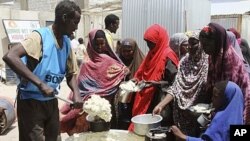
Women and children from southern Somalia line up to receive cooked food distributed by World Food Program (WFP) in Mogadishu, Somalia, August 20, 2011.
TEXT SIZE - +
Sabina Castelfranco

The U.N. World Food Program says there are growing concerns over food insecurity in the developing world. Some of those concerns are discussed in a report released to coincide with the commemoration Sunday of World Food Day.

The theme for World Food Day 2011 is “Food Prices - From Crisis to Stability.”  A ceremony to mark World Food Day will be held Monday at the headquarters of the U.N. Food and Agriculture Organization in Rome.

Rising food prices, weather emergencies and political instability are deepening the struggle of families trying to provide for their households in many developing nations.

This year’s “State of Food Insecurity in the World” report, published last week, focuses on the impact of food-cost volatility, confirming that high, unpredictable prices are likely to continue.

The report highlighted how poor consumers, small farmers and countries dependent on imports, especially in Africa, have been deeply affected by the food and economic crises.  

Gregory Barrow is with the World Food Program in Rome.

“If you look at the places where World Food Program works particularly in developing countries, you see populations of people who might be spending 60, 70, 80 percent of their salaries on purchasing food for their families”.

Barrow added that if prices become volatile and generally start rising, even by a small amount, it means that many of these people are going to struggle to put nutritious food on their tables.

The report also showed that even short-term fluctuations in prices can have a long-term effect on development, and that cutting back on nutritious food in the first 1,000 days of a child’s life can affect mental and physical development and ultimately, future earning capacity.

The United Nations has programs in place aimed at reducing the number of hungry people by one-half by 2015. But most observers agree this target is unlikely to be reached.

You May Like

Experts Weigh In on Challenges of Closing Guantanamo Prison

Former chief military prosecutor at Guantanamo delivers petition to White House with more than 370,000 signatures, demanding facility be closed down immediately More

Karzai to Discuss Enhancing Defense Ties with India

Afghanistan looking for more military aid as it prepares for withdrawal of NATO forces by next year More

India, China Pledge to Overcome Border Tensions

Indian prime minister and Chinese premier attempt to move past tense standoff in the Himalayas during Delhi talks More

Burmese President Opens US Visit with VOA Town Hall Meeting

Ahead of his meeting with President Obama Monday, Thein Sein answered questions on human rights and economic development in his country More

This forum has been closed.
Comments
     
There are no comments in this forum. Be first and add one

Featured Videos

Your JavaScript is turned off or you have an old version of Adobe's Flash Player. Get the latest Flash player.
Video

Video US Oil Surge Could Impact Mideast Geopolitics

The United States will account for a third of new oil supplies over the next five years, and will become energy self-sufficient in 20 years, according to a new report by the Paris-based International Energy Agency (IEA). Although U.S. oil imports from Arab Gulf countries increased last year, analysts predict the U.S. will lose its dependence on Middle East imports, which is expected to have a huge impact on international relations and the balance of power. VOA's Henry Ridgewell reports.