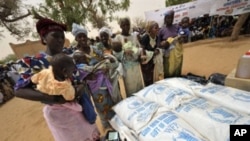
The United Nations food agency, the Food and Agriculture Organization, says international food import bills could pass the one-trillion-dollar mark in 2010.
In its latest Food Outlook report, the FAO issued a warning to the international community to prepare for harder times ahead unless production of major food crops increases significantly in 2011.
Food import bills for the world's poorest countries are predicted to rise 11 percent this year and by 20 percent for low-income food-deficit countries.
The FAO report says that passing a trillion dollars, the global import food bill will likely rise to a level not seen since food prices peaked at record levels in 2008. Abdolreza Abbassian is a senior FAO economist.
"Prices of nearly all food crops have increased rather sharply over the last few months. Some of those commodities prices have risen almost to the levels, as high as we had in 2008, which is associated with the year where we had a food crisis," said Abbassian.
The FAO report says with the pressure on world prices of most commodities not abating, the international community must remain vigilant against further supply shocks in 2011 and be prepared. Abbassian says there are more than 80 countries that are classified as low-income and food-deficit countries.
“The prices we are talking about today are 40-60 percent higher than last year. Therefore for countries that are poorer among those 80 and they are many, at least 30 countries, it is a huge burden to continue buying from the world market at these current high prices,” says Abbassian.
FAO revised its forecast for world cereal production downward, saying it would shrink by two percent. The agency, which had previously forecast a 1.2 percent expansion in production, said supply shortfalls due to bad weather were to blame.
The Food and Agriculture Organization said most cereal stocks are expected to decline sharply, and production should be increased to meet consumption. It added that only rice reserves are expected to rise. The report said wheat, maize and soybean production should be increased.
UN: Cost, Demand for Food Soaring