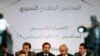



The U.N. Human Rights Council is holding a special session Monday to examine the violence in Syria following a request from 24 of its members, including all four Arab nations on the council - Jordan, Kuwait, Qatar and Saudi Arabia. It also comes as a U.N. team in Syria continues its investigation of the humanitarian situation in the country.
The U.N. Human Rights Council is set to hold a special session to examine the violence in Syria, a day after Syrian President Bashar al-Assad defended his crackdown on political unrest and said criticism from Western countries means nothing to him.
The Council's session Monday follows a request from 24 of its members, including all four Arab nations on the council - Jordan, Kuwait, Qatar and Saudi Arabia. It also comes as a U.N. team in Syria continues its investigation of the humanitarian situation in the country.
Syrian rights activists say supporters of al-Assad shot dead two people and wounded four others, after Assad defended his crackdown on political unrest and said criticism from Western countries means nothing to him.
The London-based Syrian Observatory for Human Rights said the killings happened Monday in the central flashpoint city of Hama.
Assad said during a lengthy interview with Syria's state-run television Sunday night that his security forces are making gains against the 5-month old uprising. He said he is "not worried" about the uprising and warned of consequences for any military action against his country.
The United States, the European Union and other Western powers have said that Mr. Assad must go.
Assad repeated plans to introduce reforms, adding that he expected new elections for Syria's national assembly in six months. He added that laws regarding the establishment of new political parties will be ready in the next few days and that people who want to create a new party will have a 45-day period to apply through a committee.
The Syrian president also said he wanted to know neighboring Turkey's intentions concerning the situation within his country. He said Syria will not accept someone acting as "an instructor" or as if they "know better."
Turkey has urged Assad to end the crackdown but has said it believes it is too soon to call for the Syrian president to step down.
The U.N.'s human rights office said last week that Assad's forces have carried out widespread and systematic attacks on civilians that may amount to crimes against humanity.
U.N. Human Rights chief Navi Pillay told the Security Council it should refer the situation in Syria to the Hague-based International Criminal Court.
Some information for this report was provided by AP and AFP.