


NAIROBI, Kenya -- The United Nations peacekeeping mission in South Sudan (UNMISS) says inter-communal violence in Jonglei state beginning last year was perpetuated, in part, by hate speech and the proliferation of weapons. A new UNMISS human rights report says the government failed to act fast enough to stop the violence.
The UNMISS report released Monday says an ongoing cycle of inter-ethnic violence in Jonglei state has intensified in recent years as rival groups become better armed and better organized.
The report documents human rights violations beginning in December 2011 when a group of up to 8,000 youths from the Lou Nuer ethnic group attacked the rival Murle community in Pibor County, killing 612 people.
Subsequent retaliatory attacks by the Murle left another 276 people dead.
The report says a failed disarmament campaign in 2009 and 2010 allowed the groups to stock up on weapons, which amplified the violence.
The director of human rights for UNMISS, Richard Bennett says hate speech from abroad also fueled the fighting. “There was an element of incitement and hate speech involved. And part of this came from the diaspora. We have got records - through internet and other means - of diaspora inciting the violence,” he said.
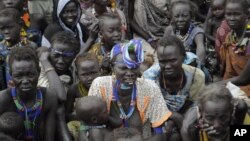
In addition to the killings, UNMISS reports women and children were abducted during the attacks, while tens of thousands were displaced. Aid agencies working in the area during the time said up to 120,000 people were affected by the violence.
Bennett says much of the suffering could have been avoided if South Sudan's government had deployed soldiers sooner.
“I would say that, for a range of reasons including the accessibility and infrastructural challenges, they didn't react fast enough to put police and soldiers in the right places in sufficient numbers. They were too slow in being there,” he said.
UNMISS peacekeepers had also been blamed at the time for not doing enough to prevent the fighting.
Bennett says the force has a mandate to receive 7,000 peacekeepers, but so far only has 5,000 deployed.
UNMISS says the root cause of the violence in Jonglei is under-development, a lack of education and few opportunities for youths outside of joining a militia.
The UNMISS report released Monday says an ongoing cycle of inter-ethnic violence in Jonglei state has intensified in recent years as rival groups become better armed and better organized.
The report documents human rights violations beginning in December 2011 when a group of up to 8,000 youths from the Lou Nuer ethnic group attacked the rival Murle community in Pibor County, killing 612 people.
Subsequent retaliatory attacks by the Murle left another 276 people dead.
The report says a failed disarmament campaign in 2009 and 2010 allowed the groups to stock up on weapons, which amplified the violence.
The director of human rights for UNMISS, Richard Bennett says hate speech from abroad also fueled the fighting. “There was an element of incitement and hate speech involved. And part of this came from the diaspora. We have got records - through internet and other means - of diaspora inciting the violence,” he said.
In addition to the killings, UNMISS reports women and children were abducted during the attacks, while tens of thousands were displaced. Aid agencies working in the area during the time said up to 120,000 people were affected by the violence.
Bennett says much of the suffering could have been avoided if South Sudan's government had deployed soldiers sooner.
“I would say that, for a range of reasons including the accessibility and infrastructural challenges, they didn't react fast enough to put police and soldiers in the right places in sufficient numbers. They were too slow in being there,” he said.
UNMISS peacekeepers had also been blamed at the time for not doing enough to prevent the fighting.
Bennett says the force has a mandate to receive 7,000 peacekeepers, but so far only has 5,000 deployed.
UNMISS says the root cause of the violence in Jonglei is under-development, a lack of education and few opportunities for youths outside of joining a militia.