



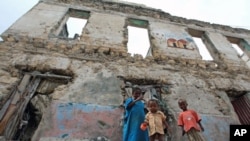
In Somalia, families continue to seek help from aid agencies as the famine spreads.
As a result, the United Nations refugee agency (UNHCR) has scaled up its presence in Mogadishu and Somalia’s border regions, providing food and medical assistance.
And now, with the rainy season just around the corner, it’s taking steps to make sure Somalis are prepared for the expected October rains.
“What we are doing in Mogadishu now is continuing our distributions of emergency assistance packages, basic household items, plastic sheeting, so that people can take shelter from the rains, which are on the way,” explained Andy Needham, spokesperson for the Nairobi-based office of the UNHCR.
Needham has just returned from a three-week visit to Mogadishu. He added, “We are scaling up our distribution of blankets. We have about 60,000 blankets in stock in Mogadishu which we want to distribute to IDP’s (internally displaced people).”
The UNHCR is working to avoid a repeat of deaths from hypothermia and weather-related illnesses that occurred during the famine of 1992 in Somalia during the October rainy season, said Needham.
The agency is also trying to make sure that children under five in the IDP camps have additional warmth at night.
Even when the rains come, Needham said there’s a long road ahead before Somalia can begin recovering from the drought and famine. He said it will take two successful cycles of rain, planting and harvest before the country can expect to see any type of recovery.
“So unfortunately what we are looking at -- we’re going to be in this emergency response situation until at least August 2012,” said the UNHCR spokesperson.
In addition to preparing for the rainy season, what cannot be overlooked, he said, is the high mortality rate that persists among young children in Mogadishu, especially in the IDP camps.
“Recent figures show the malnutrition rate had worsened from July through August. That’s why it is really imperative that agencies, as well as ourselves, are able to deliver food and health assistance, in particular to IDPs in and around Mogadishu,” said Needham.
He said a recent satellite imagery assessment showed there are almost 200 IDP camps sites just in Mogadishu. This, he says illustrates the magnitude of the crisis.