


GENEVA -- On July 9, 2011, South Sudan gained independence amid hope and optimism for the future. Nearly a year later, the country is despairing of poverty, ongoing conflict with its northern neighbor and a burgeoning refugee population.
Refugees began fleeing south last year when fight between Sudan's armed forces and rebels in Southern Kordofan and Blue Nile states flared up.
Now the Office of the United Nations High Commissioner for Refugees (UNHCR) says the outlook for those in South Sudanese refugee camps, already living in disease-prone conditions, is bleak, and that, for thousands headed south from Sudan’s Blue Nile and Southern Kordofan states, the situation the may only get worse.
The agency says more than 200,000 Sudanese have fled over the last year -- many to Ethiopia but the vast majority to South Sudan, where humanitarian efforts are reaching a breaking point.
According to spokesman Adrian Edwards, who describes South Sudan as perhaps the most difficult humanitarian situation facing UNHCR, the outlook for refugees in the country and those on the way remains bleak.
The ongoing conflict, he says, sometimes reaches an intensity that temporarily halts the exodus, forcing large numbers of refugees near the border to wait for a lull in fighting before crossing into South Sudan.
“If you get into South Sudan, what you are confronted with is the bleakest of territory in many cases," he said. "In Upper Nile State, its large, flat area is prone to flooding, and some of the temporary settlements that refugees have themselves put up are literally ankle-deep in water.
"In that kind of environment where you cannot move people around easily because roads are also flooded, there are serious problems," he said, citing not only health problems but what he called the "sheer misery of the situation for many people there."
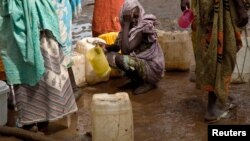
UNHCR also says refugees have constructed a number of makeshift settlements in remote areas of Upper Nile and Unity states that lack even the most basic infrastructure, where inhabitants face severe water shortages despite the rainy season.
Aid agencies are drilling boreholes to increase the supply, but the UNHCR says many refugees still receive only one-third or less of the minimum daily clean water they need, exacerbating health risks. The humanitarian organization Doctors Without Borders has expressed particular concern about the situation in Upper Nile's Jamam refugee camp, home to one-quarter of the roughly 120,000 refugees who have fled Sudan’s Blue Nile State since late last year.
At Jamam, UNHCR says increasing illness among a seriously weakened refugee population has forced mortality rates to alarming levels. Over the last two weeks alone, the group reports, doctors have treated at least 2,500 people for malaria, malnutrition, and diarrheal and respiratory diseases.
Edwards, who calls the risk of cholera and other water-borne diseases enormous, says a majority of those exposed to the conditions are less than 18 years of age.
“We are worried about the mortality rates among children in particular," he said. "Children are arriving severely malnourished, [and] ... as many as 65 [or] 66 percent of the refugees arriving in some of these camps are ... children in our view -- many of the younger children in particular need immediate medical help. They are in serious condition.”
Refugees began fleeing south last year when fight between Sudan's armed forces and rebels in Southern Kordofan and Blue Nile states flared up.
Now the Office of the United Nations High Commissioner for Refugees (UNHCR) says the outlook for those in South Sudanese refugee camps, already living in disease-prone conditions, is bleak, and that, for thousands headed south from Sudan’s Blue Nile and Southern Kordofan states, the situation the may only get worse.
The agency says more than 200,000 Sudanese have fled over the last year -- many to Ethiopia but the vast majority to South Sudan, where humanitarian efforts are reaching a breaking point.
According to spokesman Adrian Edwards, who describes South Sudan as perhaps the most difficult humanitarian situation facing UNHCR, the outlook for refugees in the country and those on the way remains bleak.
The ongoing conflict, he says, sometimes reaches an intensity that temporarily halts the exodus, forcing large numbers of refugees near the border to wait for a lull in fighting before crossing into South Sudan.
“If you get into South Sudan, what you are confronted with is the bleakest of territory in many cases," he said. "In Upper Nile State, its large, flat area is prone to flooding, and some of the temporary settlements that refugees have themselves put up are literally ankle-deep in water.
"In that kind of environment where you cannot move people around easily because roads are also flooded, there are serious problems," he said, citing not only health problems but what he called the "sheer misery of the situation for many people there."
UNHCR also says refugees have constructed a number of makeshift settlements in remote areas of Upper Nile and Unity states that lack even the most basic infrastructure, where inhabitants face severe water shortages despite the rainy season.
Aid agencies are drilling boreholes to increase the supply, but the UNHCR says many refugees still receive only one-third or less of the minimum daily clean water they need, exacerbating health risks. The humanitarian organization Doctors Without Borders has expressed particular concern about the situation in Upper Nile's Jamam refugee camp, home to one-quarter of the roughly 120,000 refugees who have fled Sudan’s Blue Nile State since late last year.
At Jamam, UNHCR says increasing illness among a seriously weakened refugee population has forced mortality rates to alarming levels. Over the last two weeks alone, the group reports, doctors have treated at least 2,500 people for malaria, malnutrition, and diarrheal and respiratory diseases.
Edwards, who calls the risk of cholera and other water-borne diseases enormous, says a majority of those exposed to the conditions are less than 18 years of age.
“We are worried about the mortality rates among children in particular," he said. "Children are arriving severely malnourished, [and] ... as many as 65 [or] 66 percent of the refugees arriving in some of these camps are ... children in our view -- many of the younger children in particular need immediate medical help. They are in serious condition.”