



PENTAGON —
Some estimates now put the cost of the war in Iraq at about two trillion dollars and the number of dead, both military and civilian, at nearly 200,000. The conflict, whose first concussive blasts were felt at 02:30 UTC on March 20, 2003, forever reshaped the way the United States armed forces conduct war.
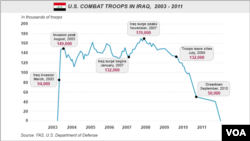
U.S. Combat Troops in Iraq, 2003-2011
It was a war that began in a conventional way. U.S. forces went against Iraqi forces with a clear objective: to bring down the government of Iraqi leader Saddam Hussein.
The long, drawn-out war that followed was far from conventional and shaped the way the U.S. military would handle future conflicts.
In 2011, the administration of President Barack Obama opted not to include regime change among its goals in Libya, citing mistakes in Iraq.
Story continues below photogallery

![Smoke rises from the Iraqi Trade Ministry in Baghdad after it was hit by a missile during a U.S.-led attacks, March 20, 2003.]()

![Smoke rises moments after the bright light at the right faded during U.S. strikes in downtown Baghdad in this image from television, March 20, 2003.]()
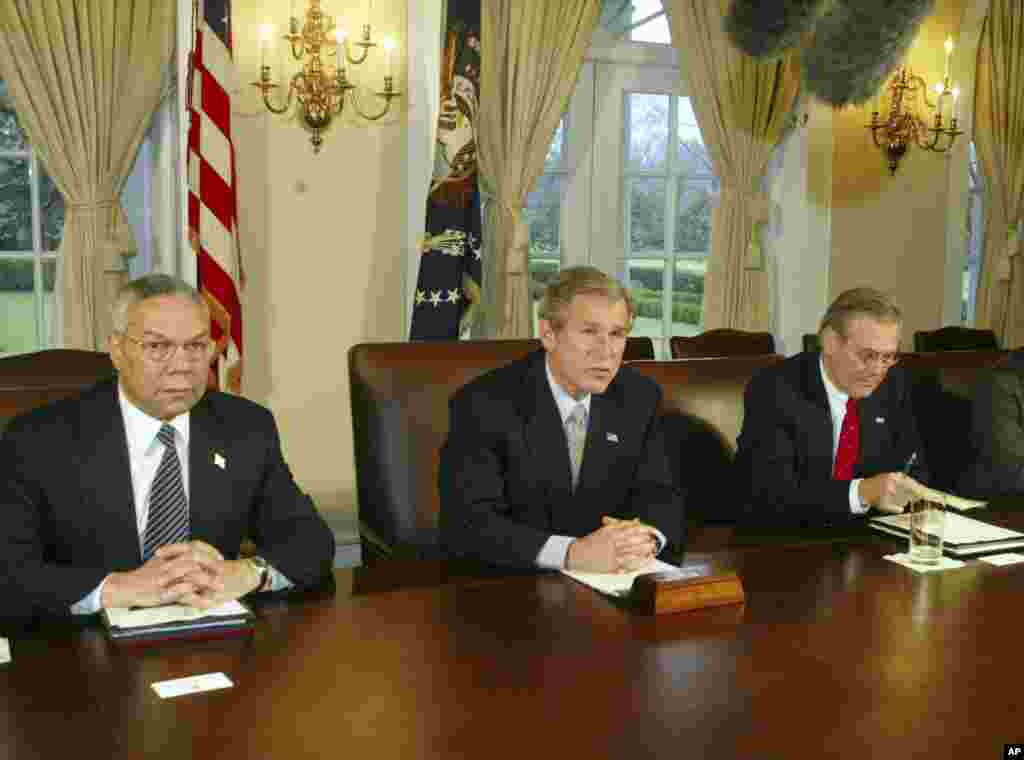
![Then President George W. Bush makes a statement to reporters while Secretary of State Colin Powell and Secretary of Defense Donald Rumsfeld look on following a Cabinet meeting, March 20, 2003.]()

![An explosion rocks Baghdad during air strikes March 21, 2003.]()
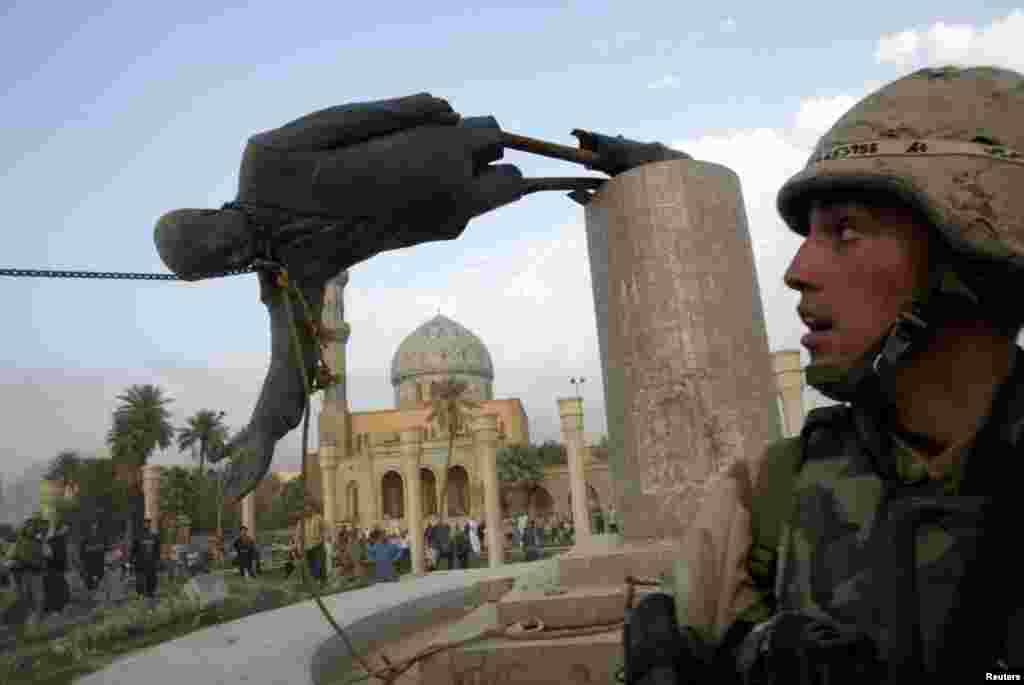
![U.S. Marine Corp Assaultman Kirk Dalrymple watches as a statue of Iraq's President Saddam Hussein falls in central Baghdad, April 9, 2003.]()
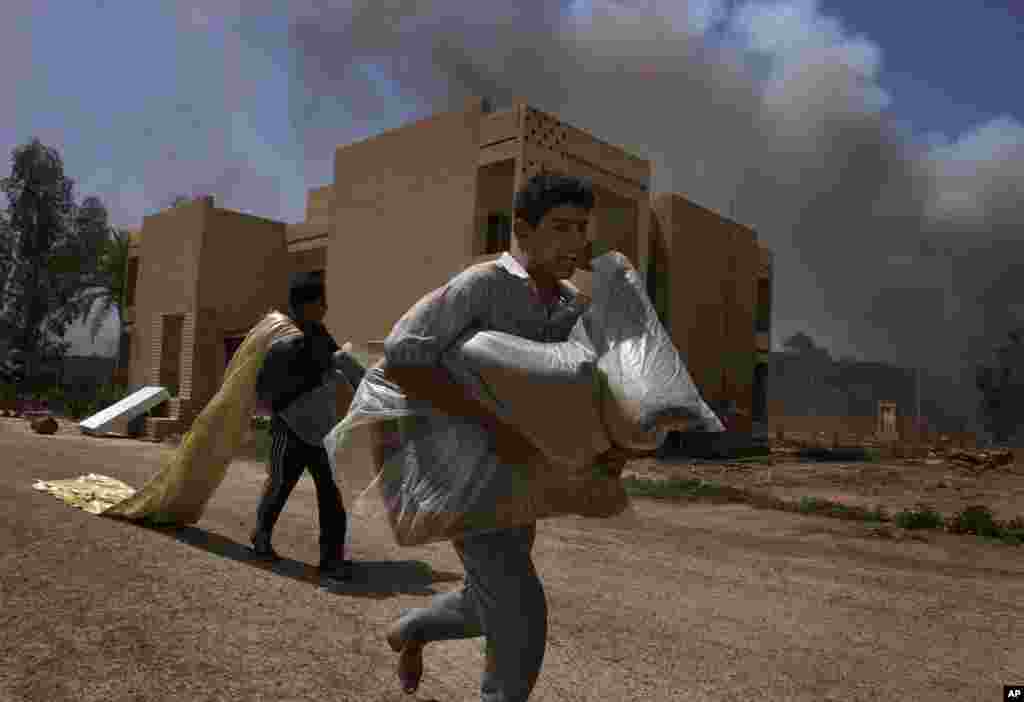
![Iraqi men run through a neighborhood with looted items, Baghdad, April 10, 2003.]()

![Iraqis cheer a column of U.S. armored vehicles arriving in Bagdhad, April 10, 2003.]()
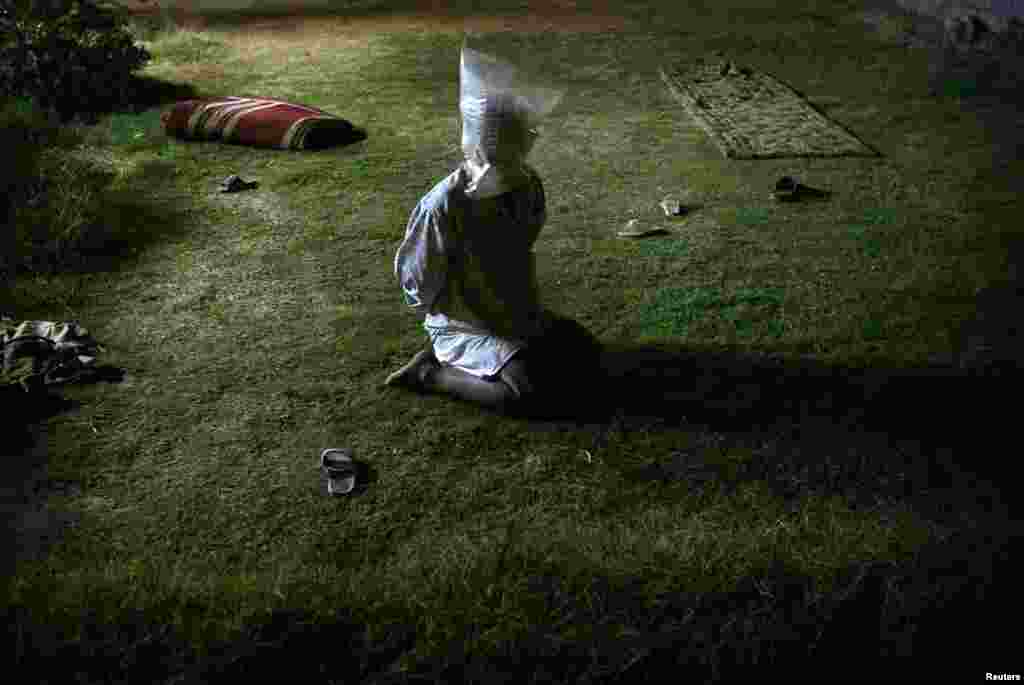
![A detained Iraqi man with a plastic bag covering his head sits in garden of a house searched by U.S. soldiers during a night raid in Tikrit, Oct. 30, 2003.]()
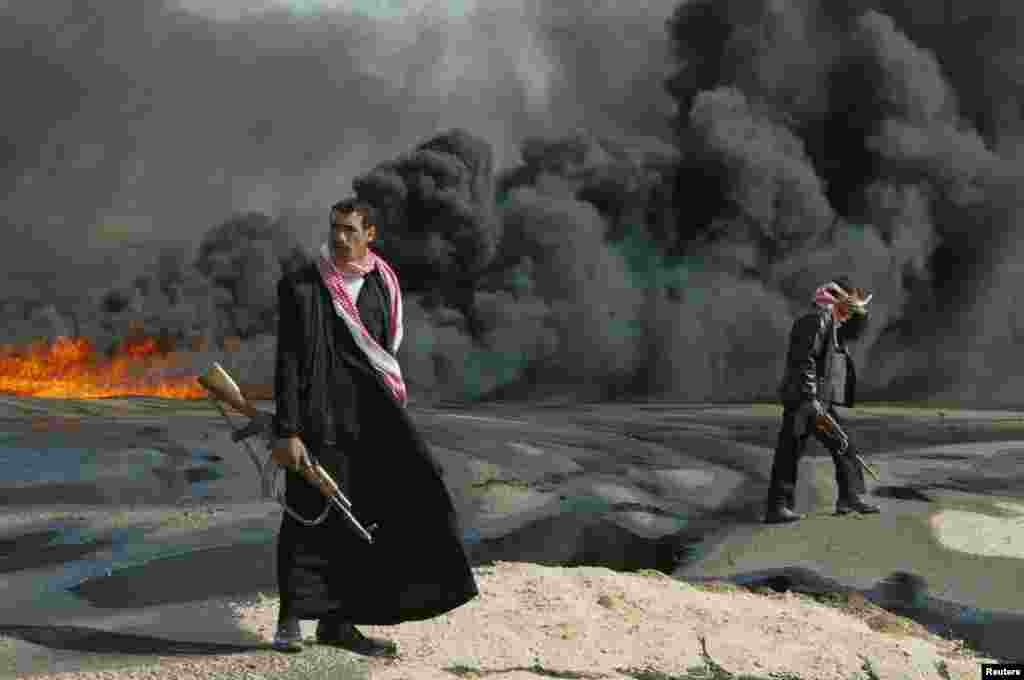
![Iraqi policemen guard the burning pipeline near Karbala, Feb. 23, 2004.]()
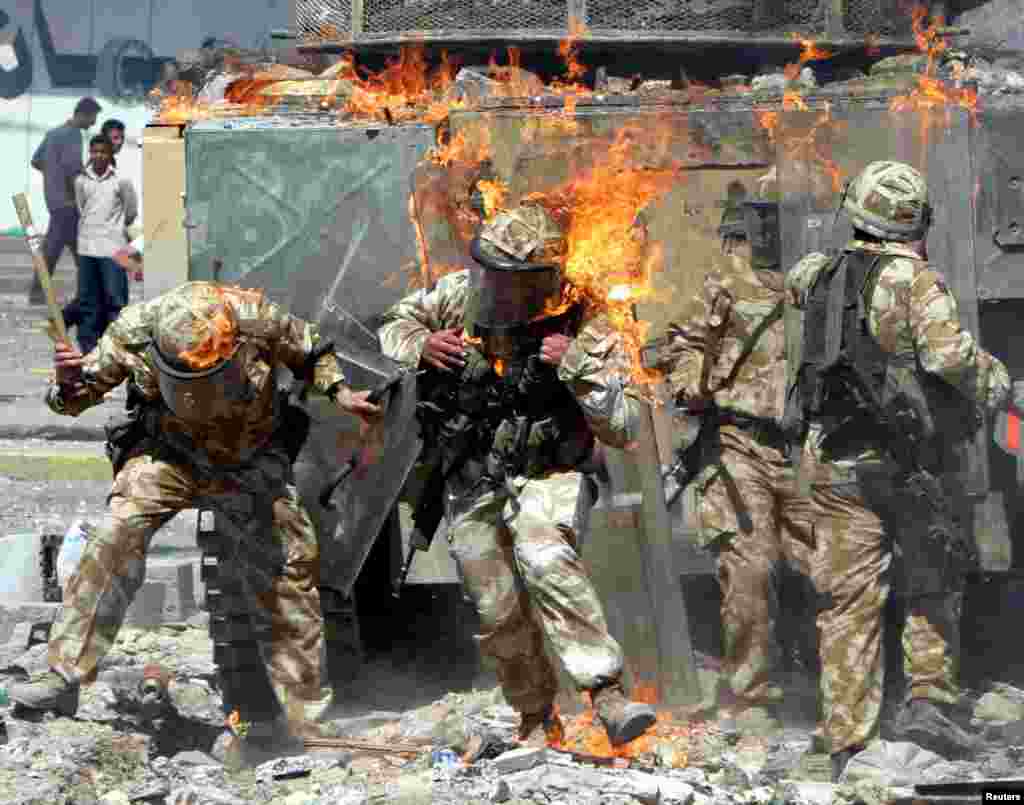
![British Army troops are covered in flames from a gas bomb thrown during a protest in Basra, March 22, 2004.]()
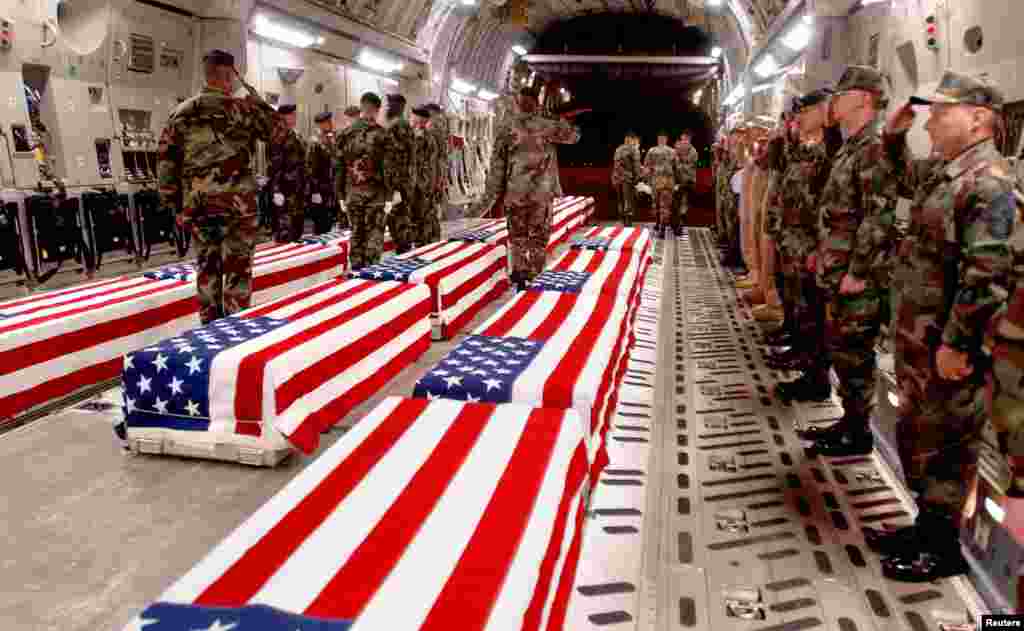
![Coffins of U.S. military personnel are prepared to be offloaded at Dover Air Force Base in Dover, Delaware in this undated photo released in 2004.]()
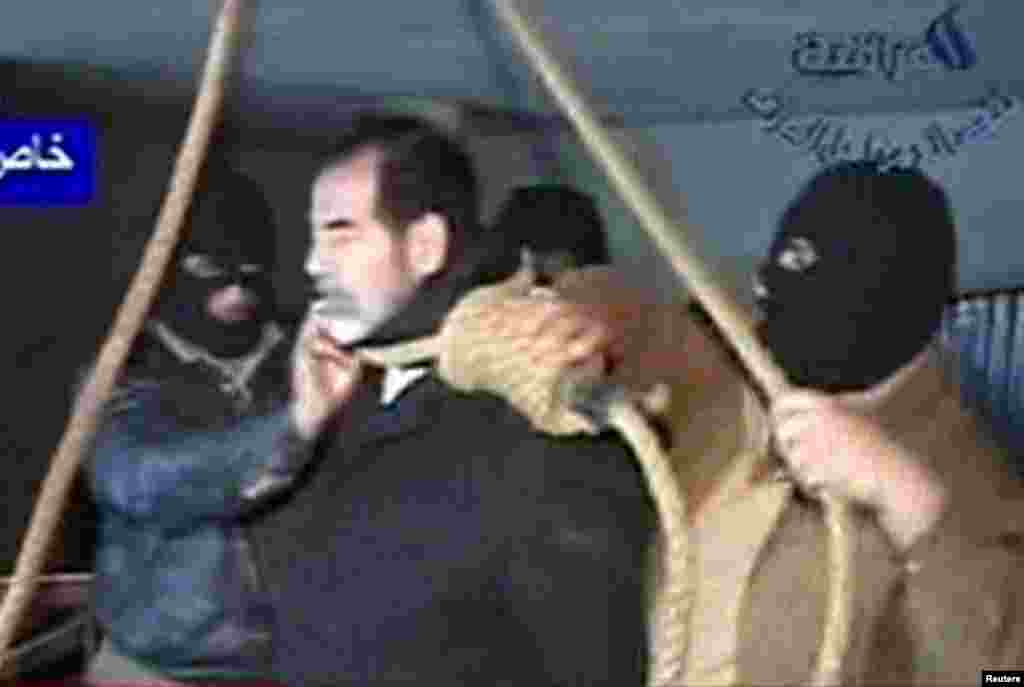
![A still from Al Iraqiya television shows masked executioners putting a noose around former Iraqi President Saddam Hussein's neck moments before his hanging in Baghdad, Dec. 30, 2006.]()
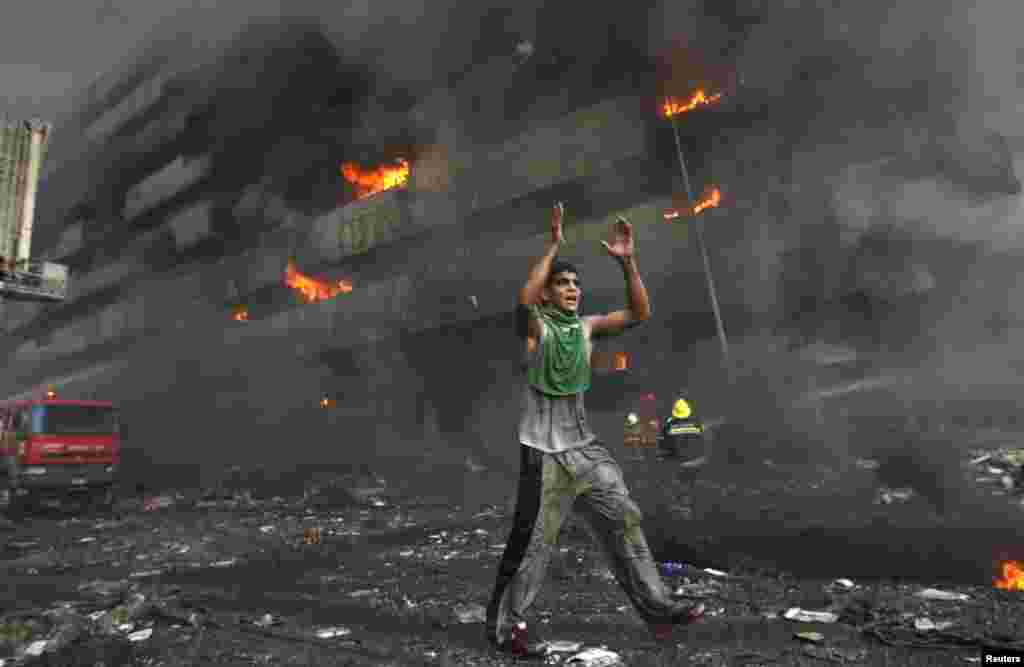
![A man runs down a street warning people to flee shortly after a twin car bomb attack at Shorja market in Baghdad, Feb. 12, 2007.]()
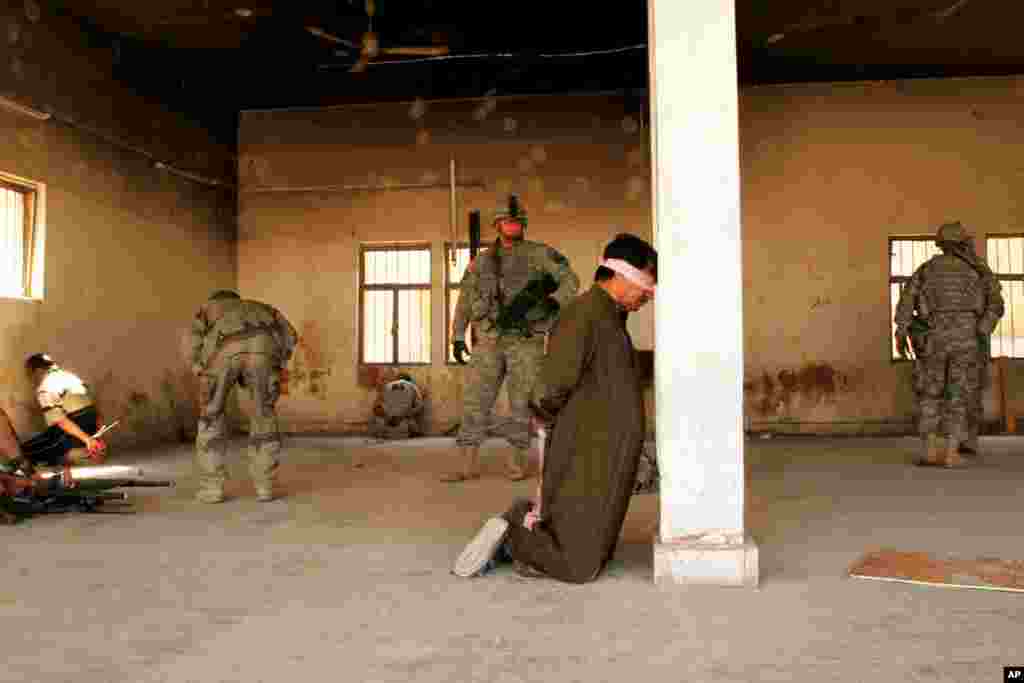
![A U.S. soldier guards an arrested man after a gunfight in central Baqouba, Iraq, March 29, 2007.]()
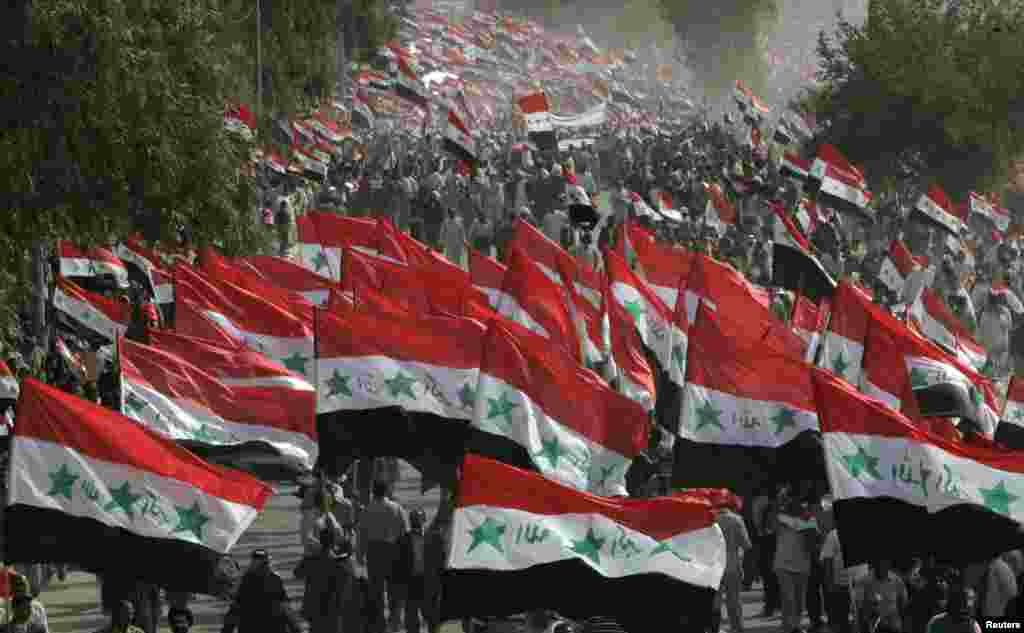
![Demonstrators wave Iraqi flags during an anti-U.S. protest called by fiery cleric Moqtada al-Sadr in Najaf, marking the fourth anniversary of the fall of Baghdad, April 9, 2007.]()
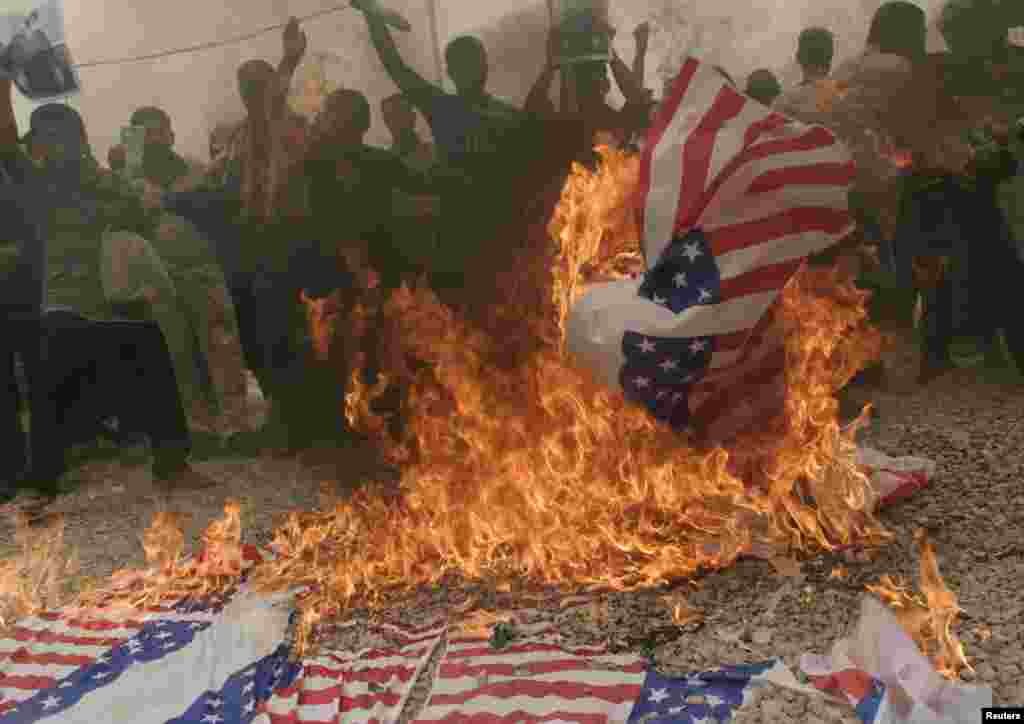
![Supporters of Shi'ite cleric Moqtada al-Sadr burn a banner representing the U.S. flag during a protest in Baghdad's Sadr City,July 3, 2009.]()
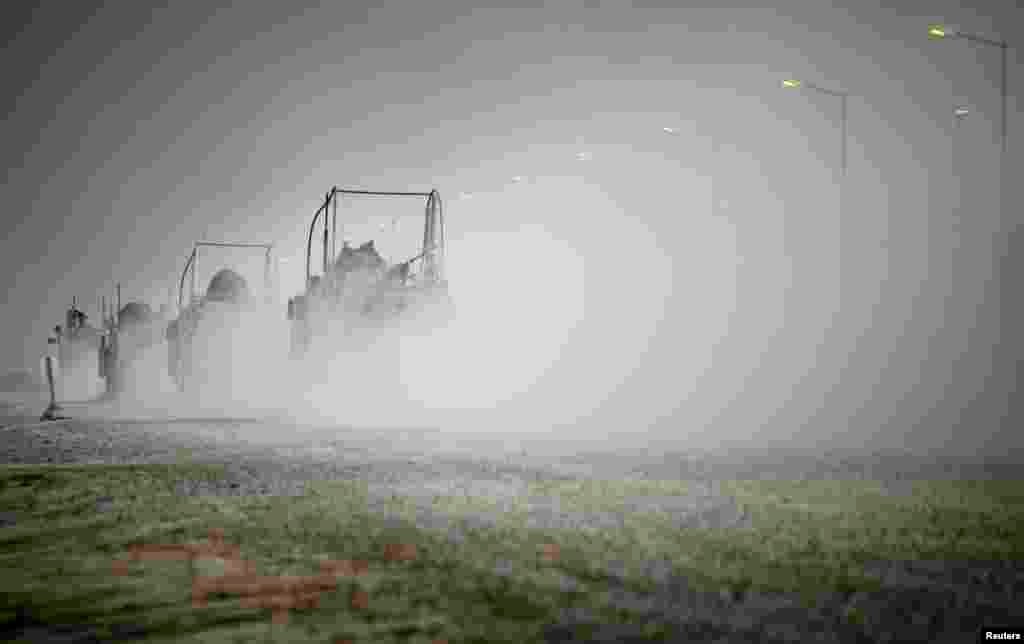
![U.S. Mine Resistant Ambush Protected (MRAP) vehicles drive through Camp Adder before departing Imam Ali Base near Nasiriyah, Iraq, Dec. 16, 2011.]()
“Regime change there took eight years, thousands of American and Iraqi lives and nearly a trillion dollars," the president said. "That is not something we can afford to repeat.”
With overwhelming power, U.S. forces were able to swiftly crush Saddam Hussein’s army and declare a quick victory, but managing the sectarian violence that erupted once Saddam was gone was a different story.
“The invasion in fact ended up being the easy part," says Jim Thomas of the Center for Strategic and Budgetary Assessments. "The tough part was obviously the occupation. And our forces, while they optimized themselves for fighting another large conventional military, they were really unprepared for dealing with irregular, non-uniformed insurgents and terrorists that they encountered.”
That new scenario forced changes in Pentagon policy and practices on the ground, with new manuals on counterinsurgency operations, improved intelligence-gathering, a greater emphasis on cultural understanding, and knowledge of how to deal with improvised explosive devices.
But it was the length and the cost of the war that has most shaped the new U.S. defense structure.
“What we’ve learned is that occupations in particular are going to be incredibly costly and that there’s probably little appetite on the part of political leaders to undertake large-scale stability operations, counterinsurgency operations, especially if they’re going to be protracted," Thomas says.
With U.S. public opinion turning against big wars, the focus has shifted to less costly surgical approaches that are heavily reliant on unmanned aerial drones, special operations teams, and training partners and allies to handle conflicts in their own regions.
The approach raises new questions of whether the lessons of Iraq have made war an easier option than it seemed a decade ago.
The long, drawn-out war that followed was far from conventional and shaped the way the U.S. military would handle future conflicts.
In 2011, the administration of President Barack Obama opted not to include regime change among its goals in Libya, citing mistakes in Iraq.
Story continues below photogallery
The 10th Anniversary of the Iraq War
Show more
Show less
Show more
Show less
Show more
Show less
Show more
Show less
Show more
Show less
Show more
Show less
Show more
Show less
Show more
Show less
Show more
Show less
Show more
Show less
Show more
Show less
Show more
Show less
Show more
Show less
Show more
Show less
Show more
Show less
Show more
Show less
Show more
Show less
With overwhelming power, U.S. forces were able to swiftly crush Saddam Hussein’s army and declare a quick victory, but managing the sectarian violence that erupted once Saddam was gone was a different story.
“The invasion in fact ended up being the easy part," says Jim Thomas of the Center for Strategic and Budgetary Assessments. "The tough part was obviously the occupation. And our forces, while they optimized themselves for fighting another large conventional military, they were really unprepared for dealing with irregular, non-uniformed insurgents and terrorists that they encountered.”
That new scenario forced changes in Pentagon policy and practices on the ground, with new manuals on counterinsurgency operations, improved intelligence-gathering, a greater emphasis on cultural understanding, and knowledge of how to deal with improvised explosive devices.
But it was the length and the cost of the war that has most shaped the new U.S. defense structure.
“What we’ve learned is that occupations in particular are going to be incredibly costly and that there’s probably little appetite on the part of political leaders to undertake large-scale stability operations, counterinsurgency operations, especially if they’re going to be protracted," Thomas says.
With U.S. public opinion turning against big wars, the focus has shifted to less costly surgical approaches that are heavily reliant on unmanned aerial drones, special operations teams, and training partners and allies to handle conflicts in their own regions.
The approach raises new questions of whether the lessons of Iraq have made war an easier option than it seemed a decade ago.
Loading timeline...