


GENEVA —The United Nations Children's Fund (UNICEF) and World Health Organization (WHO) are warning of an alarming upsurge in cholera across West Africa's Sahel region, the area at the southern fringe of the Sahara Desert running from Mauritania to Chad.
They report that cholera so far this year has killed more than 60 people and made about 2,800 others ill, with children being at particular risk.
The U.N. Children's Fund says the increase in cholera across the Sahel is placing children already weakened by malnutrition at acute risk. UNICEF reports that since mid-June, the number of people affected by this deadly waterborne disease has shot up, especially in parts of Niger bordering the Niger River.
Niger's Ministry of Health reports nearly three times as many cholera patients over the first half of 2012 compared to the same period last year. UNICEF notes about 400,000 severely malnourished children in Niger are expected to require life-saving treatment this year.
Cholera is endemic in the Sahel. Last year, the disease was centered mainly in Chad, Cameroon, and Nigeria. But this year, UNICEF spokeswoman Marixie Mercado says the epidemic appears to be concentrated further to the west.
"Its impact is aggravated by massive displacement of people fleeing the conflict in northern Mali. More than 330,000 people, a fifth of them children, have fled their homes, with 150,000 internally displaced inside Mali and over 180,000 seeking refuge in neighboring countries," said Mercado. "This displacement and the onset of the rainy season and this underlying situation of acute malnutrition is extremely dangerous for children."
The World Health Organization says adults too are increasingly being infected with cholera. Three weeks ago, several U.N. agencies and the Niger Ministry of Public Health jointly assessed the situation in the affected areas around the Niger River.
Since early this month, WHO has reported 45 cases, including two deaths in areas around Mali's Gao region. The last outbreak in Mali was in 2011 during this time of year. Aid agencies say they expect a sharp increase of cases in Mali and other countries in the Sahel with the onset of the rainy season, which runs from June to October.
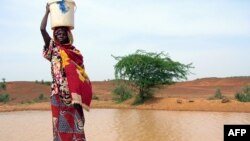
WHO spokesman Tariq Jasarevic says the consumption of water from the Niger River is a potential cause for the outbreak. Jasarevic says the people in Mali no longer have the means to treat the water before they drink it.
"Cholera is endemic in this region so people know about this," noted Jasarevic. "Cholera was traditionally quite well contained in the Sahel region because there were enough resources to put prevention activities and to have treatment capacities. As we do not have access, we are working for example with the national medical association. We are training health workers and then we are sending them into this region where we do not have access. The first team of 30 health workers spent three weeks in the north treating about 3,500 patients, including 100 surgeries."
In an effort to keep the outbreak from spreading, WHO and its partners have increased surveillance as well as technical support, including medication and diagnostic tests.
Both UNICEF and WHO say they are critically short of funds to do what is needed to contain the outbreak. But, to do nothing until they receive the money is out of the question. They say action must be taken now before the number of cholera cases explodes.
UNICEF notes a few simple measures can prevent the spread of this infectious deadly disease. It says hand-washing campaigns, treatment of drinking water and awareness-raising programs are very effective and must be carried out throughout the year.
They report that cholera so far this year has killed more than 60 people and made about 2,800 others ill, with children being at particular risk.
The U.N. Children's Fund says the increase in cholera across the Sahel is placing children already weakened by malnutrition at acute risk. UNICEF reports that since mid-June, the number of people affected by this deadly waterborne disease has shot up, especially in parts of Niger bordering the Niger River.
Niger's Ministry of Health reports nearly three times as many cholera patients over the first half of 2012 compared to the same period last year. UNICEF notes about 400,000 severely malnourished children in Niger are expected to require life-saving treatment this year.
Cholera is endemic in the Sahel. Last year, the disease was centered mainly in Chad, Cameroon, and Nigeria. But this year, UNICEF spokeswoman Marixie Mercado says the epidemic appears to be concentrated further to the west.
"Its impact is aggravated by massive displacement of people fleeing the conflict in northern Mali. More than 330,000 people, a fifth of them children, have fled their homes, with 150,000 internally displaced inside Mali and over 180,000 seeking refuge in neighboring countries," said Mercado. "This displacement and the onset of the rainy season and this underlying situation of acute malnutrition is extremely dangerous for children."
The World Health Organization says adults too are increasingly being infected with cholera. Three weeks ago, several U.N. agencies and the Niger Ministry of Public Health jointly assessed the situation in the affected areas around the Niger River.
Since early this month, WHO has reported 45 cases, including two deaths in areas around Mali's Gao region. The last outbreak in Mali was in 2011 during this time of year. Aid agencies say they expect a sharp increase of cases in Mali and other countries in the Sahel with the onset of the rainy season, which runs from June to October.
WHO spokesman Tariq Jasarevic says the consumption of water from the Niger River is a potential cause for the outbreak. Jasarevic says the people in Mali no longer have the means to treat the water before they drink it.
"Cholera is endemic in this region so people know about this," noted Jasarevic. "Cholera was traditionally quite well contained in the Sahel region because there were enough resources to put prevention activities and to have treatment capacities. As we do not have access, we are working for example with the national medical association. We are training health workers and then we are sending them into this region where we do not have access. The first team of 30 health workers spent three weeks in the north treating about 3,500 patients, including 100 surgeries."
In an effort to keep the outbreak from spreading, WHO and its partners have increased surveillance as well as technical support, including medication and diagnostic tests.
Both UNICEF and WHO say they are critically short of funds to do what is needed to contain the outbreak. But, to do nothing until they receive the money is out of the question. They say action must be taken now before the number of cholera cases explodes.
UNICEF notes a few simple measures can prevent the spread of this infectious deadly disease. It says hand-washing campaigns, treatment of drinking water and awareness-raising programs are very effective and must be carried out throughout the year.