


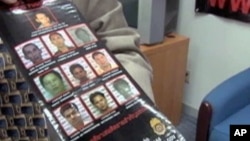
The United States Drug Enforcement Administration and Thai police are seeking help in tracking down some of Southeast Asia's most wanted criminals.
Thailand's nightlife has long been associated with less-than-legal activities.
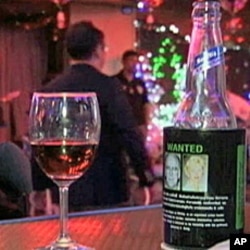
Foreign tourists and expatriates calmly swig their drinks, undisturbed by the faces around them - some of them the region's most wanted drug dealers and murderers.
But the fugitives are not sitting at the bar. Their photos are on the beer-bottle holders, coasters, and matchbooks customers use.
The United States Drug Enforcement Administration and Thai authorities say there may be most wanted criminals hiding in communities here.
And, to track them down, they are taking a fresh approach: displaying the faces of wanted criminals on bar paraphernalia, enlisting the support of bar owners like Samang Edwards.

Samang says the pictures of wanted criminals do not bother her customers, who seem to enjoy the novelty.
Some slightly inebriated patrons even claim to have seen some of those wanted.
But Danish expatriate Nicolai Kehlet points out the wanted picture on the bottle holder keeping his beer cold appears a bit dated. "I don't know. I mean, I guess anything that helps catching these guys would do difference, I think. It's like I said, it's hard to judge from these pictures. If you look around you've got all sorts of faces. And, my guess is they're changed a bit since then," Kehlet said.
At the top of the DEA's wanted list is Wei Hsueh Kang, a high-ranking official of the United Wa State Army - a drug-dealing rebel group that controls a large part of northeastern Burma.
Thomas Pasquarello, the DEA's director for East Asia, says U.S. authorities have been hunting for Wei since the 1990s and are offering up to $2 million for information leading to his arrest.
"They've been responsible for a ton, (large) amounts, of heroin as well as for methamphetamine. The organization is capable of producing thousands of kilograms of illicit narcotics. And, Mr. Wei Hsueh Kang is the financial genius behind it as well as the CEO of the criminal organization," he said.
Though Thailand is the focus, eight other countries across Asia are participating in the program, the first of its kind.
Since August, the program's web site has had over 70,000 hits and has generated 120 leads that are being investigated.
Although it has yet to catch any fugitives, Pasquarello says there are signs the program has a positive effect. "We have received reports right from the very top of these organizations-they're not happy with the program. They're not happy with the publicity. And, again, for any criminal elements, they want to work underneath the radar of law enforcements. And, what this does is it exposes their operations, it exposes their network. So, it has had an impact on their operations," Pasquarello said.
He says they will measure the program's success by how much public input they receive and how many useful tips it generates.