Profile: Longtime US Diplomat, J. Christopher Stevens
J. Christopher Stevens, 52, had served as U.S. ambassador to Libya since May. He had been a supporter of the revolt that overthrew Libyan strongman Moammar Gadhafi, and served as a U.S. envoy to the Transitional National Council in Benghazi during the Libyan revolution.
Stevens was appointed ambassador to Libya in May 2012. In a State Department video released shortly after he got the job, he said "I was thrilled to watch the Libyan people stand up and demand their rights."
He said he was excited to return to Libya to help build a partnership between the United States and Libya and help the Libyan people achieve their goals.
U.S. Secretary of State Hillary Clinton said Stevens was one of the first Americans on the ground in Benghazi as the Libyan conflict unfolded. She said he arrived in the port on a cargo ship to start working with the rebels.
"He risked his own life to lend the Libyan people a helping hand to build the foundation for a new, free nation," Clinton said in a statement.
US Ambassador Christopher Stevens
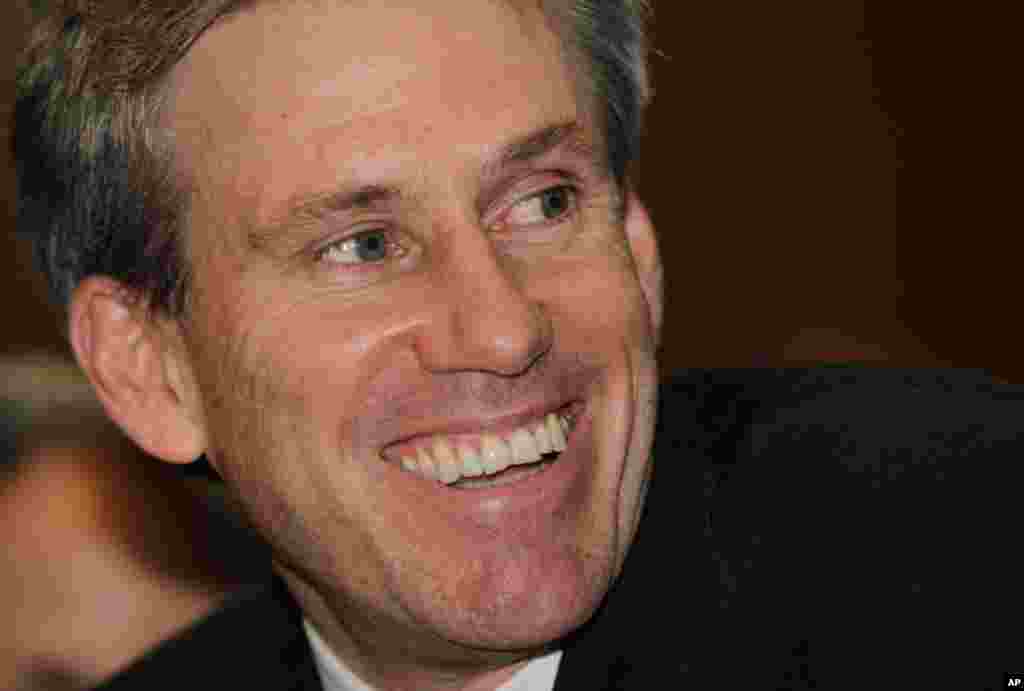
1/7Then-U.S. envoy J. Christopher Stevens attends meetings at the Tibesty Hotel in Benghazi, Libya. (April 2011 file photo)
The United States ambassador to Libya and three embassy staff were killed after a mob stormed the U.S. consulate in the eastern city Benghazi late Tuesday. J. Christopher Stevens, a career U.S. foreign service officer, is one of the most experienced U.S. envoys in the region.
Show moreShow less
2/7J. Christopher Stevens, newly appointed U.S. ambassador to Libya, shakes hands with Libyan National Transitional Council (NTC) chairman Mustafa Abdel Jalil (R) after presenting his credentials during a meeting in Tripoli, June 7, 2012.
The United States ambassador to Libya and three embassy staff were killed after a mob stormed the U.S. consulate in the eastern city Benghazi late Tuesday. J. Christopher Stevens, a career U.S. foreign service officer, is one of the most experienced U.S. envoys in the region.
Show moreShow less
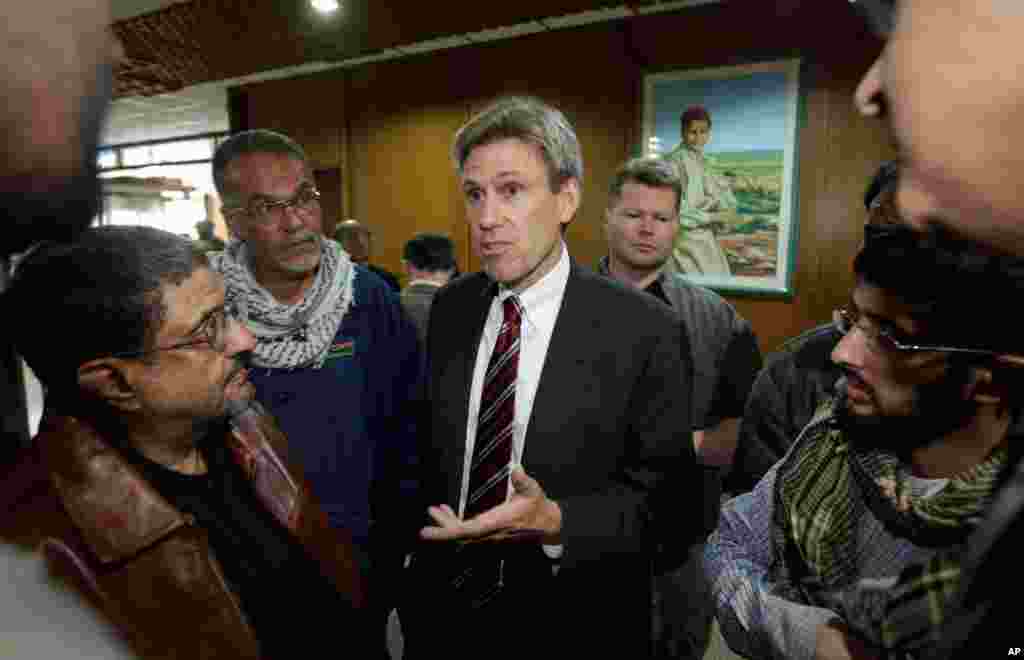
3/7Then-U.S. envoy Christopher Stevens speaks to local media before attending meetings at the Tibesty Hotel where an African Union delegation was meeting with opposition leaders in Benghazi, Libya. (April 2011 file photo)
The United States ambassador to Libya and three embassy staff were killed after a mob stormed the U.S. consulate in the eastern city Benghazi late Tuesday. J. Christopher Stevens, a career U.S. foreign service officer, is one of the most experienced U.S. envoys in the region.
Show moreShow less
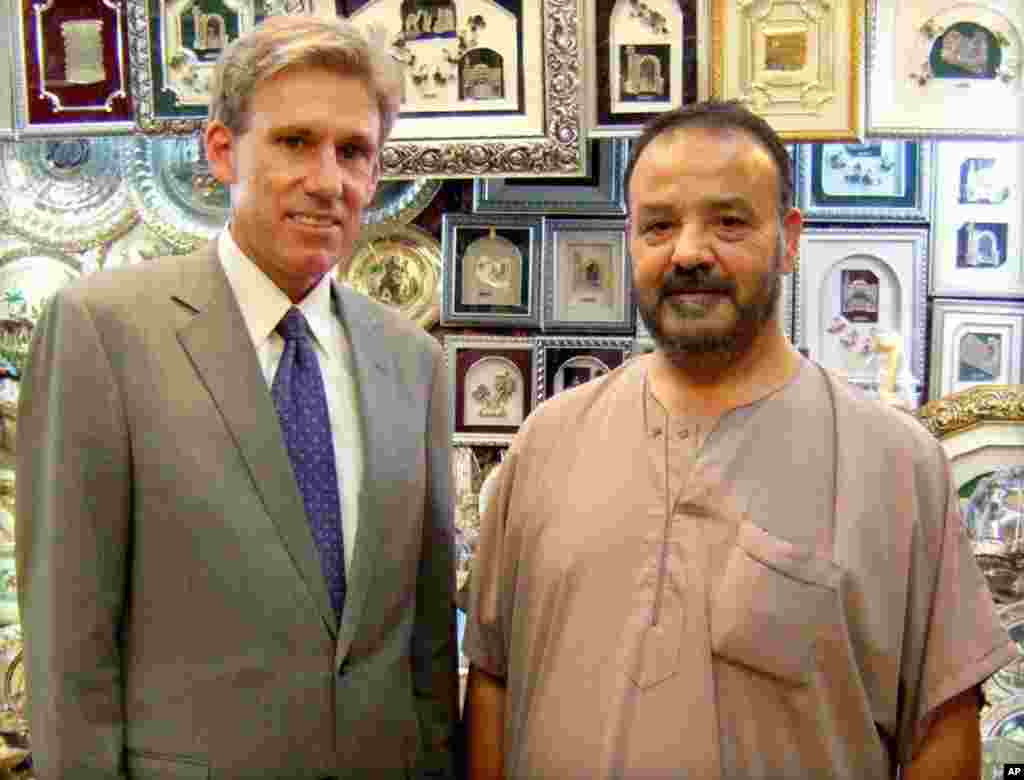
4/7In this photo posted on the U.S. Embassy Tripoli Facebook page, Christopher Stevens poses with a shop owner in Tripoli, Libya, August 12, 2012.
The United States ambassador to Libya and three embassy staff were killed after a mob stormed the U.S. consulate in the eastern city Benghazi late Tuesday. J. Christopher Stevens, a career U.S. foreign service officer, is one of the most experienced U.S. envoys in the region.
Show moreShow less
5/7دوستداران نلسون ماندلا در گرامیداشت یاد او شمع روشن کردند. پاریس، ۵ دسامبر
The United States ambassador to Libya and three embassy staff were killed after a mob stormed the U.S. consulate in the eastern city Benghazi late Tuesday. J. Christopher Stevens, a career U.S. foreign service officer, is one of the most experienced U.S. envoys in the region.
Show moreShow less
6/7Christopher Stevens (R), Britain's diplomatic representative Christopher Prentice (L) and deputy chairman of the TNC Abdul Hafiz Ghoqa (C) attend a memorial service for slain photojournalists Tim Hetherington an Chris Hondros in Benghazi, April 2011.
The United States ambassador to Libya and three embassy staff were killed after a mob stormed the U.S. consulate in the eastern city Benghazi late Tuesday. J. Christopher Stevens, a career U.S. foreign service officer, is one of the most experienced U.S. envoys in the region.
Show moreShow less
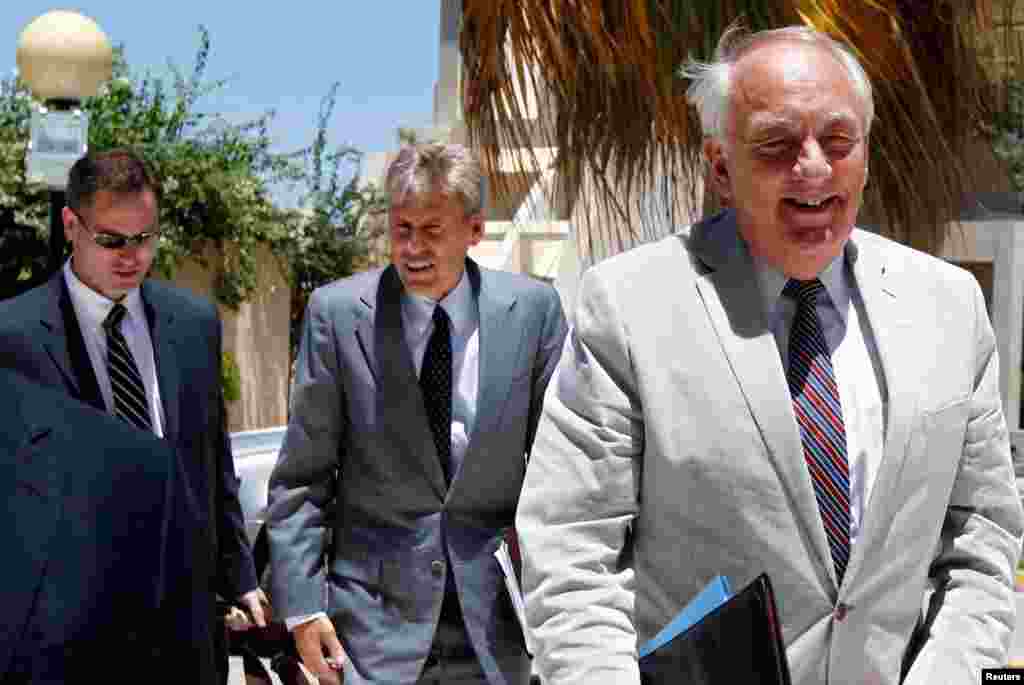
7/7U.S. Ambassador-at-Large Stephen Rapp with Christopher Stevens (C), after a meeting with Libyan Justice Minister Ali Ashour discussing cooperation between the two countries on issues of human rights, in Tripoli June 27, 2012.
The United States ambassador to Libya and three embassy staff were killed after a mob stormed the U.S. consulate in the eastern city Benghazi late Tuesday. J. Christopher Stevens, a career U.S. foreign service officer, is one of the most experienced U.S. envoys in the region.
Show moreShow less
Previous slide
Next slide
Stevens spoke Arabic and French. He joined the Foreign Service in 1991 and was assigned in Israel, Syria, Egypt and Saudi Arabia. Before the Foreign Service, he worked as an international trade lawyer in Washington and taught English in Morocco as a Peace Corps volunteer.
Stevens grew up in the western U.S. state of California and earned his undergraduate degree from the University of California at Berkeley. He got his law degree from the University of California’s Hastings College of Law in 1989, and an M.S. from the National War College in 2010.
The Voice of America provides news and information in more than 40 languages to an estimated weekly audience of over 326 million people. Stories with the VOA News byline are the work of multiple VOA journalists and may contain information from wire service reports.