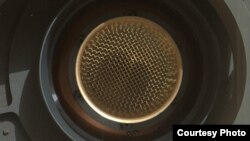
This image from NASA's Curiosity rover shows the open inlet where powered rock and soil samples will be funneled down for analysis. (NASA/JPL-Caltech/MSSS)
The Mars rover Curiosity will undergo a final round of mechanical checks Thursday before making its first lengthy drive across the surface of the Red Planet.
Engineers with the U.S. space agency NASA have kept Curiosity parked in one spot for the past week while testing its sophisticated instruments, including a high-resolution camera and a tool designed to analyze a Martian rock's chemical makeup. Tests have also been run on Curiosity's 2.1-meter-long arm, which will scoop up dirt and rock for processing.
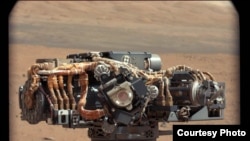
This image shows the Mars Hand Lens Imager (MAHLI) on NASA's Curiosity rover, with the Martian landscape in the background. Image was taken by Curiosity's Mast Camera, Sept. 8, 2012, UTC). (NASA/JPL-Caltech/MSSS)
In addition to final tests on the robotic arm, engineers will also use Curiosity's camera to record video of the Martian moon Phobos passing in front of the sun.
Mission manager Jennifer Trosper told reporters Wednesday that Curiosity has "performed almost flawlessly" during the tests. Trosper said the six-wheeled rover will start to "drive, drive, drive" towards a site dubbed Glenelg where three types of terrain intersect. Scientists hope to find rock and soil suitable enough for Curiosity's first sample testing.
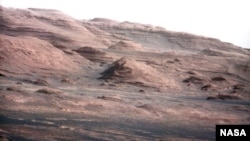
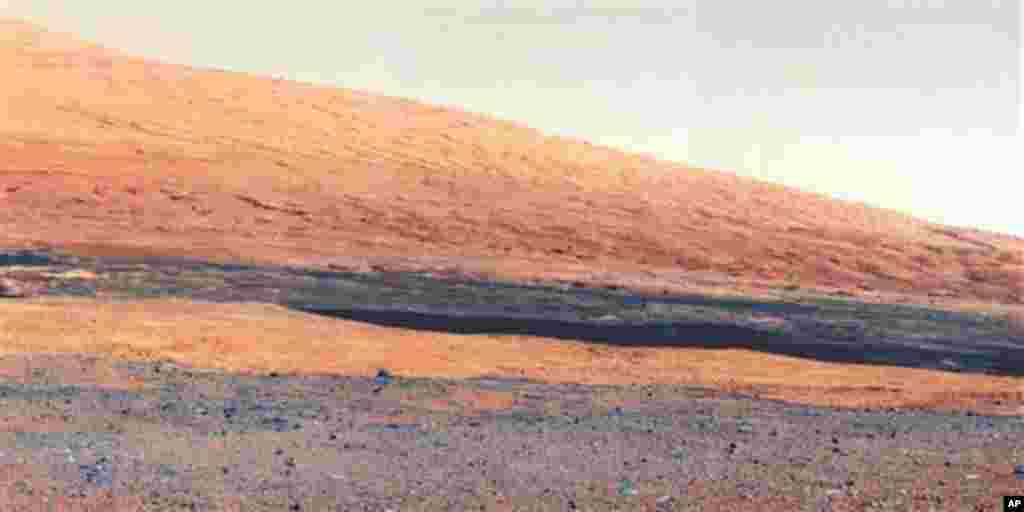
This photo, taken by the Curiosity rover, shows the layered geology of Mars.
Curiosity landed in the planet's Gale Crater last month to begin a two-year mission to determine if the Martian environment has ever been hospitable to life. It has traveled on the Martian surface about 109 meters since then, with its ultimate destination Mount Sharp, a mountain rising from the floor of the crater.
Curiosity Ready to Roll
1/10This view of the lower front and underbelly of Curiosity combines nine images taken on September 9, 2012.
The Mars rover Curiosity undergoes a final round of checks before making its first lengthy drive across the surface of the Red Planet.
Show moreShow less
2/10This image shows the Mars Hand Lens Imager on Curiosity, with the Martian landscape in the background.
The Mars rover Curiosity undergoes a final round of checks before making its first lengthy drive across the surface of the Red Planet.
Show moreShow less
3/10A penny that is used by Curiosity to calibrate its Mars Hand Lens Imager camera. The penny is covered in Martian dust, September 9, 2012.
The Mars rover Curiosity undergoes a final round of checks before making its first lengthy drive across the surface of the Red Planet.
Show moreShow less
4/10One of the five cylindrical blocks of sealed organic material for use in a control experiment if Curiosity's laboratory detectes organic compounds in Martian soil or powdered rock.
The Mars rover Curiosity undergoes a final round of checks before making its first lengthy drive across the surface of the Red Planet.
Show moreShow less
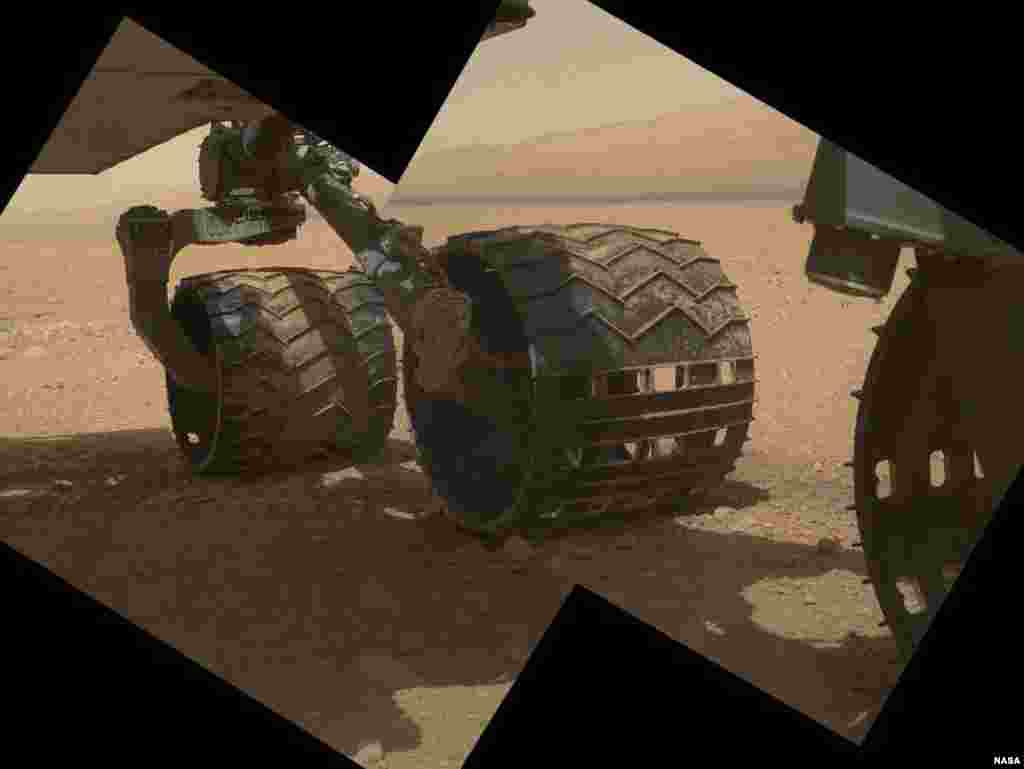
5/10This view of three of Curiosity's wheels combines two images taken on September 9, 2012.
The Mars rover Curiosity undergoes a final round of checks before making its first lengthy drive across the surface of the Red Planet.
Show moreShow less
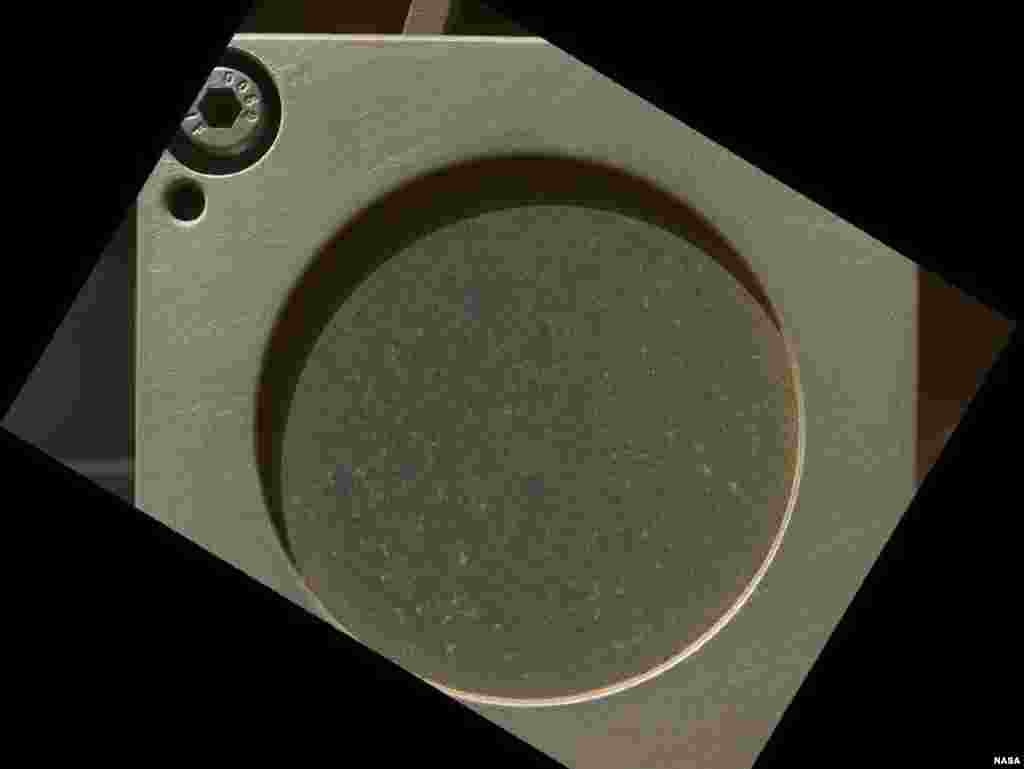
6/10A 3.5 centimeter circular opening reveals a piece of basaltic rock from New Mexico that serves as a calibration target for the Mars rover Curiosity’s Alpha Particle X-Ray Spectrometer, September 9, 2012.
The Mars rover Curiosity undergoes a final round of checks before making its first lengthy drive across the surface of the Red Planet.
Show moreShow less
7/10A photo taken by the the Curiosity rover's mast camera highlights the geology of Mount Sharp, a mountain inside Gale Crater on Mars, August 27, 2012.
The Mars rover Curiosity undergoes a final round of checks before making its first lengthy drive across the surface of the Red Planet.
Show moreShow less
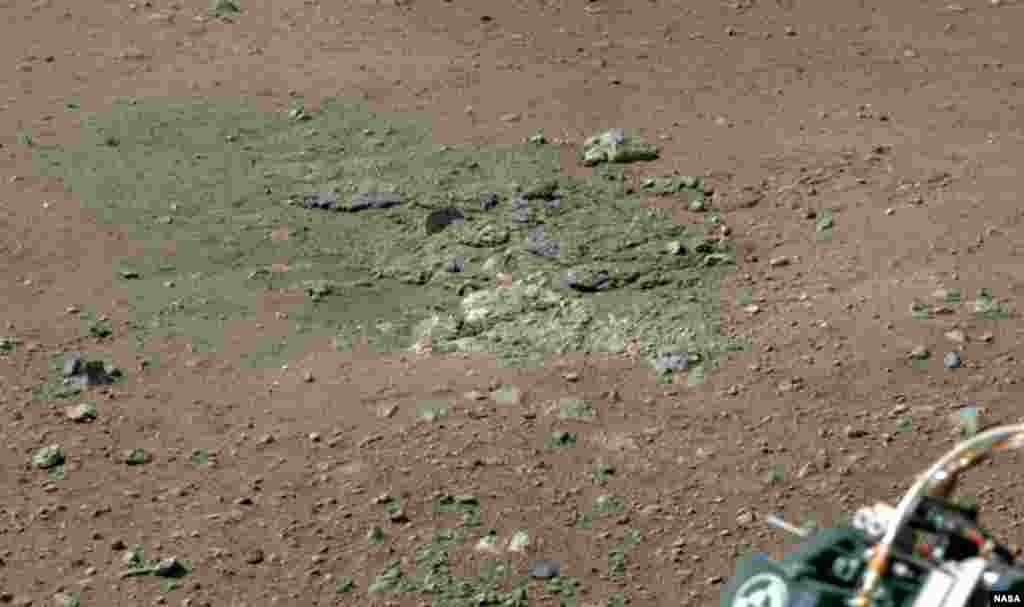
8/10This image shows bedrocks that were exposed after Curiosity's rocket stage fired its engines that blew away soil from the Martian surface.
The Mars rover Curiosity undergoes a final round of checks before making its first lengthy drive across the surface of the Red Planet.
Show moreShow less
9/10The Mars Curiosity rover's robotic arm takes aim at Mount Sharp in a mosaic that combines navigation-camera imagery. The shadow of the rover's camera mast is visible in the center foreground.
The Mars rover Curiosity undergoes a final round of checks before making its first lengthy drive across the surface of the Red Planet.
Show moreShow less
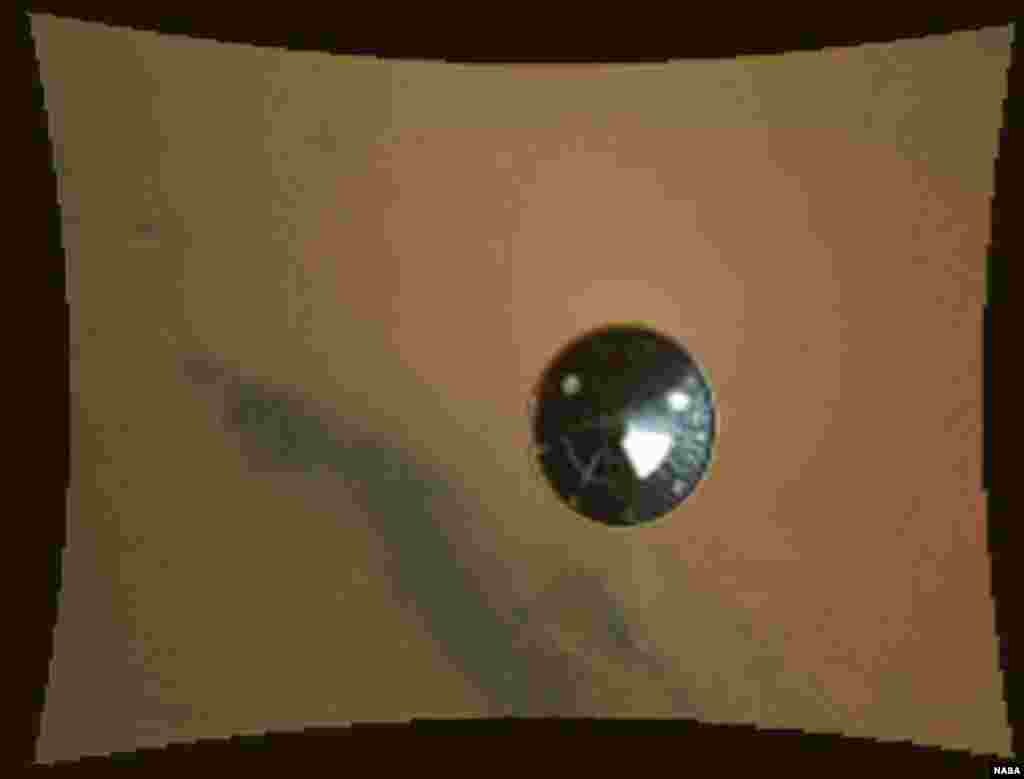
10/10In a stop motion frame, the heat shield falls away during Curiosity's descent to the surface of Mars.
The Mars rover Curiosity undergoes a final round of checks before making its first lengthy drive across the surface of the Red Planet.
The Voice of America provides news and information in more than 40 languages to an estimated weekly audience of over 326 million people. Stories with the VOA News byline are the work of multiple VOA journalists and may contain information from wire service reports.