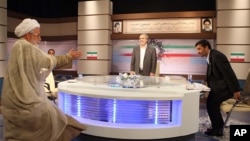
The United States Wednesday imposed sanctions on Iranian state-sponsored broadcasters as it continues to pressure Iran over the country's controversial nuclear program.
The U.S. Treasury Department took the action against the Islamic Republic of Iran Broadcasting and its director Ezzatollah Zarghami. The sanctions block their access to the U.S. financial system. The sanctions also cover the Iranian Cyber Police and two other entities: the Communications Regulatory Authority and Iran Electronics Industries.
A U.S. official said those named are involved in censorship, jamming, and using social media to hunt down political activists. The broadcasters are being targeted as a government censor of Iran's opposition movement.
Under U.S. law, the Treasury Department can target anyone in Iran it believes restricts the flow of information to the Iranian public.
The Treasury Department said that after Iran's 2009 presidential election and in the wake of the Arab Spring movements, jamming of foreign channels by Tehran, particularly on the British Broadcasting Corporation and Voice of America, increased in intensity.
The Obama administration says it will continue to increase pressure on Iran as long as Tehran continues to seek a nuclear weapon and violate human rights. Previously announced sanctions targeting Iranian oil revenues went into effect Wednesday.
Those sanctions restrict Iran's ability to use oil revenues held in foreign countries and prevent Tehran from transferring those funds to Iran, effectively "locking up" the revenues abroad.
A U.S. official said the move is aimed at making it harder for Iran to access its dwindling oil revenues.
The action announced Wednesday is the latest in a series of sanctions against Iran. Some Western nations, including the U.S., believe Iran is secretly trying to develop nuclear weapons. Iran says its nuclear program is peaceful.
The United Nations Security Council has demanded in multiple resolutions that Iran suspend all enrichment-related activities and allow U.N. inspectors to access its nuclear facilities.
The U.S. Treasury Department took the action against the Islamic Republic of Iran Broadcasting and its director Ezzatollah Zarghami. The sanctions block their access to the U.S. financial system. The sanctions also cover the Iranian Cyber Police and two other entities: the Communications Regulatory Authority and Iran Electronics Industries.
A U.S. official said those named are involved in censorship, jamming, and using social media to hunt down political activists. The broadcasters are being targeted as a government censor of Iran's opposition movement.
Under U.S. law, the Treasury Department can target anyone in Iran it believes restricts the flow of information to the Iranian public.
The Treasury Department said that after Iran's 2009 presidential election and in the wake of the Arab Spring movements, jamming of foreign channels by Tehran, particularly on the British Broadcasting Corporation and Voice of America, increased in intensity.
The Obama administration says it will continue to increase pressure on Iran as long as Tehran continues to seek a nuclear weapon and violate human rights. Previously announced sanctions targeting Iranian oil revenues went into effect Wednesday.
Those sanctions restrict Iran's ability to use oil revenues held in foreign countries and prevent Tehran from transferring those funds to Iran, effectively "locking up" the revenues abroad.
A U.S. official said the move is aimed at making it harder for Iran to access its dwindling oil revenues.
The action announced Wednesday is the latest in a series of sanctions against Iran. Some Western nations, including the U.S., believe Iran is secretly trying to develop nuclear weapons. Iran says its nuclear program is peaceful.
The United Nations Security Council has demanded in multiple resolutions that Iran suspend all enrichment-related activities and allow U.N. inspectors to access its nuclear facilities.