



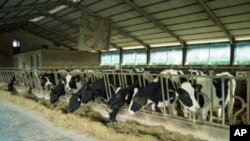
Doctors around the world are finding it harder and harder to cure some infections. Bacteria are developing resistance to the drugs used to kill them. Health experts point to doctors over-prescribing antibiotics, and patients misusing them, as part of the problem. Many also say the meat industry is contributing by feeding animals antibiotics to help them grow better.
In the late 1980s, doctors in Europe were finding that vancomycin, one of the most potent antibiotics in the medicine cabinet, was not working as well as it used to. Certain bacteria had developed resistance to it, even though doctors were not using very much of this drug of last resort.
But a drug similar to vancomycin was widely used in livestock at the time.
"They used, hundreds of tons of this drug in animal husbandry in Europe, while we only used kilograms of vancomycin," says Niels Frimodt-Moller, head of antibiotic research at the Danish State Serum Institute.
Steady diet of antibiotics
Animals in many large livestock-raising operations around the world get a small but steady dose of certain antibiotics in their feed. It keeps the animals healthy, and that promotes their growth.
But when bacteria are steadily exposed to an antibiotic, they will eventually develop resistance. Frimodt-Moller said a number of studies linked vancomycin-resistant bacteria in people to use of the animal drug as a growth promoter.
"It could be shown that [the bacteria were] transmitted by food to humans in hospitals, and in non-hospitalized humans, and we found the same types in infections," Frimodt-Moller says, "So there was good reason for banning the growth promoters."
Banned in Denmark
Denmark banned the drug's use as a growth promoter in 1996, and levels of resistant bacteria found in animals and meat declined. The European Union has since banned the use of several other antibiotics as growth promoters.
But there is disagreement over how effective Denmark's ban has been.
Over-use in animal husbandry is not the only source of antibiotic resistance. Health experts point to doctors over-prescribing antibiotics, and patients misusing them, as another part of the problem.
And the growth-promoter ban does not appear to have made much difference in the overall rates of resistant infections in people, says Rich Carnevale with the U.S. industry-sponsored Animal Health Institute. He says Denmark may have over-reacted.
He says, "They saw resistance. They said, 'Well, it could be due to use of drugs in animals. And certainly some of that resistance was. But the real question is, was it harming humans? And to this day, they have not been able to really conclude that it's actually harming humans."
More sick animals
Meanwhile, Carnevale adds, animals get sick more often than they did before the ban, which means Danish farmers have to use more antibiotics to treat them than they used to.
"They actually increased their uses of antibiotics quite a bit," he says. "And I don't think they got, in all cases, the change in resistance they were looking for."
A 2003 report from the World Health Organization supports Denmark's decision to ban antibiotic growth promoters. It says reducing antibiotic resistance overall is a good thing. Bacteria that become resistant can spread that trait to other bacteria. But the report notes that more data is needed about the impact on people. While researchers continue to study the issue, the debate goes on.