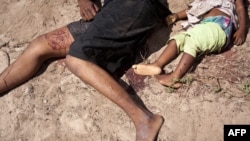
The body of a woman and her daughter lie on the ground following an overnight attack on Jon the village of Kibusu in the Tana river Delta region in Kenya, January 10, 2013.
At least 11 people have been killed in a fresh attack in Kenya's Tana River region, where months of tribal unrest has resulted in intermittent fighting.
Several other people were injured and at least 15 houses were burned in Thursday's attack on the Pokomo community in Kibisu. A local reporter says the attackers used firearms, spears, and bows and arrows, and that two of the victims were children shot on their way to school. Another child was hanged from a tree.
The attack comes a day after Pokomo raiders attacked an Orma community village with guns and machetes. Nine people were killed, including at least six Orma.
Tana River County Commissioner Joseph Rotich told says the motive for the attacks is not yet clear.
"We are not certain of exactly what the attacks are on, they could be revenge and counter-revenge, but we also suspect political motives could be behind," he said.
Attacks in Kenya's Tana River Region
1/5Women embrace in grief after an attack in Kibusu village in the Tana Delta region of the Kenya, January 10, 2013.
Eleven people were killed in a fresh attack in the region, where months of tribal unrest has resulted in intermittent fighting.
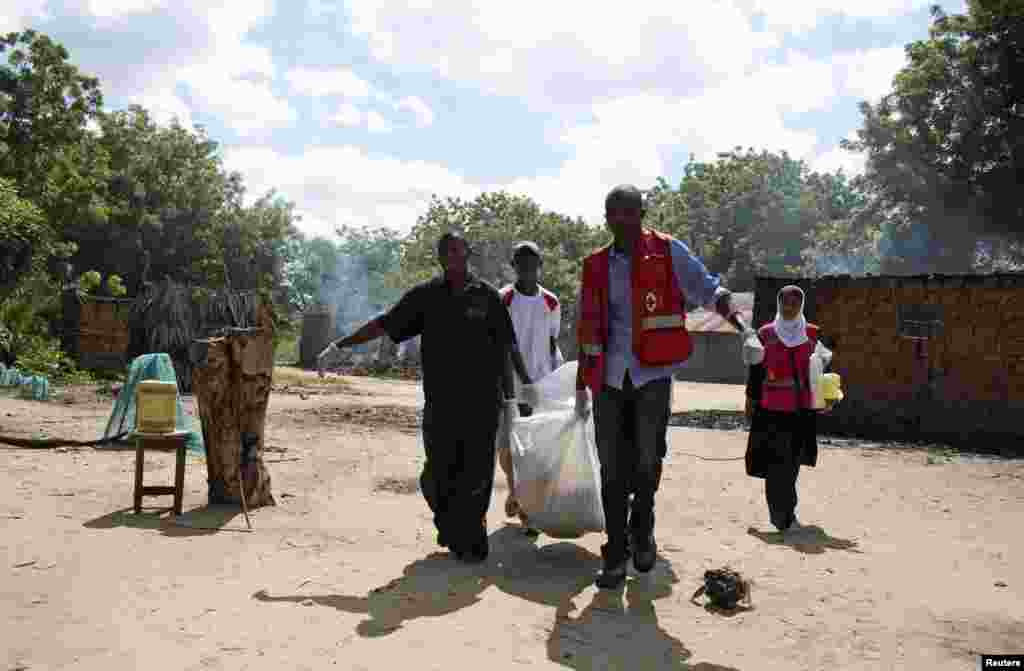
2/5Members of the Kenyan Red Cross carry the body of a man killed during an attack in Kibusu village in the Tana Delta region of Kenya, January 10, 2013.
Eleven people were killed in a fresh attack in the region, where months of tribal unrest has resulted in intermittent fighting.
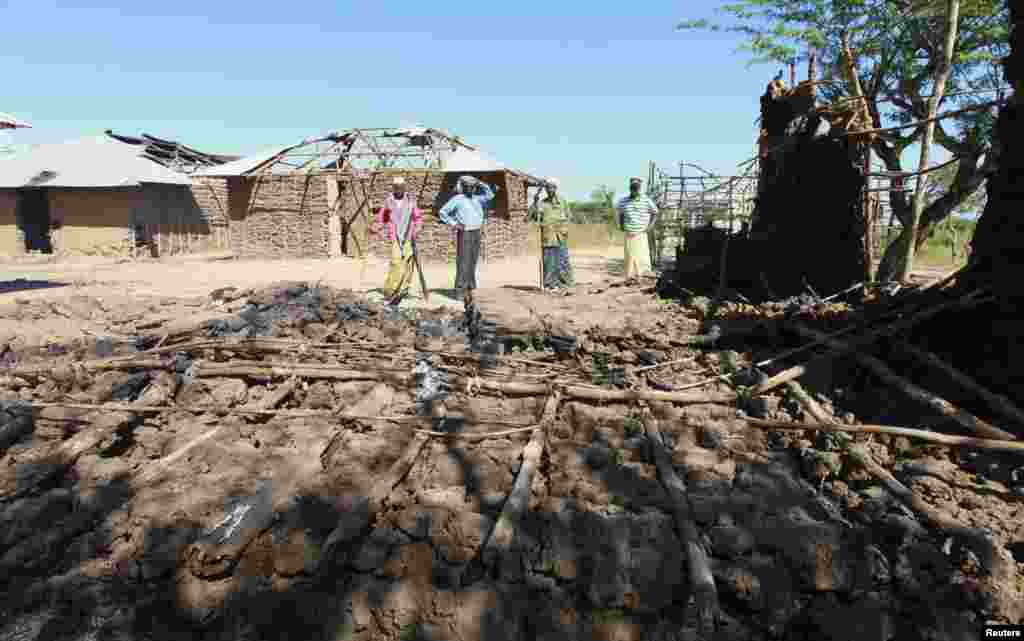
3/5Residents look at a house that was destroyed when their village was attacked, Nduru village in the Tana Delta region of Kenya, January 9, 2013.
Eleven people were killed in a fresh attack in the region, where months of tribal unrest has resulted in intermittent fighting.
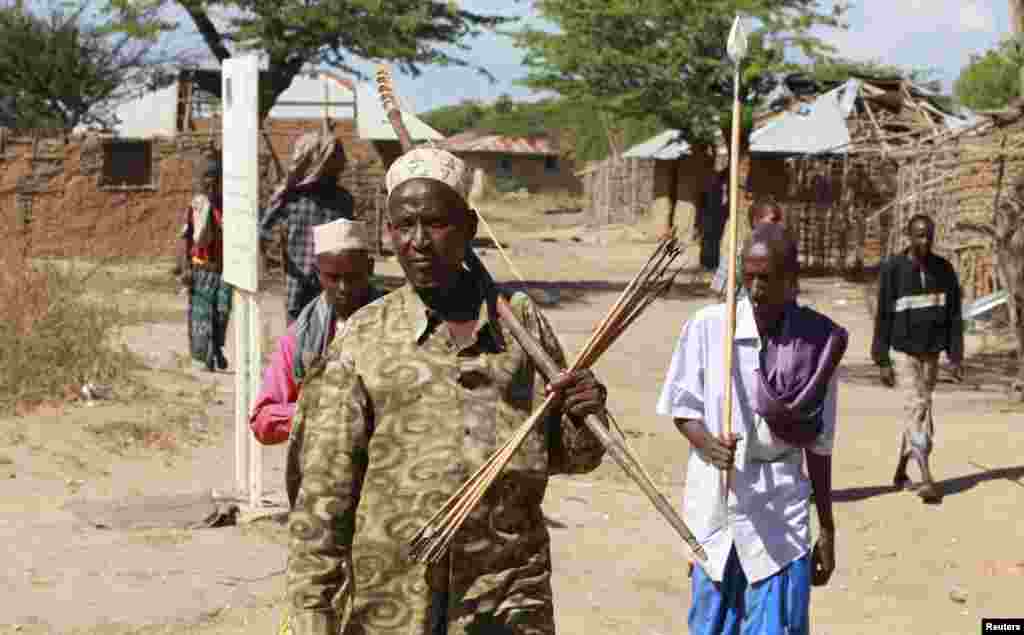
4/5Residents hold arms as they prepare for the burial of their kinsmen who were killed in Nduru village, Tana Delta region of Kenya, January 9, 2013.
Eleven people were killed in a fresh attack in the region, where months of tribal unrest has resulted in intermittent fighting.
5/5Residents arrive for the burial of kinsmen who were killed when their village was attacked in Nduru in the Tana Delta region of Kenya, January 9, 2013.
Eleven people were killed in a fresh attack in the region, where months of tribal unrest has resulted in intermittent fighting.
Previous slide
Next slide
Clashes between the groups have killed more than 140 people since August.
The violence has raised fears that local politicians have deepened the rift, in hopes of benefiting in Kenya's March 4 elections.
The Pokomo are farmers, while the Orma raise cattle. For years they have been at odds over land and water rights.
Rotich says a Judicial Commission of Inquiry, which began investigating the violence in October, may yield ways to defuse the tensions.
"We have a judicial commission which is still writing its report, so probably from that report probably they will provide recommendations on how to better improve the situation," said Rotich.
Kenya was gripped by weeks of riots and ethnic fighting after the disputed 2007 presidential poll. The violence in early 2008 killed more than 1,100 people.
The Voice of America provides news and information in more than 40 languages to an estimated weekly audience of over 326 million people. Stories with the VOA News byline are the work of multiple VOA journalists and may contain information from wire service reports.