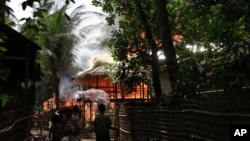
People look on a house engulfed in flames in Sittwe, Burma, June 11, 2012.
BANGKOK - Northwest Burma’s Rakhine state remains tense after President Thein Sein dispatched troops to try to end religious and ethnic violence. The riots began after 10 ethnic-Rohingya Muslims were mobbed and murdered by ethnic Rakhines, in retaliation for the gang-rape of a Rakhine girl.
Local witnesses in villages in Burma’s western Rakhine state said fires continued to burn Monday, even after President Thein Sein declared a state of emergency and sent in troops to bring the riots under control.
The clashes that began on June 8 are the most severe in a string of violent attacks between ethnic Rakhine Buddhists, the state’s largest minority group, and ethnic Rohingya Muslims, who are denied citizenship in both Burma and Bangladesh.
“In the morning after leaving the army from the Maungdaw today morning, the police and the riot police they and the Rakhine people are trying to burn to loot and to kill the Rohingya people," said Tin Soe is the editor of Kaladan Press Network, a Rohingya news agency, which has been reporting on the riots. "Ethnic problem or religious problem, we don’t know which one we can say.”
Both minority groups in the region claim to be under attack, but the Rohingya have a history of being a target of racism. Although many Rohingya communities have lived in Burma for decades, the government refuses to grant them citizenship - a position that has broad support among other Burmese nationals.
Even democracy leader and former political prisoner Ko Ko Gyi recently said he believed "so-called Rohingya" not to be one of the recognized Burmese ethnic groups.
Troops Patrol Western Burma as Sectarian Strife Continues
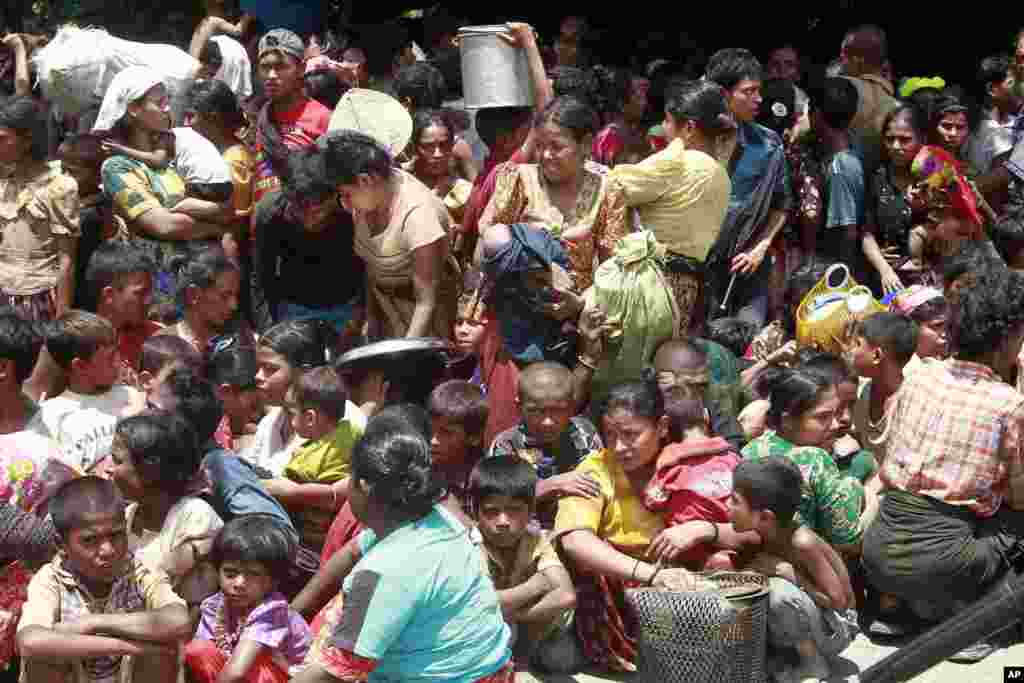
1/13Muslims women and children from villages gather before being relocated to secure areas in Sittwe, capital of Rakhine state in western Burma, where sectarian violence is ongoing, June 12, 2012.
Armed security forces preside over an uneasy calm in western Burma, as international pressure mounts for an end to a week of deadly violence between Muslims and Buddhists.
Show moreShow less
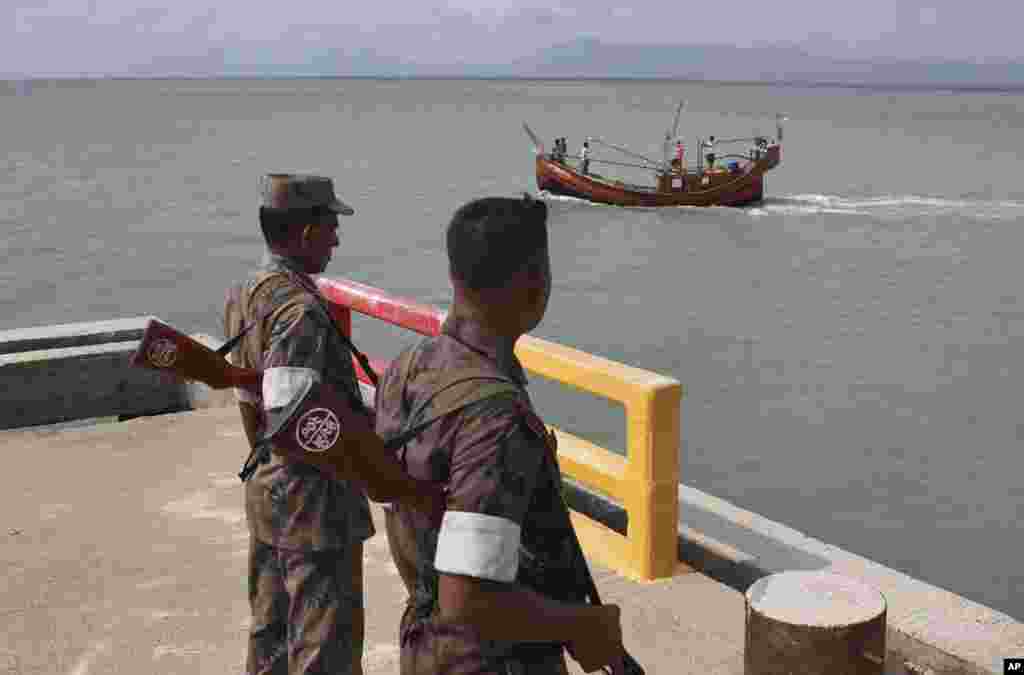
2/13Bangladeshi Border Guard soldiers keep watch at a wharf in Taknaf, Bangladesh, June 12, 2012.
Armed security forces preside over an uneasy calm in western Burma, as international pressure mounts for an end to a week of deadly violence between Muslims and Buddhists.
Show moreShow less
3/132013年4月3日韓國的車輛被拒絕進入朝鮮開城工業區之後,掉頭回去。
Armed security forces preside over an uneasy calm in western Burma, as international pressure mounts for an end to a week of deadly violence between Muslims and Buddhists.
Armed security forces preside over an uneasy calm in western Burma, as international pressure mounts for an end to a week of deadly violence between Muslims and Buddhists.
Show moreShow less
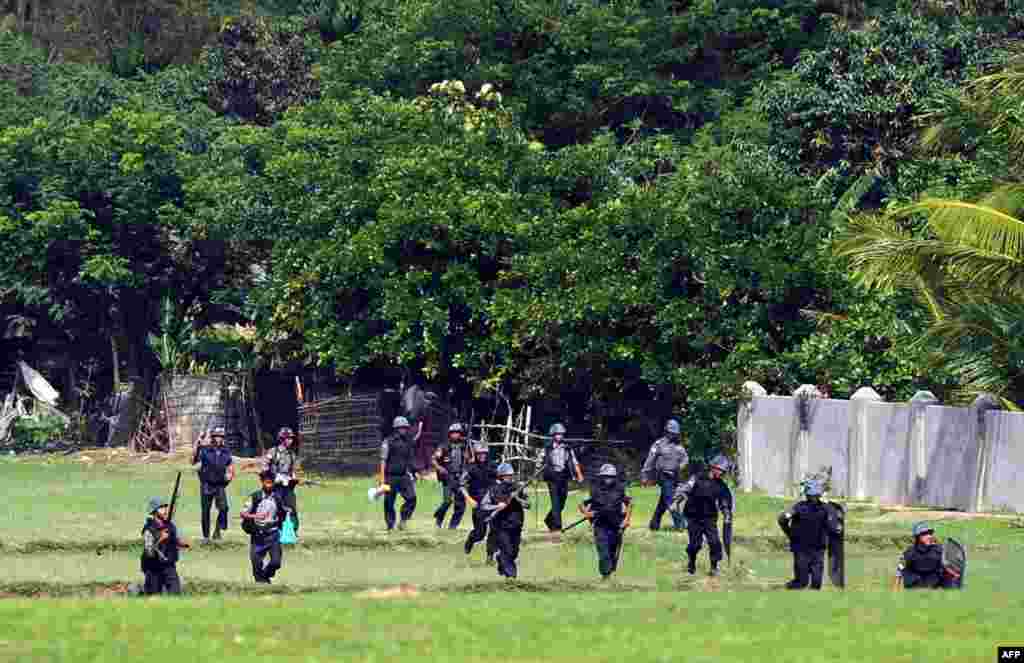
5/13Security forces try to restore order in Rakhine state, Burma, after a wave of deadly religious violence, as the United Nations evacuated foreign workers, June 11, 2012.
Armed security forces preside over an uneasy calm in western Burma, as international pressure mounts for an end to a week of deadly violence between Muslims and Buddhists.
Show moreShow less
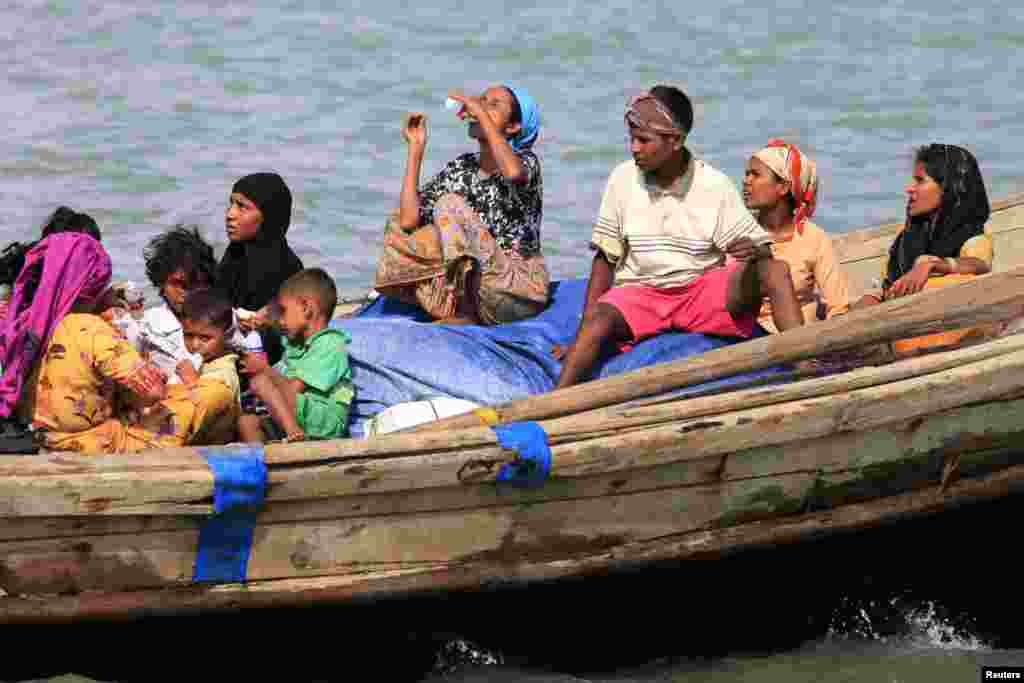
6/13Muslim Rohingya people on a boat cross the river Naf, from Burma into Teknaf, Bangladesh, June 11, 2012.
Armed security forces preside over an uneasy calm in western Burma, as international pressure mounts for an end to a week of deadly violence between Muslims and Buddhists.
Show moreShow less
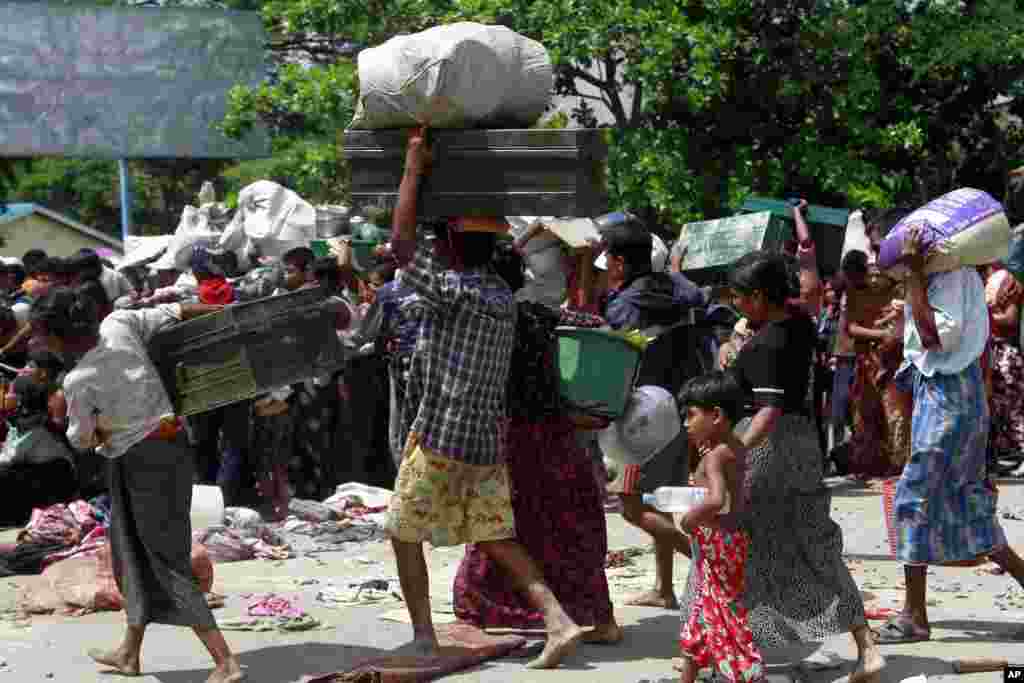
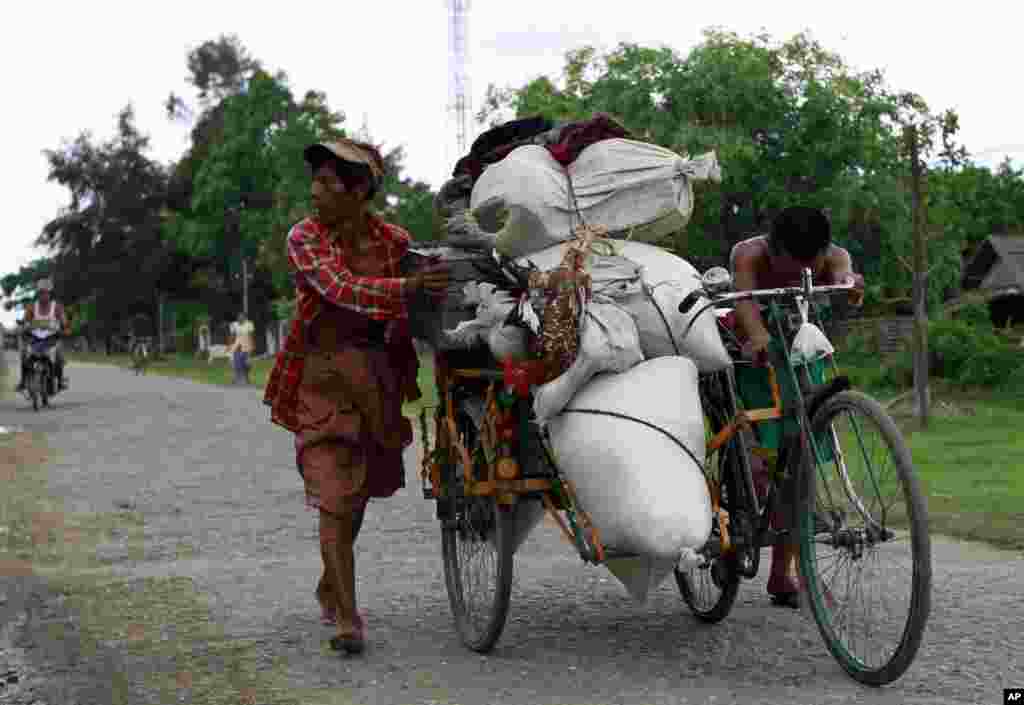
7/13Local residents push a trishaw vehicle carrying their belongings in a village in Sittwe, where sectarian violence is impacting on the local population, June 11, 2012.
Armed security forces preside over an uneasy calm in western Burma, as international pressure mounts for an end to a week of deadly violence between Muslims and Buddhists.
Show moreShow less
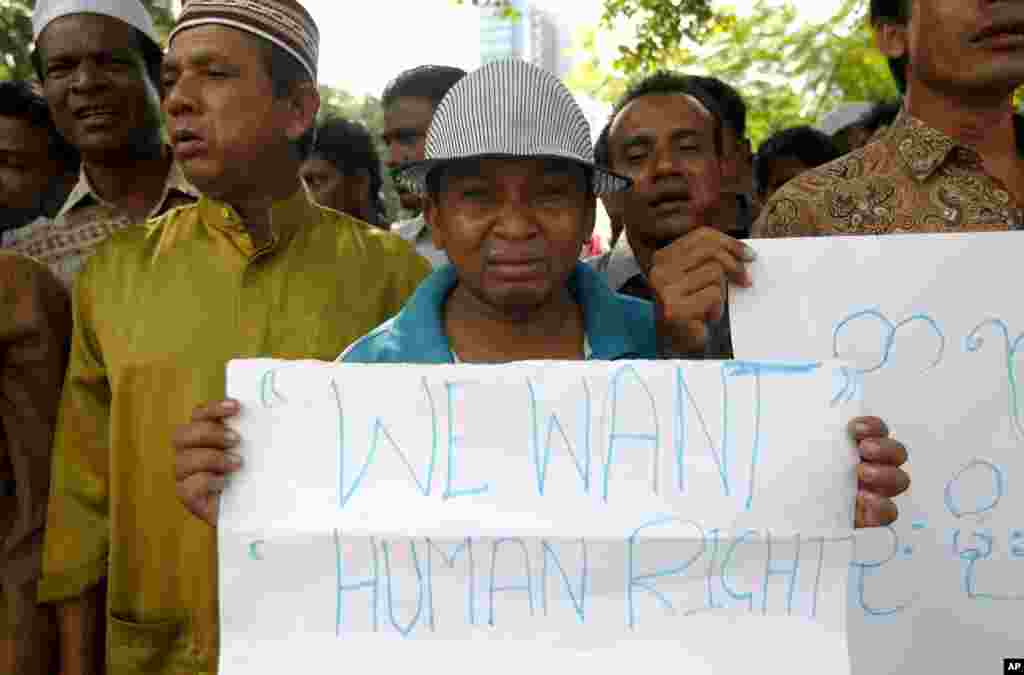
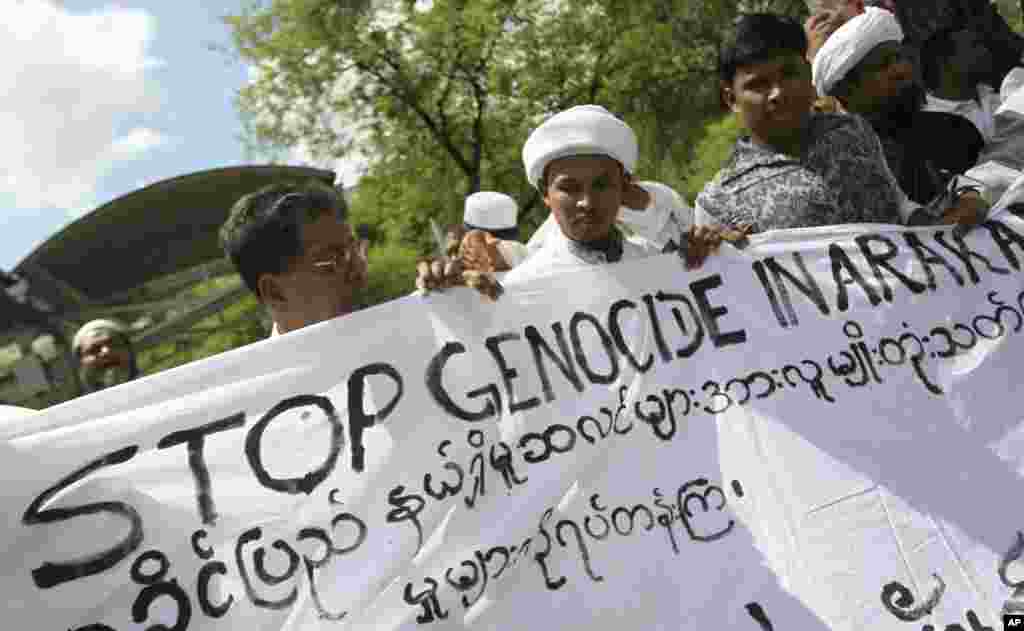
8/13Rohingya protesters gather in front of a U.N. regional office in Bangkok, Thailand, to call for an end to the ongoing unrest and violence in Burma’s Rakhine State, June 11, 2012.
Armed security forces preside over an uneasy calm in western Burma, as international pressure mounts for an end to a week of deadly violence between Muslims and Buddhists.
Show moreShow less
9/13Men carry sacks filled with shellfish on a beach at Diani Beach on the Indian Ocean coast of Kenya, some 30 km (19 miles) south of Mombasa.
Armed security forces preside over an uneasy calm in western Burma, as international pressure mounts for an end to a week of deadly violence between Muslims and Buddhists.
Show moreShow less
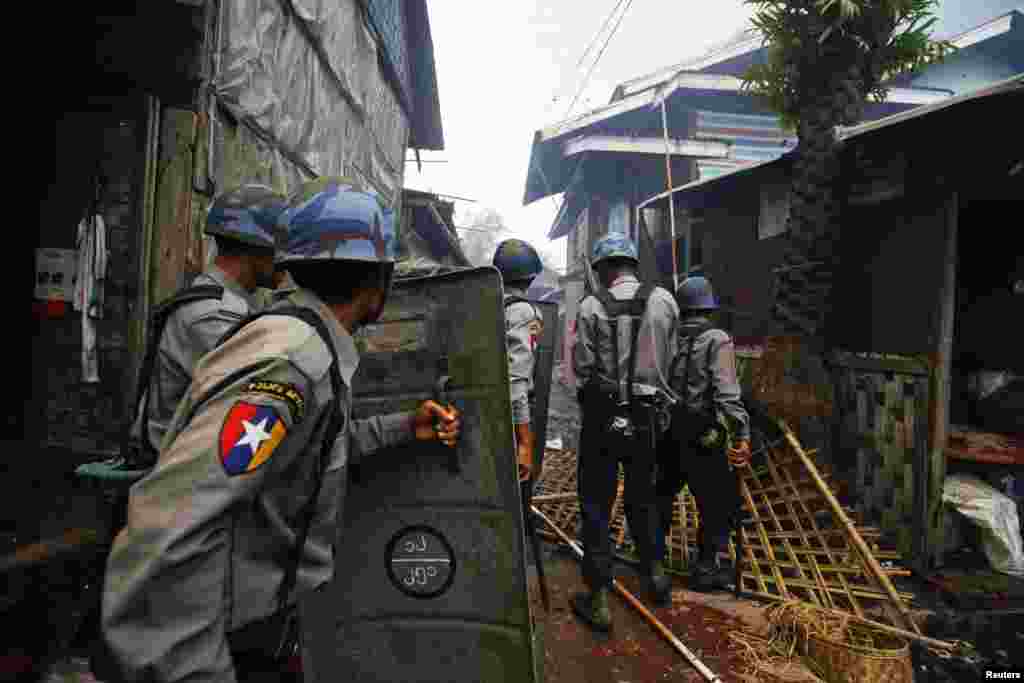
10/13Policemen move towards burning houses during fighting between Buddhist Rakhine and Muslim Rohingya communities in Sittwe, June 10, 2012.
Armed security forces preside over an uneasy calm in western Burma, as international pressure mounts for an end to a week of deadly violence between Muslims and Buddhists.
Show moreShow less
11/13Սերժ Սարգսյանի երդմնակալության օրը, Երևան, 2013թ. ապրիլի 9
Armed security forces preside over an uneasy calm in western Burma, as international pressure mounts for an end to a week of deadly violence between Muslims and Buddhists.
Show moreShow less
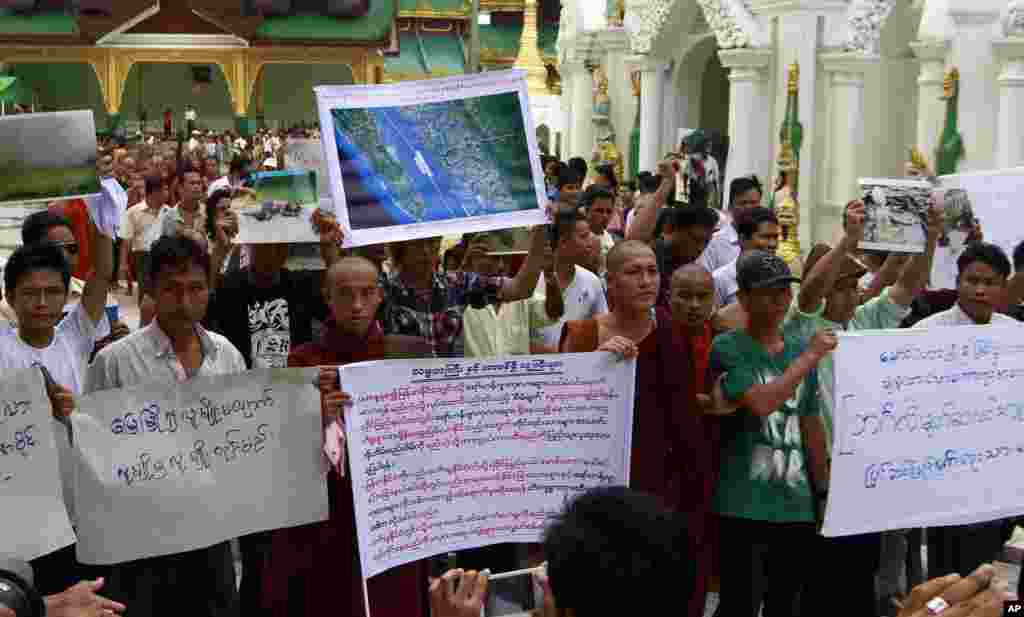
12/13Buddhist monks and ethnic Rakhine people hold placards at Shwedagon pagoda in Rangoon, Burma, June 10, 2012.
Armed security forces preside over an uneasy calm in western Burma, as international pressure mounts for an end to a week of deadly violence between Muslims and Buddhists.
Show moreShow less
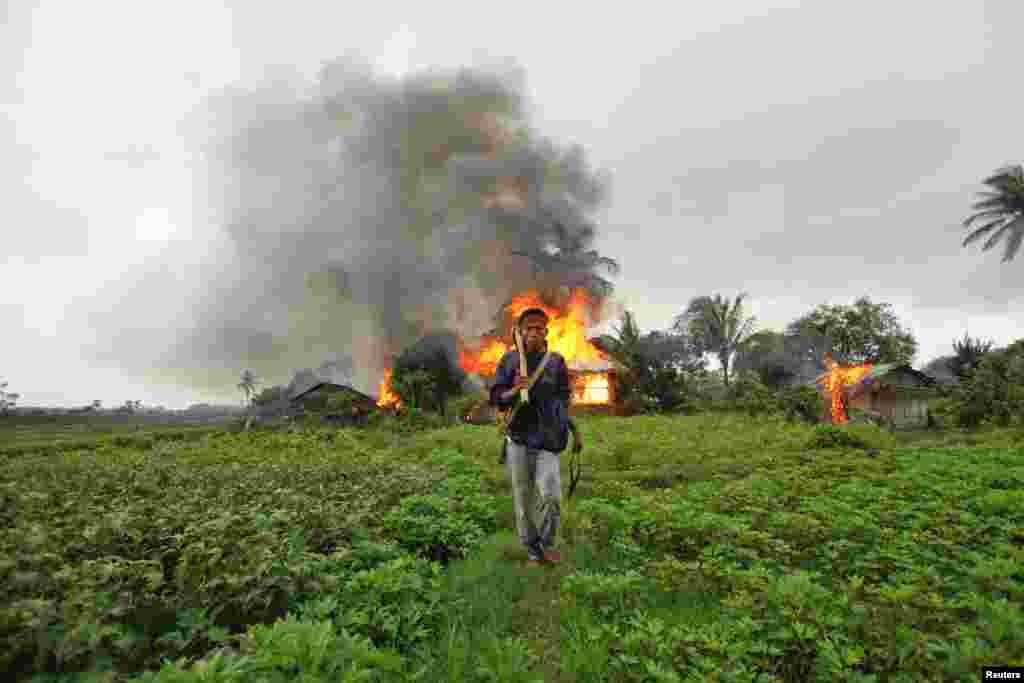
13/13An ethnic Rakhine man holds homemade weapons as he walks in front of houses that were burnt during fighting between Buddhist Rakhine and Muslim Rohingya communities in Sittwe, June 10, 2012.
Armed security forces preside over an uneasy calm in western Burma, as international pressure mounts for an end to a week of deadly violence between Muslims and Buddhists.
Show moreShow less
Previous slide
Next slide
Nicholas Farelly, Burma analyst of Australia National University, says the Rohingya’s statelessness between Burma and Bangladesh is partially to blame for the conflict's escalation.
“The Rohingya, they fit somewhat awkwardly in that borderland between the two different political systems, they have nowhere to call home and, as a result from time to time, there are these episodes of conflict," said Farelly. "We have seen one of those very recently and it has in this case taken the form of Buddhist and Muslim mobs of varying sizes coming to blows.”
On Sunday, Thein Sein’s national address referenced what he called Burma’s “checkered” history of peaceful co-existence of among the country’s diverse ethnic groups. He condemned racial and religiously-based violence, which he said could jeopardize the country’s democratic reforms.
In Bangkok Monday, Maung Kyaw Nu of the Burmese Rohingya Association of Thailand asked the United Nations to intervene.
"Today, I am coming here to express, to hand over the letter to Mr. Ban Ki-moon, secretary general of the United Nations," said Maung Kyaw Nu. "I would like his intervention, U.N. intervention to save my people who are killed. Genocide is there. I'm coming here to ask his help, intervention as well as the global civil society's help."
The U.S. embassy issued a statement urging all parties to stop violent attacks and the government to hold a transparent investigation.