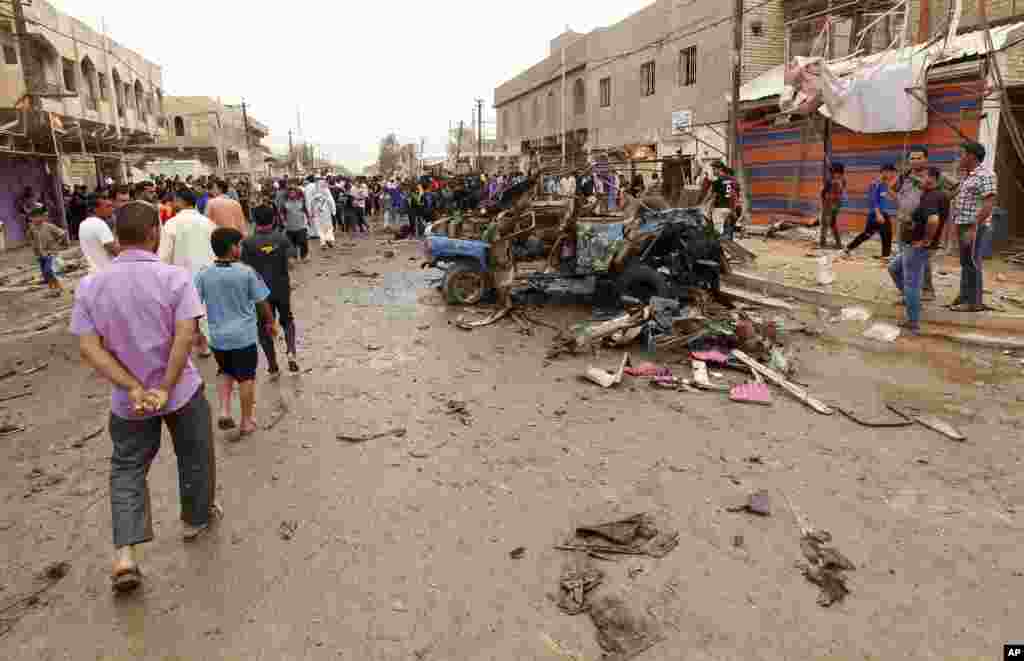
Residents stand amid rubble at blast scene in Tuz Khormato town in northern Iraq, May 21, 2013.
New attacks in three Iraqi cities have killed at least eight people and wounded dozens more, a day after more than 70 died in assaults on Shi'ite Muslims, stoking fears of a sectarian war with minority Sunnis.
Officials say a suicide bombing followed by clashes between militants and Iraqi troops left three soldiers dead Tuesday in Tarmiyah, north of the capital, Baghdad.
Farther north, two car bombs exploded in Tuz Khormato, killing three and wounding 38, while car bombs in Kirkuk killed at least two people. Both cities are in an area that Iraq's Kurds want to incorporate into their autonomous region, a move the central government opposes.
More Attacks Across Iraq
1/7Onlookers gather outside Zain al-Abideen mosque, a Shi'ite place of worship, near where a suicide bomb attack occurred, Hilla, Iraq, May 21, 2013.
More attacks have rocked Iraq, which is experiencing its worst sectarian violence since U.S. troops withdrew in December 2011.
Show moreShow less
2/7An Iraqi woman passes by the scene of a car bomb attack in Kamaliyah, a predominantly Shi'ite area of eastern Baghdad, May 20, 2013.
More attacks have rocked Iraq, which is experiencing its worst sectarian violence since U.S. troops withdrew in December 2011.
Show moreShow less
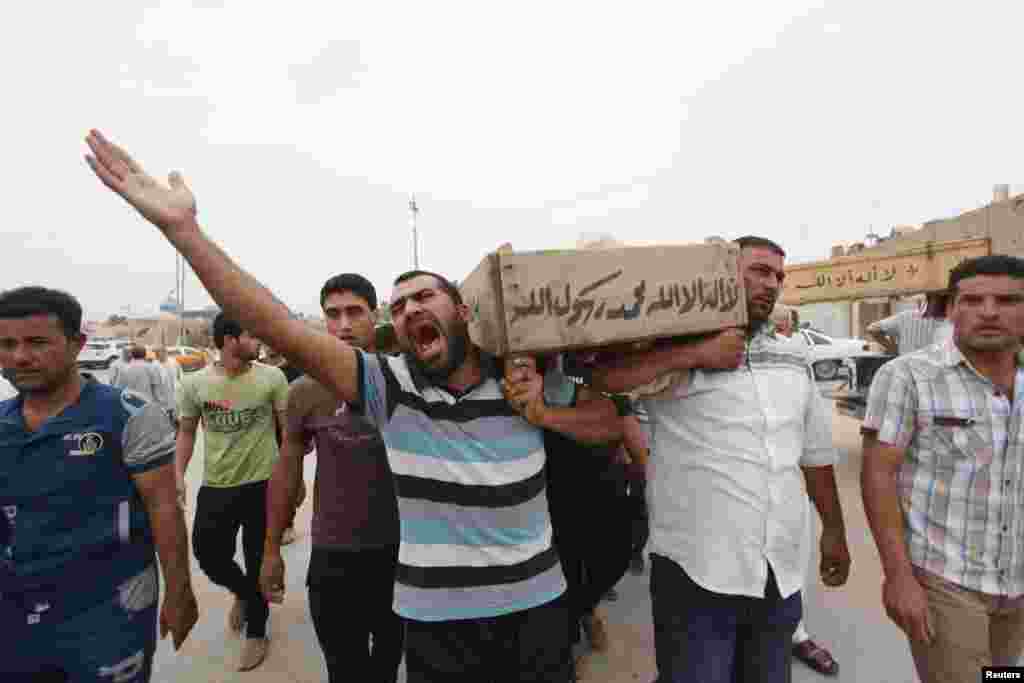
3/7Mourners stand beside coffins of four members of a family killed in Basra bomb attacks, during a funeral in Najaf, Iraq, May 20, 2013.
More attacks have rocked Iraq, which is experiencing its worst sectarian violence since U.S. troops withdrew in December 2011.
Show moreShow less
4/7Relatives carry the coffin of an Iraqi police officer killed by militants, Najaf, Iraq, May 20, 2013.
More attacks have rocked Iraq, which is experiencing its worst sectarian violence since U.S. troops withdrew in December 2011.
Show moreShow less
5/7Residents gather at the site of a bomb attack in Basra, Iraq, May 20, 2013.
More attacks have rocked Iraq, which is experiencing its worst sectarian violence since U.S. troops withdrew in December 2011.
Show moreShow less
6/7A wrecked truck is removed from the site of a car bomb attack in front of a crowded popular restaurant in Basra, Iraq, May 20, 2013.
More attacks have rocked Iraq, which is experiencing its worst sectarian violence since U.S. troops withdrew in December 2011.
Show moreShow less
7/7People look at the scene of a car bomb attack in a predominantly Shi'ite area of eastern Baghdad, May 20, 2013.
More attacks have rocked Iraq, which is experiencing its worst sectarian violence since U.S. troops withdrew in December 2011.
Show moreShow less
Previous slide
Next slide
Iraq is experiencing its worst sectarian violence since U.S. troops withdrew from the country in December 2011.
Monday's wave of car bombings and suicide attacks against Shi'ite Muslims killed at least 76 people.
The attacks increased the number of Iraqis killed in apparent sectarian violence over the past week to more than 200, including 70 who died Friday in a series of bombings targeting Sunnis.
In Washington, White House spokesman Jay Carney condemned all the attacks in Iraq over the past several days, saying U.S. officials have been in contact with "a wide range of Iraqi leaders ... to help resolve ongoing political and sectarian tensions."
The unrest has raised fears of a return to the level of sectarian fighting that left tens of thousands dead in 2006 and 2007.
Violence has fallen from that peak, but the United Nations said 712 people were killed in April, making it the deadliest month in Iraq since June 2008.
The Voice of America provides news and information in more than 40 languages to an estimated weekly audience of over 326 million people. Stories with the VOA News byline are the work of multiple VOA journalists and may contain information from wire service reports.