


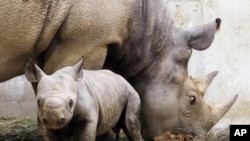
The International Union for the Conservation of Nature is officially declaring the western black rhino of Africa extinct. In its latest assessment of the situation, the IUCN says two other sub-species of rhinoceros also are close to extinction.
Despite the action of conservation programs, the International Union for the Conservation of Nature warns many sub-species of rhinos may soon be a thing of the past. The deputy director of IUCN’s Global Species program, Jean-Christophe Vie, tells VOA poaching is the main threat to the survival of the rhinoceros.
“People just shooting them to take their horn. So, that is it," Vie said. "That is what also killed the latest rhino in Vietnam, just poaching. People just want to make money out of the horn. So, by doing that, they undermine all the potential of rhinos for the development of economic opportunity in tourism. Rhinos in the world are really attractive animals. So, in a way, it is undermining the potential of the countries to develop responsible tourism and generate income.”
The report says a sub-species of the white rhino in central Africa, the northern white rhino, is currently teetering on the brink of extinction and has been listed as "possibly extinct in the wild."
It says the Javan rhino also is making its last stand. It says the sub-species is probably extinct, following the poaching of what is thought to be the last animal in Vietnam in 2010.
But, Jean-Christophe Vie says not everything is bad news. He says there still are two or three rhino species that are considered conservation successes. He says the black and white rhinos are doing much better in southern and eastern Africa.
“The main problem is the countries in southern and eastern Africa are facing lots of poaching," he said. "It is just organized crime. I think this year, the poachers have killed more than 300 already, including national parks. It is really criminal doing that. And, this is to sell the horn, mostly to Asia and, I know, it is mostly Vietnam.
Vie says millions of dollars are spent by people who buy the horn, falsely believing it can cure cancer. Besides the rhino, he says there are more than 20,000 other species, including plants, fish, invertebrates, mammals and birds that are threatened with extinction. He notes about a quarter of all mammals are at risk of being wiped out.
He says a lack of political support and willpower for conservation efforts is hastening the demise of many of these species.