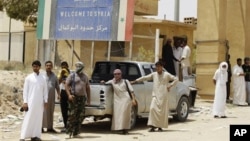
Armed Syrian rebels stand guard as refugees flee Syria at border crossing near Qaim, Iraq, July 25, 2012.
Syrian government warplanes, tanks and heavy artillery continue to pound opposition forces that are essentially fighting back with light weapons. The disparity in forces has prompted a debate whether the United States and other western countries should provide weapons to the insurgents.
The Syrian army, estimated to have 200,000 to 250,000 troops, is by regional standards a highly capable military force.
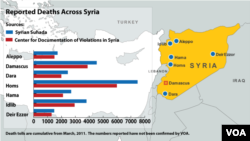
Deaths Across Syria, map dated Aug 16, 2012
For decades, first the Soviet Union and now Russia delivered weapons to the Syrian army. These included thousands of tanks, helicopters, jet fighters, heavy artillery, armored personnel carriers and ammunition.
Syrian opposition armed with light weapons
John Pike, head of Globalsecurity.com, an Internet research firm, says facing a well-equipped Syrian army are insurgents essentially armed with assault rifles, machine guns and rocket-propelled anti-tank rockets.
30,000 air force personnel
5,000 navy personnel
300 fighter-ground attack planes
48 intelligence/surveillance planes.
22 heavy transport planes
36 attack helicopters
100 reconnaissance/transport helicopters
“What they do not have is helicopters,” said Pike. “What they do not have is tanks. And that’s basically what the Syrian government is relying on to suppress this insurrection: this military imbalance that the rebels have light weapons and the government has heavy weapons.”
Analysts say much of the weaponry used by the insurgents has either been captured from military depots, taken from soldiers of the Syrian army who have defected, or purchased on the black market. Reports also indicate that countries like Qatar and Saudi Arabia are either providing funds to the rebels to purchase weapons or are directly supplying them with arms.
Calls to arm or intervene
The latest images from Syria
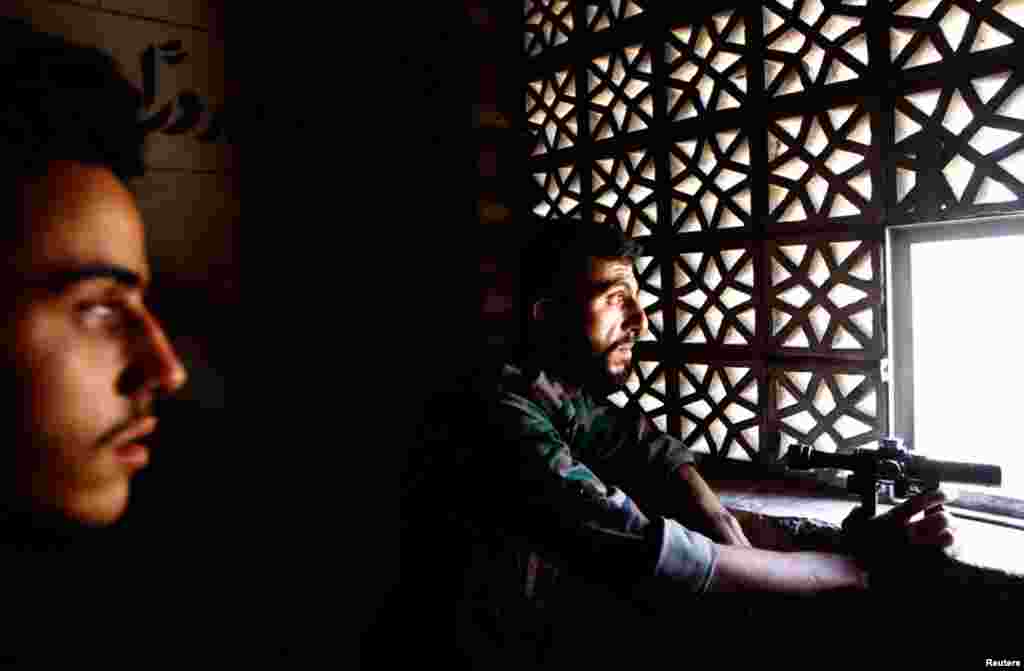
1/15A Free Syrian Army fighter observes the area during clashes in Aleppo, August 16, 2012.
Show moreShow less
2/15A Free Syrian Army fighter carries the body of a fellow fighter in Aleppo, August 16, 2012.
Show moreShow less
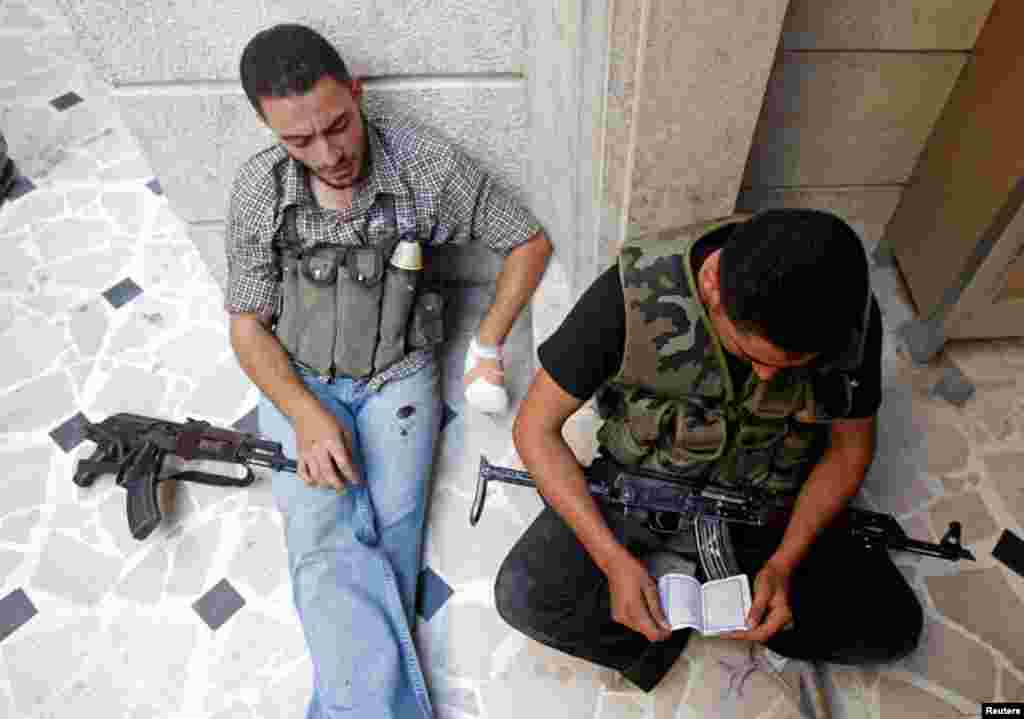
3/15A Free Syrian Army fighter reads the Quran before clashes in Aleppo, August 16, 2012.
Show moreShow less
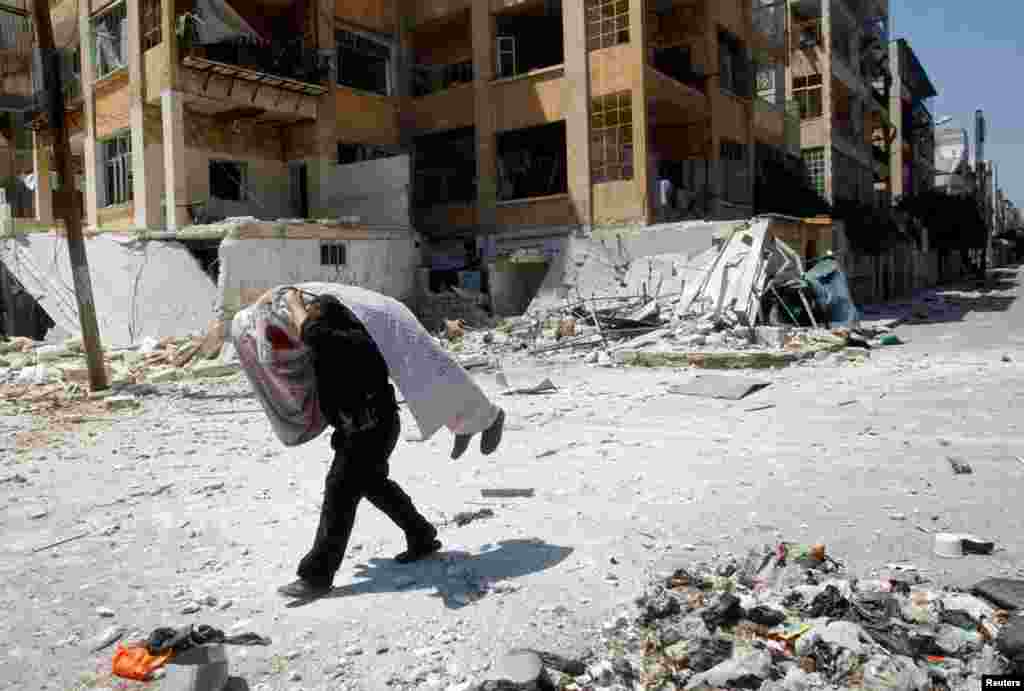
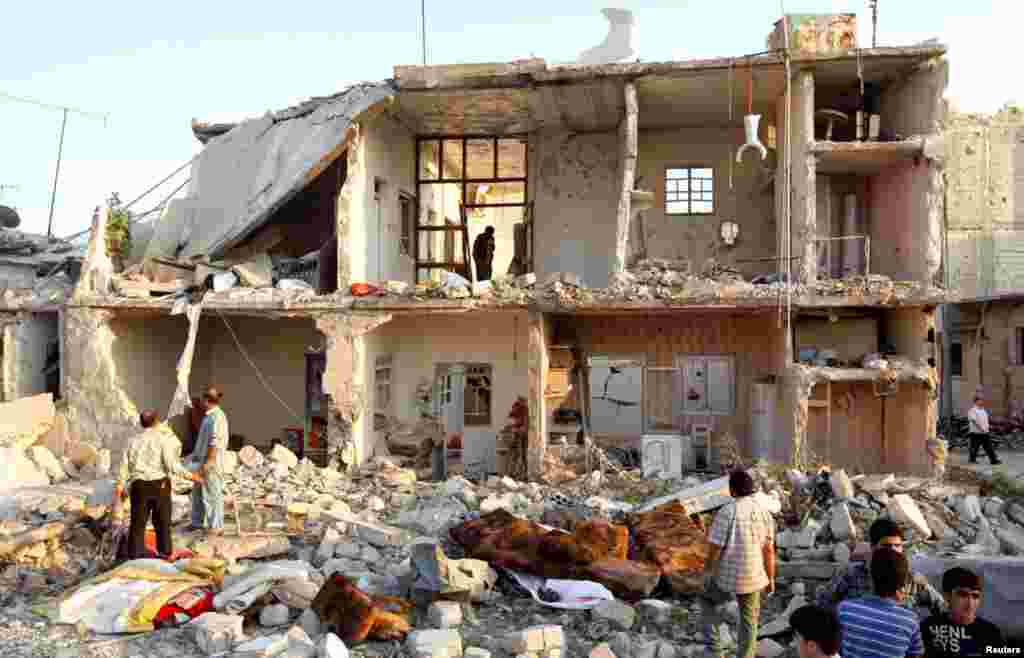
4/15A man searches among houses that were destroyed during a recent Syrian Air Force air strike in Azaz, August 15, 2012.
Show moreShow less
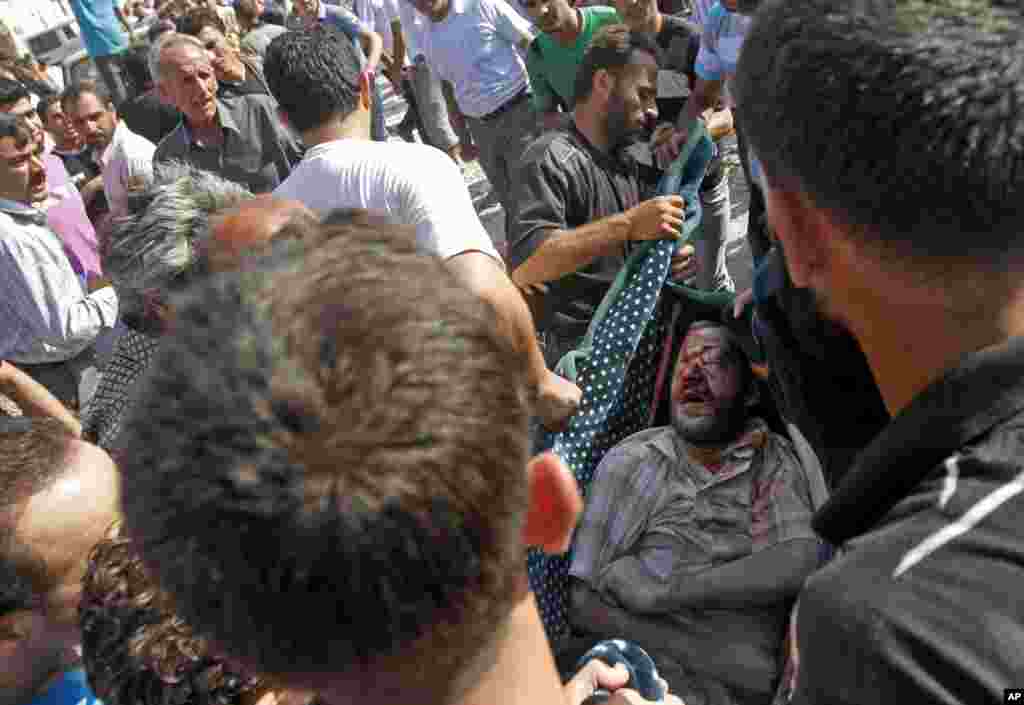
5/15Syrians evacuate a wounded man from under the rubble after an air strike destroyed at least ten houses in Azaz on the outskirts of Aleppo, Syria, August 15, 2012.
Show moreShow less
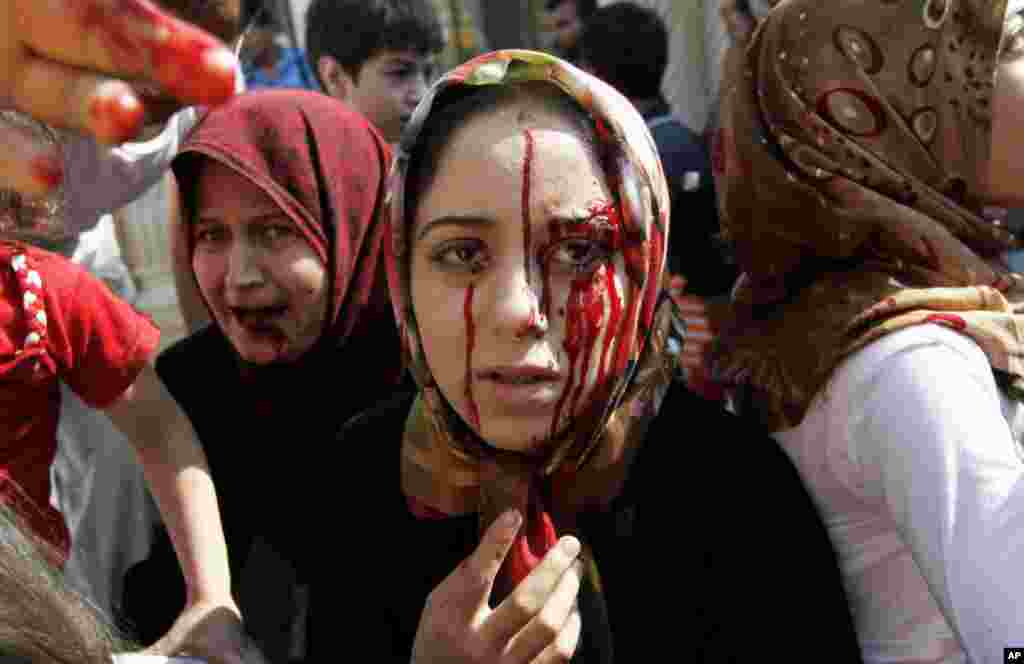
6/15Injured Syrian women arrive at a field hospital after an air strike hit their homes in the town of Azaz on the outskirts of Aleppo, Syria, August 15, 2012.
Show moreShow less
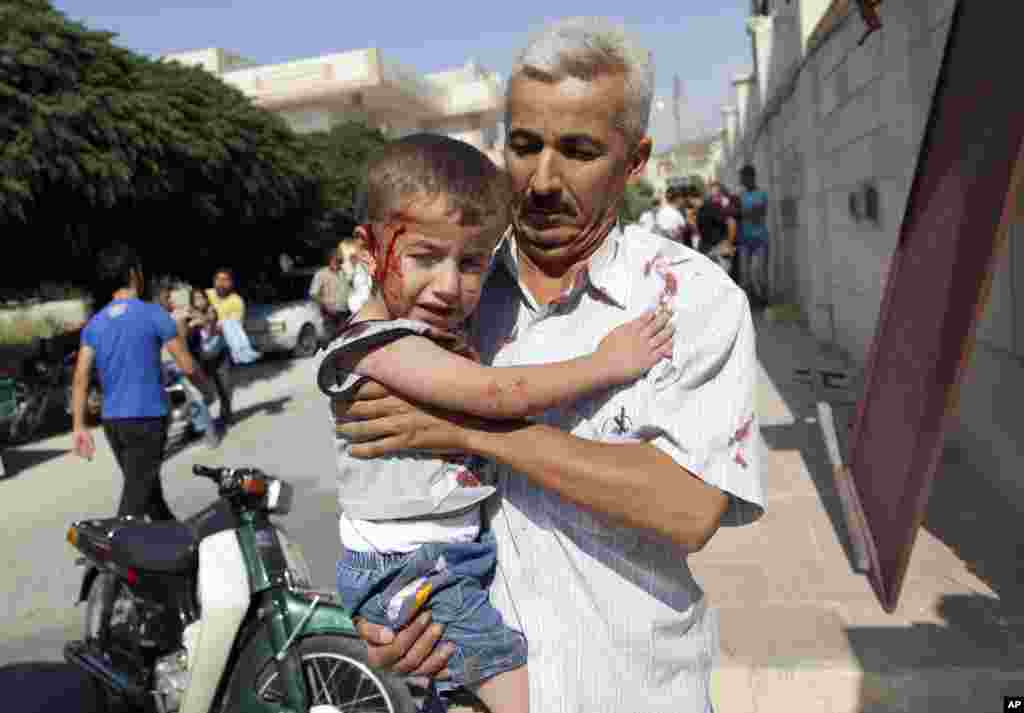
7/15A Syrian man carries an injured child to a field hospital after an air strike hit homes in Azaz on the outskirts of Aleppo, August 15, 2012.
Show moreShow less
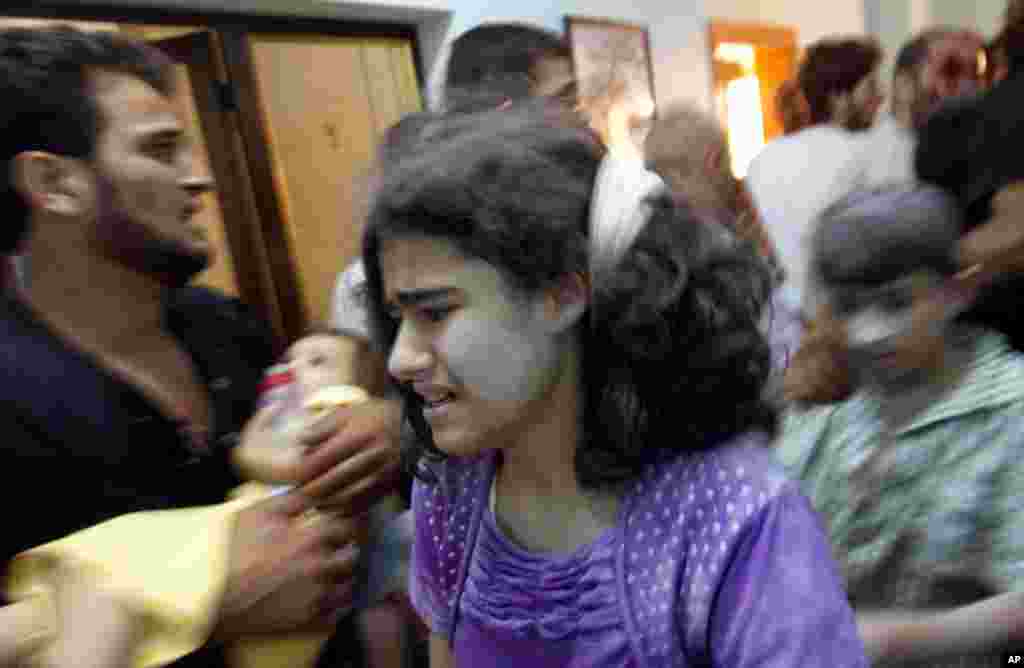
8/15Wounded Syrians arrive at a field hospital after an air strike hit their homes in Azaz on the outskirts of Aleppo, August 15, 2012.
Show moreShow less
9/15Syrians wounded in an air strike that hit their homes evacuate a field hospital after a second air strike in Azaz on the outskirts of Aleppo, August 15, 2012.
Show moreShow less
10/15Wounded Syrians evacuate a field hospital after a second air strike in Azaz on the outskirts of Aleppo, August 15, 2012.
Show moreShow less
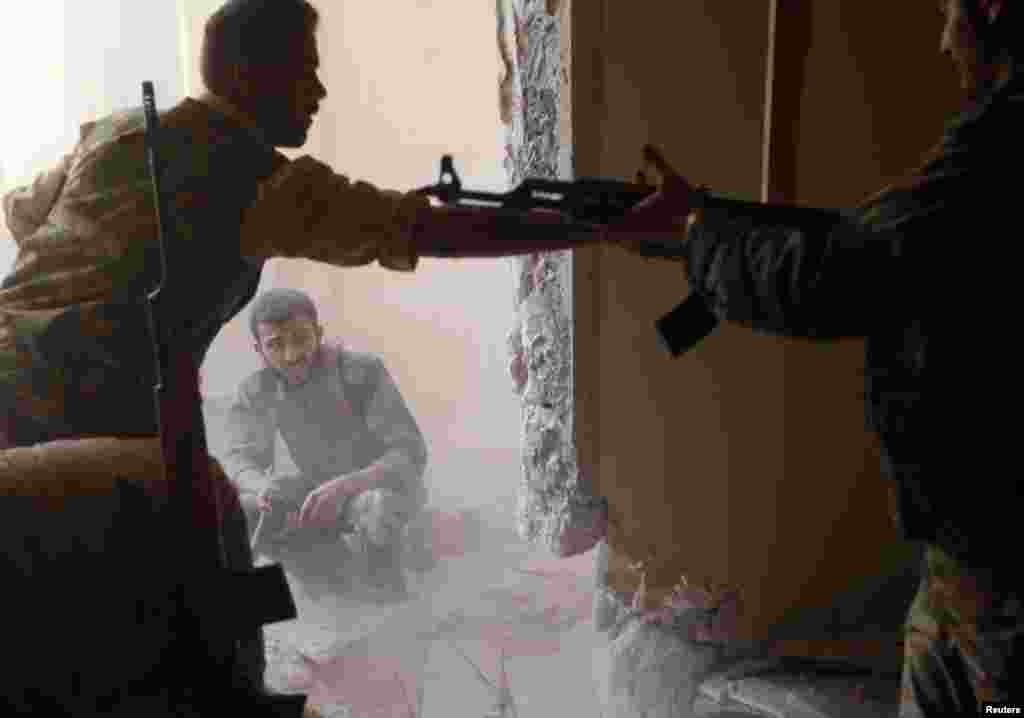
11/15A Free Syrian Army fighter passes an AK-47 rifle to his fellow fighter in Aleppo, August 14, 2012.
Show moreShow less
12/15A Free Syrian Army fighter reacts after hearing news that his commander had been killed by tank shell in Aleppo, August 14, 2012.
Show moreShow less
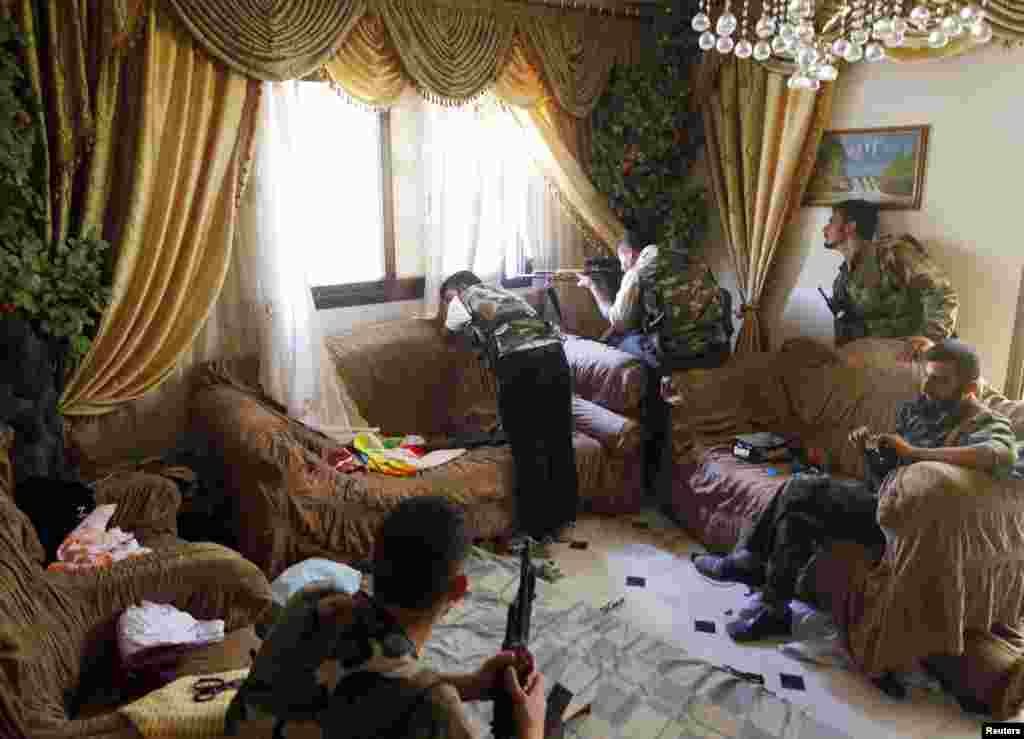
13/15A Free Syrian Army fighter fires his sniper rifle from a house in Aleppo, August 14, 2012.
Show moreShow less
14/15Free Syrian Army fighters sit behind a barricade on a street in Aleppo, August 13, 2012.
Show moreShow less
15/15A Free Syrian Army fighter observes the area with a pair of binoculars in Aleppo, August 13, 2012.
Show moreShow less
Previous slide
Next slide
Several western nations, including the United States and Great Britain, have been providing the Syrian opposition with non-lethal assistance – such as communications equipment, medical supplies and water-purification kits.
But some experts and U.S. politicians are calling for more. One of them is Senator John McCain, who spoke on the Senate floor March 6.
“Time is running out,” he said. “Assad’s forces are on the march. Providing military assistance to the Free Syrian Army and other opposition groups is necessary.”
Senator McCain and others say the Syrian opposition needs the weapons to continue the fight. And he even calls for western air strikes against Syrian military forces to bolster the rebels.
Arguments against arming Syrian opposition
But John Bolton, former U.S. Ambassador to the United Nations, is wary about providing weapons and other assistance to the Syrian rebels.
“Even those in Congress who advocate giving lethal or non-lethal assistance to the opposition are reluctant to identify precisely to which leaders we should give it,” Bolton said. “When people who want a broader American involvement can’t identify the right people to give it to – that really makes me nervous.”
Bolton gives another reason not to arm the rebels.
“There is a very real risk that as bad as the Assad regime has been, the terrorists and radicals inside the opposition could capture control of the opposition and in retaliation for decades of oppression by the Assad regime, conduct their own executions and mass killings against Alawites, Christians, Druze, Sunnis who supported the regime,” he said.
Bolton does “not want to have American weapons or American-trained leaders involved in such a bloodbath.”
Difficult to disarm militias
Nadil Shehadi, with London’s Chatham House, says arming the rebels “will backfire, because all these groups that are being armed now, whether for a good cause or not, will have to be disarmed later – and that will be a very difficult process.”
Shehadi favors a coordinated military action against Bashar al-Assad “because a direct military intervention has more legality and it will be easier to get rid of an occupying force than to dismantle militias later.”
Fawaz Gerges, from the London School of Economics, says providing weapons to the Syrian opposition will play directly into the hands of President Assad.
“The militarization of the uprising in Syria is a God-sent development for Assad, because the Assad regime has argued all along that he is facing armed groups, [that] he’s facing al-Qaida type extremists,” said Gerges. “And now Assad has mobilized his army and is receiving support from Iran. He has convinced a critical segment of his population that there is no political uprising – this is an armed conflict financed and driven by outside players, particularly the United States and its regional allies.”
Gerges says Assad is hunkering down for the long haul. The Syrian President and his supporters, he says, believe he can still defeat the opposition, and that, barring an international military intervention, he could survive for a long time.
The latest images from Syria
1/15A Free Syrian Army fighter observes the area during clashes in Aleppo, August 16, 2012.
Show moreShow less
2/15A Free Syrian Army fighter carries the body of a fellow fighter in Aleppo, August 16, 2012.
Show moreShow less
3/15A Free Syrian Army fighter reads the Quran before clashes in Aleppo, August 16, 2012.
Show moreShow less
4/15A man searches among houses that were destroyed during a recent Syrian Air Force air strike in Azaz, August 15, 2012.
Show moreShow less
5/15Syrians evacuate a wounded man from under the rubble after an air strike destroyed at least ten houses in Azaz on the outskirts of Aleppo, Syria, August 15, 2012.
Show moreShow less
6/15Injured Syrian women arrive at a field hospital after an air strike hit their homes in the town of Azaz on the outskirts of Aleppo, Syria, August 15, 2012.
Show moreShow less
7/15A Syrian man carries an injured child to a field hospital after an air strike hit homes in Azaz on the outskirts of Aleppo, August 15, 2012.
Show moreShow less
8/15Wounded Syrians arrive at a field hospital after an air strike hit their homes in Azaz on the outskirts of Aleppo, August 15, 2012.
Show moreShow less
9/15Syrians wounded in an air strike that hit their homes evacuate a field hospital after a second air strike in Azaz on the outskirts of Aleppo, August 15, 2012.
Show moreShow less
10/15Wounded Syrians evacuate a field hospital after a second air strike in Azaz on the outskirts of Aleppo, August 15, 2012.
Show moreShow less
11/15A Free Syrian Army fighter passes an AK-47 rifle to his fellow fighter in Aleppo, August 14, 2012.
Show moreShow less
12/15A Free Syrian Army fighter reacts after hearing news that his commander had been killed by tank shell in Aleppo, August 14, 2012.
Show moreShow less
13/15A Free Syrian Army fighter fires his sniper rifle from a house in Aleppo, August 14, 2012.
Show moreShow less
14/15Free Syrian Army fighters sit behind a barricade on a street in Aleppo, August 13, 2012.
Show moreShow less
15/15A Free Syrian Army fighter observes the area with a pair of binoculars in Aleppo, August 13, 2012.
Andre de Nesnera is senior analyst at the Voice of America, where he has reported on international affairs for more than three decades. Now serving in Washington D.C., he was previously senior European correspondent based in London, established VOA’s Geneva bureau in 1984 and in 1989 was the first VOA correspondent permanently accredited in the Soviet Union.