


HARARE – The United Nations’ World Food Program is appealing for $87 million to avert starvation in Zimbabwe’s rural areas where close to two million people need food aid. The U.N. agency says because of poor rainfall, this year's hunger season in Zimbabwe has started earlier than in the past.
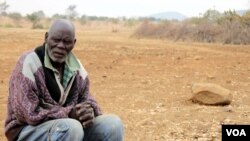
Kennedy Rusere is home alone with his wife in Buhera rural district, about 300 kilometers southeast of Harare. He talks about the dismal food situation in the village he heads.
"We no longer prepare any food during the day; otherwise the hunger season would be longer," Rusere said. "Children go into the bush during the day and get some wild fruits and then drink water while waiting for a meal in the evening."
That about summarizes the hunger situation in Buhera rural area since March of this year. Children look emaciated. The fields are dry.
Buhera, part of Manicaland province, is one of the four regions the World Food Program says are worst affected by drought in Zimbabwe. Others are Midlands, Matabeleland South and Masvingo.
Liliana Yovcheva of the WFP program office in Zimbabwe says her organization is facing an $87 million deficit as it tries to ease the food shortage.
"This year, the needs are much higher than in the last three years," she explained. "This is about 60 percent more. We hear of people starting to sell their livestock at distress prices, reducing their number of meals in rural Zimbabwe, which is a clear indication that the food security situation is worsening. It happens in other years but much more later in the year, sometime in November, December."
Junica Maradzika says she does not know her age but looks over 80 years old. She, along with her 90-year-old husband, is looking after 14 grandchildren who were left by their late seven children.
“When our maize was at tussling level, rains disappeared and our crop dried up," she said. "We had four cattle. We sold one and bought 250 kilograms of maize, but that could not cater for school fees [of my grandchildren.]”
Maradzika is now into pottery, from which she earns about $5 a week, if she is lucky. At times no one buys her pottery. She hopes food aid gets going so she and her grandchildren can avoid starvation.
Zimbabwe's government has indicated that it is looking for money to import maize.
The country was once the breadbasket of southern Africa, but food production fell sharply after President Robert Mugabe ordered the seizure of white-owned commercial farms beginning in 2000.
Some farms are productive under their new black owners but agriculture and the economy have yet to fully recover, forcing Zimbabwe to import much of the food it needs.
Kennedy Rusere is home alone with his wife in Buhera rural district, about 300 kilometers southeast of Harare. He talks about the dismal food situation in the village he heads.
"We no longer prepare any food during the day; otherwise the hunger season would be longer," Rusere said. "Children go into the bush during the day and get some wild fruits and then drink water while waiting for a meal in the evening."
That about summarizes the hunger situation in Buhera rural area since March of this year. Children look emaciated. The fields are dry.
Buhera, part of Manicaland province, is one of the four regions the World Food Program says are worst affected by drought in Zimbabwe. Others are Midlands, Matabeleland South and Masvingo.
Liliana Yovcheva of the WFP program office in Zimbabwe says her organization is facing an $87 million deficit as it tries to ease the food shortage.
"This year, the needs are much higher than in the last three years," she explained. "This is about 60 percent more. We hear of people starting to sell their livestock at distress prices, reducing their number of meals in rural Zimbabwe, which is a clear indication that the food security situation is worsening. It happens in other years but much more later in the year, sometime in November, December."
Junica Maradzika says she does not know her age but looks over 80 years old. She, along with her 90-year-old husband, is looking after 14 grandchildren who were left by their late seven children.
“When our maize was at tussling level, rains disappeared and our crop dried up," she said. "We had four cattle. We sold one and bought 250 kilograms of maize, but that could not cater for school fees [of my grandchildren.]”
Maradzika is now into pottery, from which she earns about $5 a week, if she is lucky. At times no one buys her pottery. She hopes food aid gets going so she and her grandchildren can avoid starvation.
Zimbabwe's government has indicated that it is looking for money to import maize.
The country was once the breadbasket of southern Africa, but food production fell sharply after President Robert Mugabe ordered the seizure of white-owned commercial farms beginning in 2000.
Some farms are productive under their new black owners but agriculture and the economy have yet to fully recover, forcing Zimbabwe to import much of the food it needs.