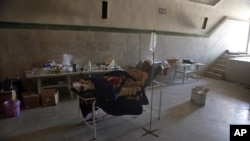
Mahmoud, 21, a Palestinian resident of Syria, rests in a field hospital after he was found Monday, August 6, 2012, with three gunshot wounds on the outskirts of Aleppo, Syria.
GENEVA — The World Health Organization is expressing alarm at the deteriorating health situation in Syria as battles escalate.
Syria used to produce 90 percent of its medicines and drugs locally. With battles raging in the country, the World Health Organization says pharmaceuticals production has slowed because of less availability of raw materials, international sanctions, increased fuel costs and instability in much of the country.
WHO notes 90 percent of the country’s medicinal plants are in the commercial centers of Aleppo, Homs and Damascus - areas of high, continuing conflict. Factories have suffered substantial damages during the recent escalation of fighting and many of the plants have closed.
WHO spokesman Tarek Jasarevic says hospitals and health centers in conflict areas also have been closed or damaged. He says those that remain open are under control of government or rebel factions. That, he says, keeps Syrians from seeking treatment.
“We cannot confirm or deny that there have been abuses," says Jasarevic. "But in any conflict this is what may happen that health facilities are being targeted, are being used by parties in the conflict. They can be simply targeted and destroyed. So, we cannot confirm or deny this because we are not there.
"But, it can just happen," he adds. "It happens in conflict, if the health facility is taken by one party and it is used as a military base, it is logical to assume that people would be reluctant to go there.”
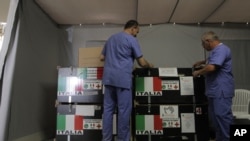
The Italian Medical crew opens the medical supplies boxes at the Italian Field Hospital for Syrian refugees, which was established in al Mafraq city, Jordan, July 10, 2012.
Jasarevic says that when health facilities in battle zones stop functioning, urgent medical and surgical interventions are hard to perform. He says health care workers are finding it difficult to go to work because of the fighting and increasing fuel shortages.
He says the Syrian Ministry of Health reports it has lost 200 ambulances over the last few weeks as the vehicles were either stolen or destroyed in fighting.
“The impact of this situation, of course, is devastating for people who need drugs on a daily basis, people with chronic conditions, people with mental health situations and also for people who are on antibiotics to prevent infections while being treated for conflict-related injuries,” says Jasarevic.
WHO says urgently needed medicines include drugs for tuberculosis, hepatitis, hypertension, diabetes, and cancer, as well as dialysis for kidney diseases. It says chemical reagents for blood screening tests are also needed to ensure the safety and quality of blood used in surgical and trauma cases.