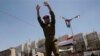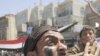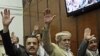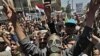



Yemen's parliament has approved a law imposing a state of emergency in the country amid protest-related violence. The adoption of the emergency law Wednesday was expected, as Yemeni President Ali Abdullah Saleh's ruling party holds a majority of the parliamentary seats.
Saleh announced a state of emergency after gunmen loyal to the president opened fire on a group of protesters calling for his ouster Friday, killing a reported 52 people. A wave of government officials, tribal leaders and diplomats defected to the side of opposition protesters after the bloody crackdown. Yemen's top military figure, Major General Ali Muhsen al-Ahmar, also defected to "support the peaceful revolution."
Nasser Arrabyee, a Yemeni journalist based in Sana'a who writes for the Cairo-based Al Ahram Weekly and the Dubai-based Gulf News daily newspaper, regularly covers events in Yemen for major international newspapers and on his own blog.
VOA's Davin Hutchins spoke with him by phone to find out more about how last week's killings may alter events in coming days.
Arrabyee: Ali Muhsen has been the main pillar of Saleh’s rule over the last 30 years, and he is from the same village, from the same clan [as Saleh] – from Sanhan, and from the same family. So it is difficult to say now whether he is a completely honest fellow. There is a possibility that they agreed, that they made a deal to help Saleh find a peaceful solution for transferring power. And also, at the same time, to secure a safe exit for Saleh…. but I would say [the situation] could end at any moment.
Hutchins: You said in a recent blog post that the crisis was at its end, and that last Friday was a turning point, but Saleh has not really changed his position other than to say that he will step down by the end of the year. So, what makes you so sure that this won’t be a drawn out stalemate.
Arrabyee: When I said that the end was very close I meant that there will be some kind of deal. This is what I see from the previous history, because right now there is a lot of effort from inside and outside Yemen to reach a deal to transfer power….
Hutchins: When we saw what was happening in the final days of the Mubarak regime in Egypt, when there was a crackdown or supression, that seemed to motivate the protesters even more. The protesters in Yemen are already organizing for this Friday. Do you think that the numbers will be larger because of what happened last Friday? What do you expect exactly?
Arrabyee: I think the protests will be stronger, that there will be more and more protesters, because of what happened last Friday and because of a direct call from the opposition [for more rallies]. It will be a decisive Friday, but at the same time I am not expecting [a repeat of the violence last Friday], but something strong, something in the direction of finding a solution.
Will Rising Tensions in Yemen Lead to Quick Solution or Chaos?
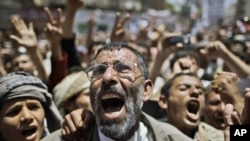
Local journalist Nasser Arrabyee believes that despite more planned protests, a quiet exit for President Saleh could be negotiated.