Zimbabwe AIDS Orphans Strive to Overcome Obstacles
Community adolescent treatment supporters at AFRICAID, Harare, Zimbabwe, June 2012. (S. Mhofu/VOA)
HARARE — Zimbabwe has one of the highest HIV rates in the world, despite years of effort to slow the spread of the virus. The pandemic - and the government’s failure to rollout a life-prolonging anti-retroviral drug program - has left tens of thousands of AIDS orphans. Many of these young people are working to make a difference with their lives.
These are some of the many young people living with the HIV virus. Most of them are orphans - their parents having succumbed to HIV-related illnesses. They meet every Saturday afternoon in central Harare to share experiences. Among them is a 19-year-old man we shall call Jacob. He says he contracted HIV from his parents who have since died. He says he has been fighting the stigma that comes with the virus since he got tested nine years ago.
“Now stigma and discrimination I can count as nothing to me. I first accepted my status. It will never change. Acceptance was the first medicine I took. I take medication as prescribed by doctors," stated Jacob. "Adherence is the most important thing for us people with HIV.”
He says he gets support from fellow youths that he meets each week at the offices of PSI - one of many global health organizations involved in assisting Zimbabwe’s cash-strapped government help the 1.2 million people here living with HIV and AIDS.
Jacob says being an HIV-positive orphan does not make him different from those who do not have the virus. “Right now a bit better than those who do not know their statuses. If you know who you are and where you are coming from you will have a brighter future,” he said.
Across town from the PSI offices is “Zvandiri House“ - which houses AFRICAID, an organization that helps young people with HIV. Zvandiri in the Shona language means “as I am.”
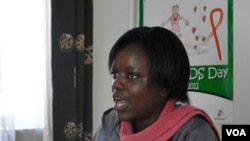
Volunteer AIDS peer counselor Loyce Maturu, Harare, Zimbabwe, June 2012. (S. Mhofu/VOA)
Loyce Maturu is a 19-year-old who tested positive for the virus when her parents died of HIV-related illnesses about eight years ago. She is now a volunteer peer counselor, believing she can share important lessons she learned from losing her parents at a young age.
She encourages all young Zimbabweans to get tested for HIV, saying that once you know your status, you can live well with or without the virus and have a future. “What I can say is that there is no difference - [It] is the blood with the virus, and not the brains,” explained Maturu.
Maturu says her goal is to work as a radio and TV presenter where she can talk about AIDS to help fight the stigma and inspire other orphans to follow their dreams.
Others here in Zimbabwe are already living their dreams.
This is music from singer Anderson Mamimine who calls himself a “humanitarian artist” and has named his backup vocalists “The Positive Life Choir” - formed by a group of HIV-positive orphans.
Mamimine says he’ll begin a European tour on July 22. “The main purpose of the tour is to fundraise for other kids who still have no access to education,” he explained.
Primary education is difficult to access in Zimbabwe because of poverty - but it is that much more difficult for poor children with HIV.
Members of "The Positive Life Choir" hope their voices will literally help make Zimbabwe a better place for young people just like them.