


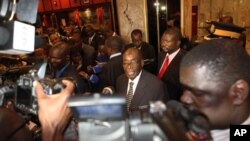
HARARE — Zimbabwe’s government census kicks off at midnight Friday and the country’s President Robert Mugabe expects a higher population growth from the previous count done 10 years ago. Zimbabwe is one of the countries most affected by the HIV/AIDS pandemic.
Speaking ahead of the two-day head-counting exercise which ends Sunday, the 88-year-old Zimbabwean leader said he was not pleased with how the 2002 census reflected the effects of the HIV/AIDS pandemic on the African country.
“Sorry to say, but the census results of 2002 were disappointing to me," said Mugabe. "The numbers were down, miserably down. The country population [in 2002] had been decimated, decimated by the pandemic we all know, that of HIV and AIDS.”
Zimbabwe has one of the highest HIV/AIDS infection rates in the world. Mugabe said the death rate was higher than the birth rate since Zimbabwean women had adopted, what he called, the western ideas of not having many children. He said that was stagnating population growth in a country ravaged by HIV.
“Women folk… and do not want to have as many children as our mothers used to have," he said. "They now have two or three children when we had one mother producing 10 or 12 children. We want more children, give us more children you women.”
The Zimbabwe census was almost thrown into disarray after the army forced their way into the process in the past.
Traditionally teachers do the census in Zimbabwe but more than 10,000 security forces had found their way onto the list of enumerators. The country's Ministry of Finance had to reduce their presence clearing the way for the census which begins Friday. In Zimbabwe, many people associate the army with intimidating civilians given its history.
In the 1980s, President Robert Mugabe’s government used soldiers to intimidate and to commit violence against perceived dissidents in the southern part of Zimbabwe. In the disputed elections of 2008, the army was said to be involved in violence against supporters of the then-opposition MDC party.
Zimbabwe's last census was held in 2002. That census showed Zimbabwe had about 11.6 million people.
Speaking ahead of the two-day head-counting exercise which ends Sunday, the 88-year-old Zimbabwean leader said he was not pleased with how the 2002 census reflected the effects of the HIV/AIDS pandemic on the African country.
“Sorry to say, but the census results of 2002 were disappointing to me," said Mugabe. "The numbers were down, miserably down. The country population [in 2002] had been decimated, decimated by the pandemic we all know, that of HIV and AIDS.”
Zimbabwe has one of the highest HIV/AIDS infection rates in the world. Mugabe said the death rate was higher than the birth rate since Zimbabwean women had adopted, what he called, the western ideas of not having many children. He said that was stagnating population growth in a country ravaged by HIV.
“Women folk… and do not want to have as many children as our mothers used to have," he said. "They now have two or three children when we had one mother producing 10 or 12 children. We want more children, give us more children you women.”
The Zimbabwe census was almost thrown into disarray after the army forced their way into the process in the past.
Traditionally teachers do the census in Zimbabwe but more than 10,000 security forces had found their way onto the list of enumerators. The country's Ministry of Finance had to reduce their presence clearing the way for the census which begins Friday. In Zimbabwe, many people associate the army with intimidating civilians given its history.
In the 1980s, President Robert Mugabe’s government used soldiers to intimidate and to commit violence against perceived dissidents in the southern part of Zimbabwe. In the disputed elections of 2008, the army was said to be involved in violence against supporters of the then-opposition MDC party.
Zimbabwe's last census was held in 2002. That census showed Zimbabwe had about 11.6 million people.