



Editor's note: this story was translated from the original VOA Pashto article.
The United Nations has urged the Taliban to align their definition of a child with the Convention on the Rights of the Child, amid growing concerns over the recruitment and use of children by the group in Afghanistan.
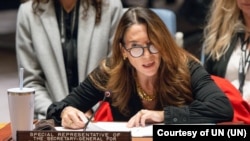
The U.N. Special Representative for Children and Armed Conflict, Vanessa Frazier, told VOA that the age of adulthood must be set at 18, warning that physical signs of puberty cannot replace the internationally recognized legal definition of a child.
The Taliban leader issued a decree banning the recruitment of children “who do not show physical signs of puberty” into their ranks.
Frazier, however, said that the main problem is how these directives define a child.
“The problem that we have is that the distinguishing element that is used in the edicts of the Taliban is signs of puberty, and not the age of 18, which comes out of the Convention on the Rights of the Child,” said Frazier.
The U.N. special representative called on the Taliban to align their definition of a child with the Convention on the Rights of the Child to which Afghanistan is a party.
A new U.N. report released in September said that the task force verified the recruitment of 557 boys, some as young as 12 years old, by the Taliban from 2023 to 2025.
The U.S. State Department’s 2026 Trafficking in Persons Report, released in October, said that there was a pattern of recruiting and using children both in combat and support roles, as well as a pattern of sexual slavery through bacha bazi, a practice in which men exploit boys for social and sexual entertainment.
The report accused the Taliban of not taking measures to prevent the recruitment and use of children for combat and support roles, and that the Taliban did not make efforts to protect the victims of bacha bazi.
However, the report acknowledged that the Taliban established a commission to identify and demobilize children among its forces and that an international organization was able to secure the release of 58 children from their ranks.
Frazier said poverty and economic hardship could also leave Afghan children vulnerable to recruitment.
“Families struggling to feed their children may see joining an armed force as a source of food, security and income,” she told VOA.
Frazier said that boys are reportedly used in a range of roles, including cooking, carrying weapons, fighting and serving as border guards.
She also said that the militarization of schools and ideological indoctrination of children under the Taliban is concerning.
"And so, when they are recruited, there's already been some indoctrination that has happened in madrasas,” Frazier added.
The Annual Report of the U.N. Secretary-General on Children and Armed Conflict for 2025 reported 1,070 verified grave violations against children, including recruiting and using 204 boys by the Taliban in combat, 62 in support roles and 142 verified.
The U.N. also reported the killing of 100 and maiming of 290 children, including the killing of 103 children in the air strikes by Pakistani forces.
The report called on the Taliban to “immediately take all actions to better protect and uphold the rights of children and ensure accountability.”