Syrian President Bashar al-Assad says he is fully committed to disposing his chemical arsenal, but denies his forces launched a poison gas attack last month that killed hundreds near Damascus.
In an interview with the U.S. network Fox News broadcast Thursday, Assad promised to abide by a U.S.-Russia deal aimed at destroying the chemical stockpiles. But he described the situation as "complicated," saying destruction of the weapons would cost about $1 billion and would take a year or "maybe a little more."
Russian Defense Minister Sergei Shoigu said his country currently has no plans to destroy Syria's chemical weapons on its own territory, although he acknowledged it has the facilities to do so.
Russia and the United States are the only countries with industrial scale capacity to handle mustard, VX, sarin or cyanide-armed munitions, but the import of chemical weapons is banned under U.S. law.
The disarmament plan, which is still being debated by U.N. Security Council envoys, requires Syria's government to turn over details of its chemical weapons by Saturday. Assad said he is willing to do this "tomorrow" and can provide experts access to the sites where the weapons are stored.
New war
Assad also insisted his government is waging a "new kind of war" against an infiltration of Islamist fighters from more than 80 countries. While he acknowledged the two-year uprising against him initially included non-extremists, he said that by the end of 2012 they had become the majority. He said "80 to 90 percent now consist of al-Qaida and their offshoots."
The Syrian leader slammed a U.N. report issued this week that confirms sarin nerve gas was used in an attack against civilians in the rebel-held suburb of Ghouta on August 21.
Although the report did not assign blame, the U.S. and other Western nations said it strongly suggested that government forces, not rebels, were responsible for the attack.
Assad slams UN report
President Assad called the findings "unrealistic," expressing doubt about the authenticity of the large amounts of photos and videos purporting to show the aftermath of the attack. He said it is possible rebel forces had access to the sarin gas, a claim his government has repeatedly made.
U.N. Secretary-General Ban Ki-moon said evidence gathered by U.N. investigators on the ground and released Monday "indisputably" and "overwhelmingly" confirms the use of the nerve agent sarin on a relatively large scale in the attack on Ghouta.
The U.S. says the attack killed 1,400 people.
Meanwhile, a roadside bomb struck a bus in the central province of Homs Thursday, killing at least 14 members of Assad's minority Alawite sect.
The Latest Images from Syria
1/9This citizen journalism image provided by Edlib News Network shows anti-Syrian regime protesters hold a poster depicting U.S. President Barack Obama during a demonstration in Kafr Nabil, Idlib province, Sept. 20, 2013.
Show moreShow less
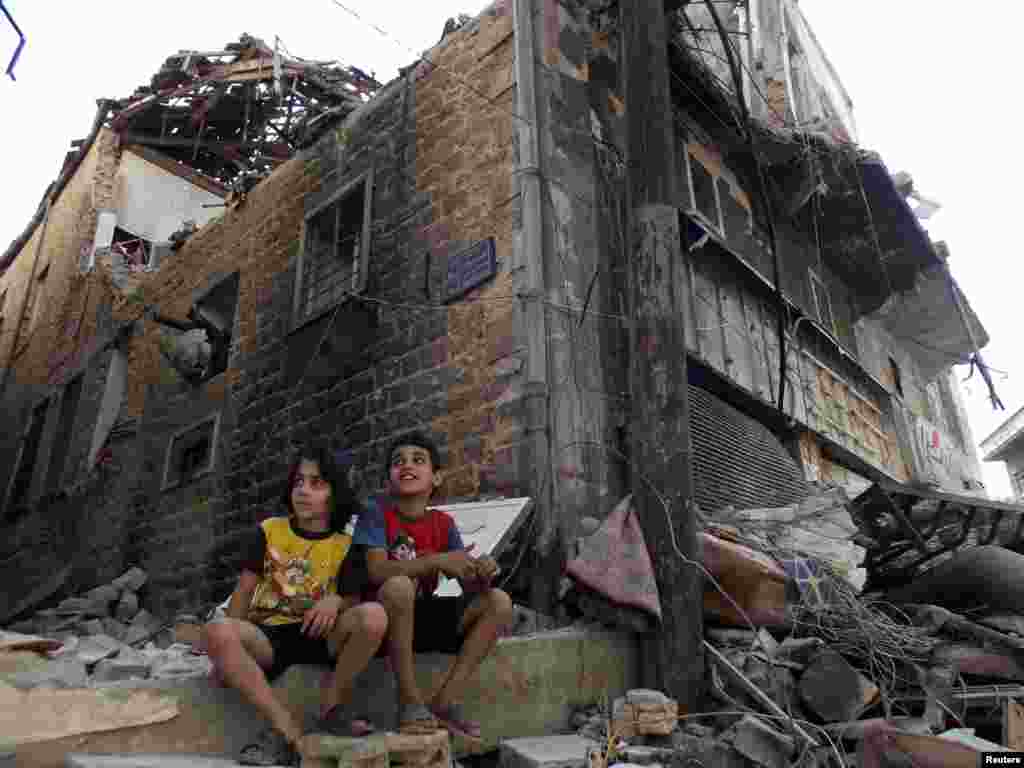
2/9Children sit along a damaged street filled with debris in the besieged area of Homs, Sept. 19, 2013.
Show moreShow less
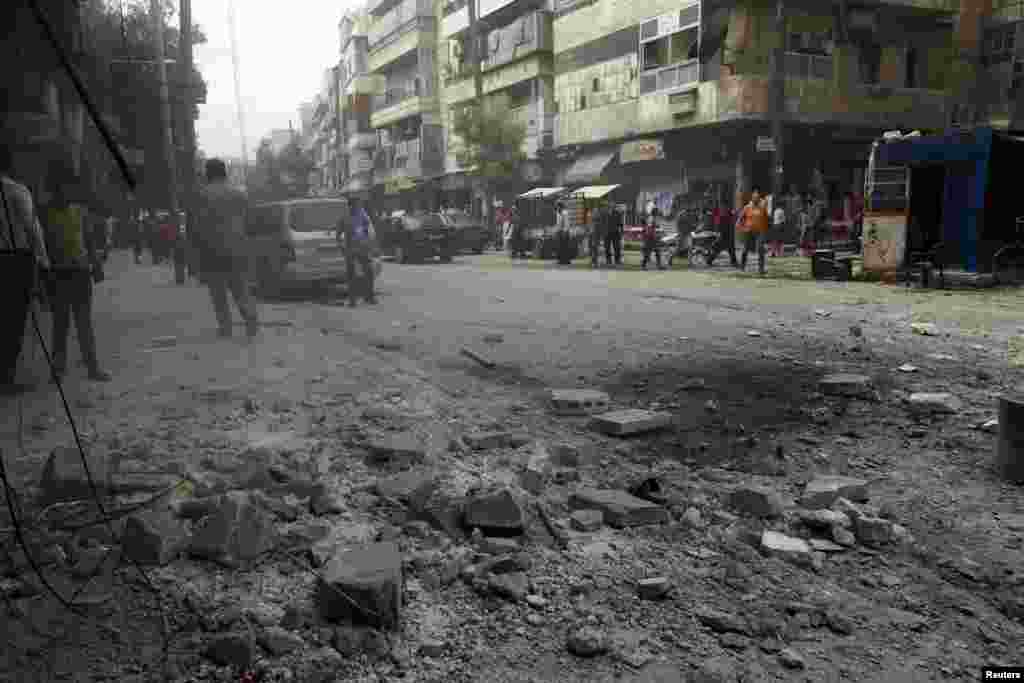
3/9Debris is seen on the ground after what activists said was shelling by forces loyal to Syria's President Bashar al-Assad in the al-Myassar neighborhood of Aleppo, Sept. 19, 2013.
Show moreShow less
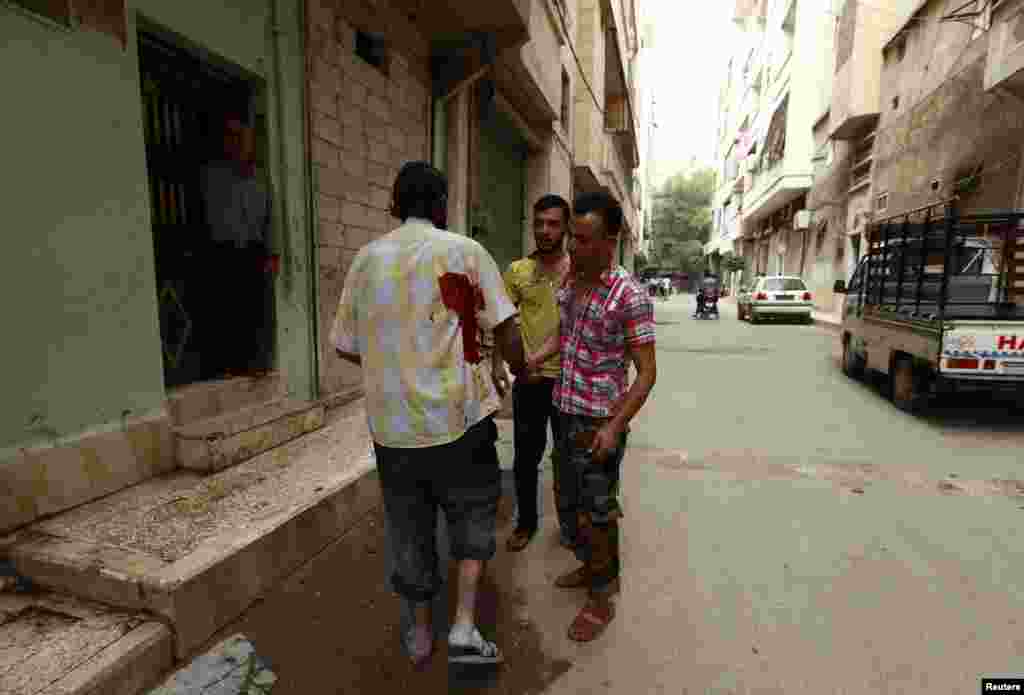
4/9An injured man walks along a street after what activists said was shelling by forces loyal to Syria's President Bashar al-Assad in the al-Myassar neighborhood of Aleppo, Sept. 19, 2013.
Show moreShow less
5/9This citizen journalism image provided by The Syrian Revolution against Bashar Assad shows a Syrian military tank on fire during clashes with Free Syrian army fighters in Joubar, a suburb of Damascus, Sept. 18, 2013.
Show moreShow less
6/9A member of the Shohadaa Badr Brigade, which operates under the Free Syrian Army, stands in shooting position behind sandbags in Ashrafieh, Aleppo, September 17, 2013.
Show moreShow less
7/9'Yan kabilar Yazidi.
Show moreShow less
8/9A Free Syrian Army fighter carries his weapon as he stands on rubble of damaged buildings in al-Aseela neighborhood near Aleppo's historic citadel, Sept. 13, 2013.
Show moreShow less
9/9In this citizen journalism image provided by the United media office of Arbeen, a Syrian protester chants slogans during a demonstration in Arbeen, a suburb of Damascus, Sept. 13, 2013.
The Voice of America provides news and information in more than 40 languages to an estimated weekly audience of over 326 million people. Stories with the VOA News byline are the work of multiple VOA journalists and may contain information from wire service reports.