As former Chinese political star Bo Xilai awaits trial for corruption and other charges, VOA's Bill Ide takes a closer look at how the country's tumultuous Cultural Revolution played a part in both his rapid rise and fall.
BEIJING —
The struggles of Chinese politician Bo Xilai have captured international attention and become an embarrassment that authorities in China would like to move past quickly. As the former Chinese political star awaits trial for corruption and other charges, some analysts believe China's tumultuous Cultural Revolution played a part in both his rapid rise and fall.
When Bo Xilai was a teenager, China was in the grips of Mao Zedong's violent Cultural Revolution. A time of political struggle that turned children against parents, husbands against wives.
Bo and his father, a party elder, each spent years in prison and his mother died of unknown causes. Those experiences, however, did little to shake Bo’s respect for the man who unleashed the turmoil.
Zhang Ming, a political scientist at Beijing’s Renmin University, says Bo was similar to other descendants of influential officials, red princelings, they all have one shortcoming: they have all grown up with the wolves, they all have experienced psychologically this sense of political struggle and revolution. Although Mao Zedong ruined their families, he says they still admire Mao.
But as much as Bo was an admirer of Mao, he also worshiped Western culture, Zhang added.
"Mao did not have anything to do with the West, when looking at Mao you cannot find any Western feature, but Bo Xilai himself really worshipped western culture and, in fact, he was able to take these two elements, Mao and westernization, and combine them really well, according to Zhang."
Bo was the son of one of China’s prominent Communist Party elders, Bo Yibo. And as a princeling, as son’s and daughters of ranking officials are called in China, his father helped aid his rapid rise within the party and to government posts.
During his career, Bo served in key economic centers, including Dalian and lastly in the mega city of Chongqing. At one point he was China’s Commerce Minister and many analysts believe that before his fall he was likely to become one of China’s top leaders.
Analysts describe Bo as handsome, charismatic, imaginative and media savvy, but also as someone who grew more authoritarian as his career flourished.
Despite his family connections and career success, political analyst Cheng Li says few of Bo's counterparts in the United States liked him when he served as Commerce Minister.
They were not impressed by Bo Xilai, Li said. They liked other leaders such as Wu Yi and certainly Wang Qishan, adding that they all received a lot of praise, but usually they found Bo Xilai was very egotistical, very blunt and ultra nationalistic.
When Bo became party secretary of the southern mega city Chongqing, the appointment was seen as a demotion. But using lessons from his experiences during the Cultural Revolution, he launched a crackdown on gangs and promoted the singing of revolutionary red songs.
When he realized that his political future ran into a wall, he turned to copy Mao's model, take advantage of the common folk's dissatisfaction or resentment of the status quo, said Chinese dissident Wei Jingsheng. "I'm not sure he really felt that way, but at least he verbally said so and took action."
The results of his approach in Chongqing, however, had similarities with Mao's Cultural Revolution. However, unlike the Cultural Revolution where Mao’s leadership was uncontested, Bo’s was.
LI said one his two major policy agendas was to crack down on the mafia, but now it's clear know that he and his family, his wife, behaved like the mafia or the head of the mafia.
Li added that while his behavior was inconsistent and hypocritical, it was not like that of other leaders in the past, including Mao Zedong, Josef Stalin and Hitler.
Li said Bo’s approach was a successful tactic, at least until his wife was exposed as the murderer of a British businessman. If that had never happened, analysts believe Bo's rise may have never stopped.
Scenes from Chongqing, China:
Scenes from Chongqing, China
1/6Low-income housing built by the Chongqing government was a popular project. Image shot in April, 2012. (VOA/Ming Zhang)
Among the places where disgraced Chinese politician Bo Xilai served was the southern mega city of Chongqing, at one point holding the title of party secretary. Bo gained prominence for launching a crackdown on corruption in the city.
Show moreShow less
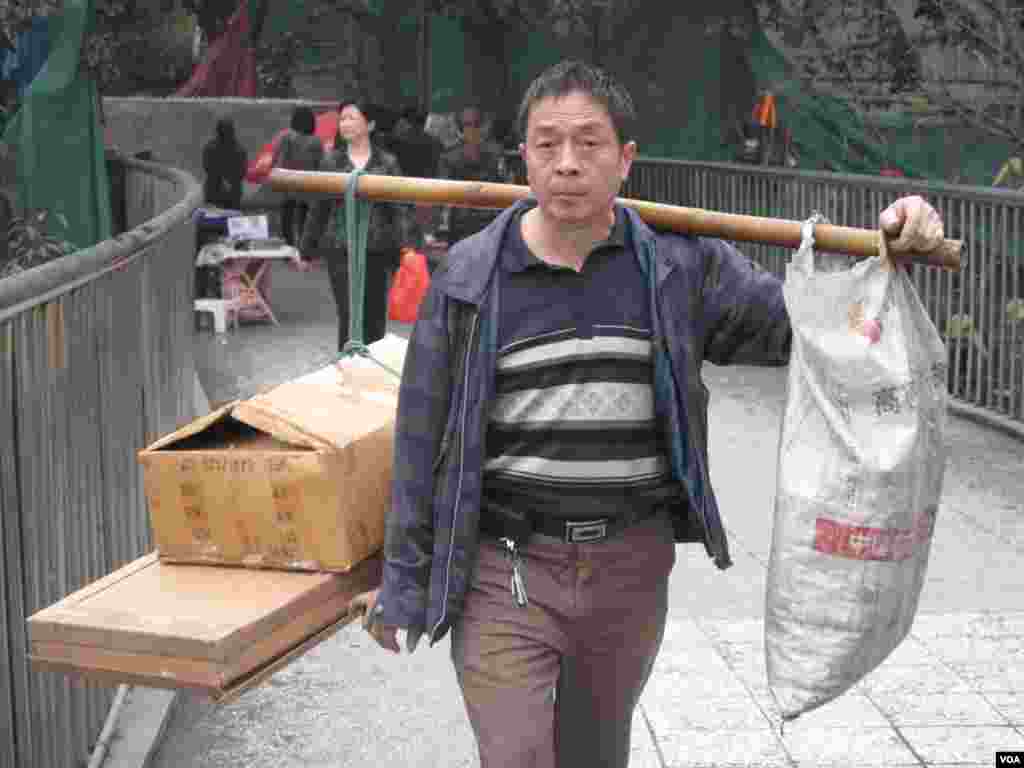
2/6A farmer in Chongqing, formerly a part of Sichuan Province. In 1997 the city rose to be one of the four special municipalities under the direct control of the central government. The municipality encompasses large urban and rural areas in southwest China. (VOA/Ming Zhang)
Among the places where disgraced Chinese politician Bo Xilai served was the southern mega city of Chongqing, at one point holding the title of party secretary. Bo gained prominence for launching a crackdown on corruption in the city.
Show moreShow less
3/6The luxury hotel in Chongqing where British national Neil Heywood was alleged murdered by Bo’s wife, Gu Kailai. Photo taken April, 2012. (VOA/Ming Zhang)
Among the places where disgraced Chinese politician Bo Xilai served was the southern mega city of Chongqing, at one point holding the title of party secretary. Bo gained prominence for launching a crackdown on corruption in the city.
Show moreShow less
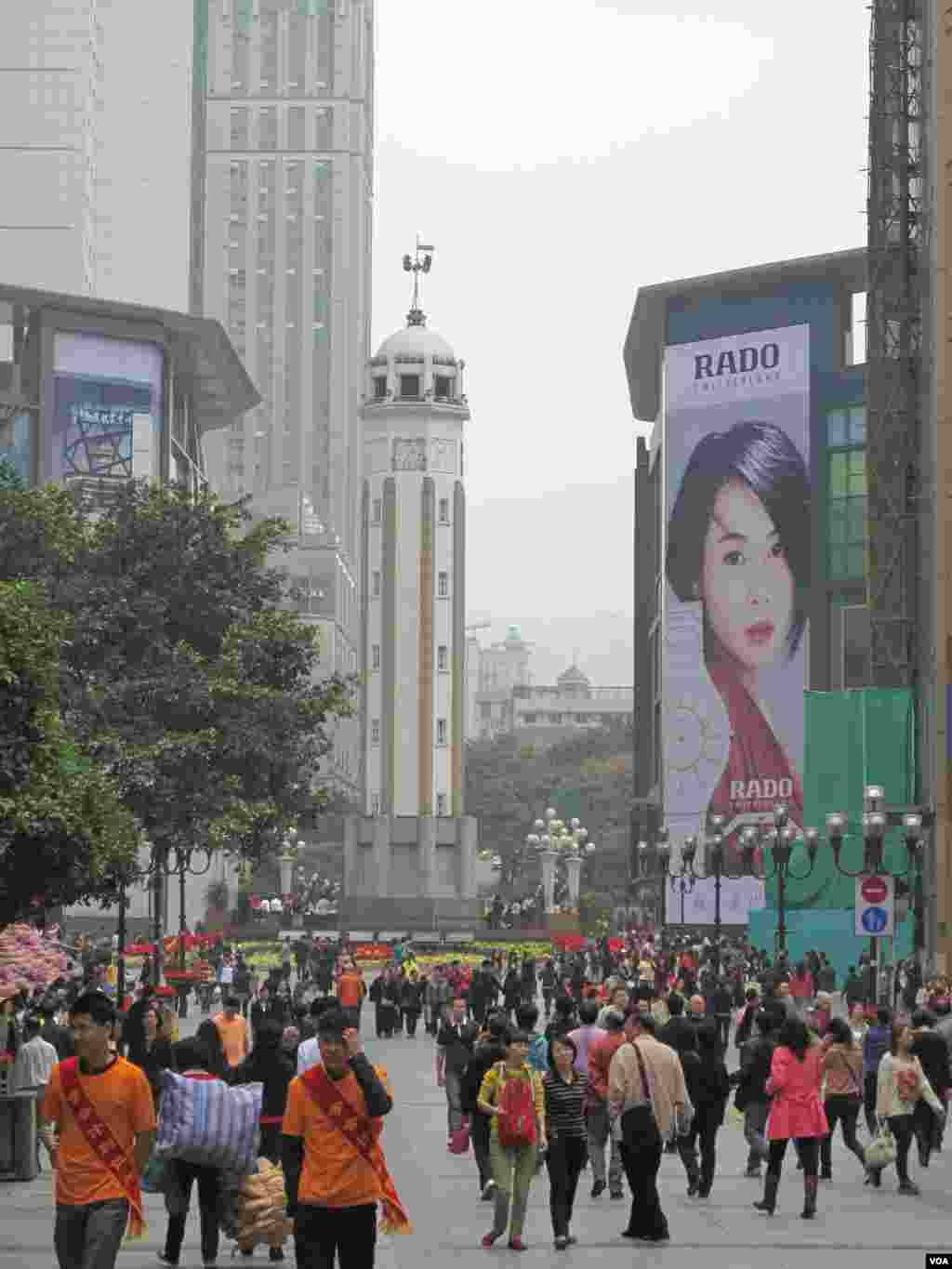
4/6A city scene in Chongqing, China. Photo taken April, 2012. (VOA/Ming Zhang)
Among the places where disgraced Chinese politician Bo Xilai served was the southern mega city of Chongqing, at one point holding the title of party secretary. Bo gained prominence for launching a crackdown on corruption in the city.
Show moreShow less
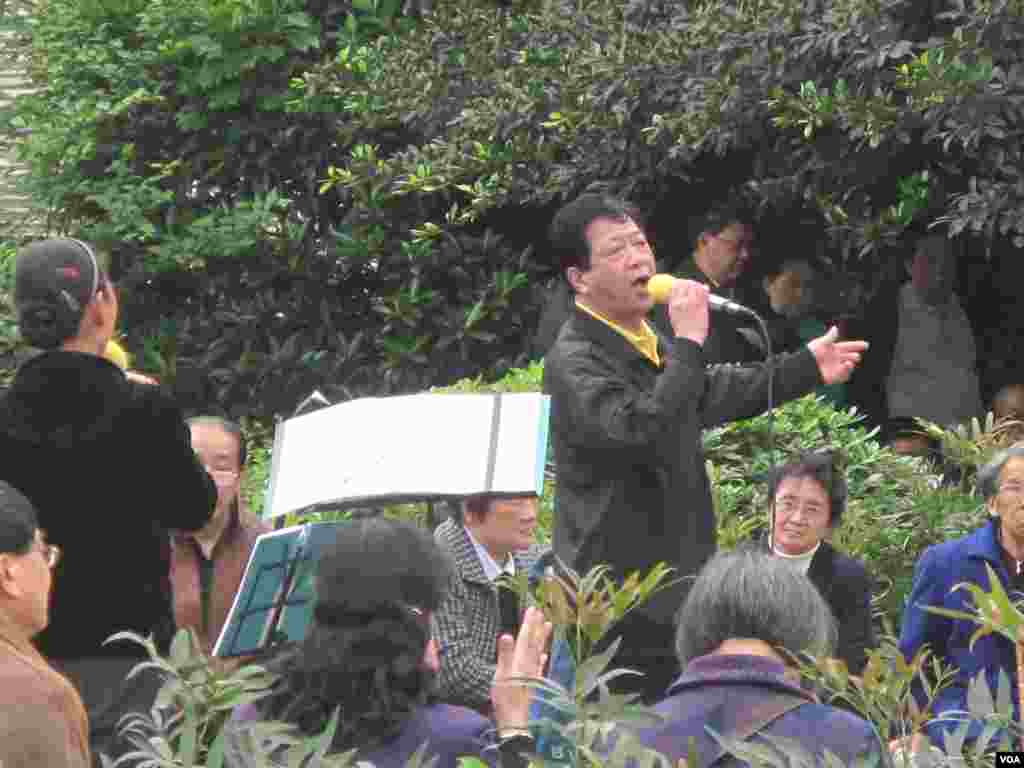
5/6Chongqing-ers carrying out spontaneous singing sessions in parks -- “singing the red songs” was a key signature of Bo’s effort to mobilize local population, an effort that subsequently gained considerable traction nationwide. (VOA/Ming Zhang)
Among the places where disgraced Chinese politician Bo Xilai served was the southern mega city of Chongqing, at one point holding the title of party secretary. Bo gained prominence for launching a crackdown on corruption in the city.
Show moreShow less
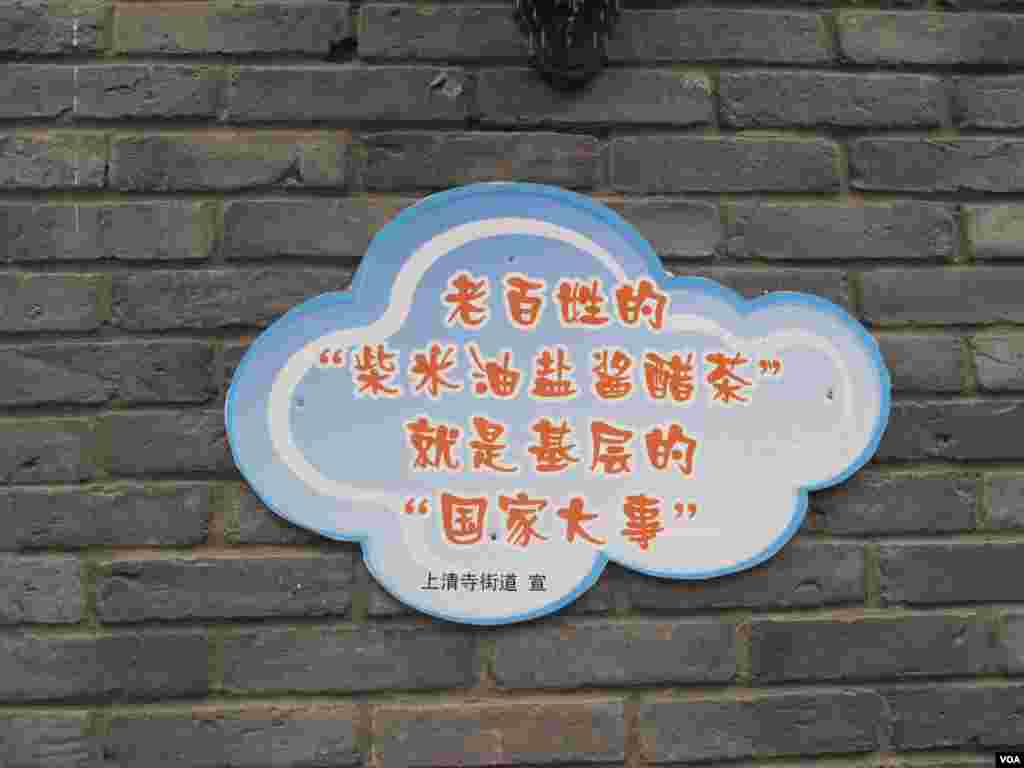
6/6“Ordinary people’s foodstuffs are the highest concerns of local government,” the sign says. (VOA/Ming Zhang)
Among the places where disgraced Chinese politician Bo Xilai served was the southern mega city of Chongqing, at one point holding the title of party secretary. Bo gained prominence for launching a crackdown on corruption in the city.