YEREVAN, ARMENIA —
Twenty-one years after gaining independence from the Soviet Union, Armenia may be coming of age. It is developing a more open society, and even a messy democracy. This is clear after the February 18 presidential election - won by incumbent Serzh Sargsyan.
Armenian opposition presidential candidate Raffi Hovhannisyan claimed victory - even though he lost the election. “For the first time in 20 years the citizens have said yes to our constitution, yes to the rule of law, yes to democracy in our future,” he said.
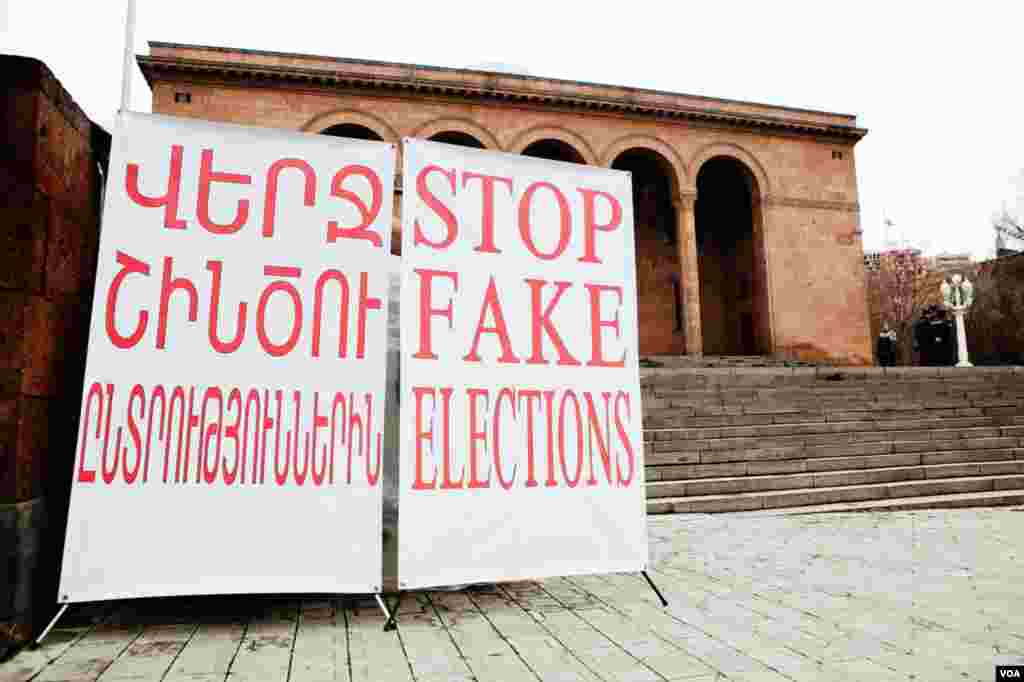
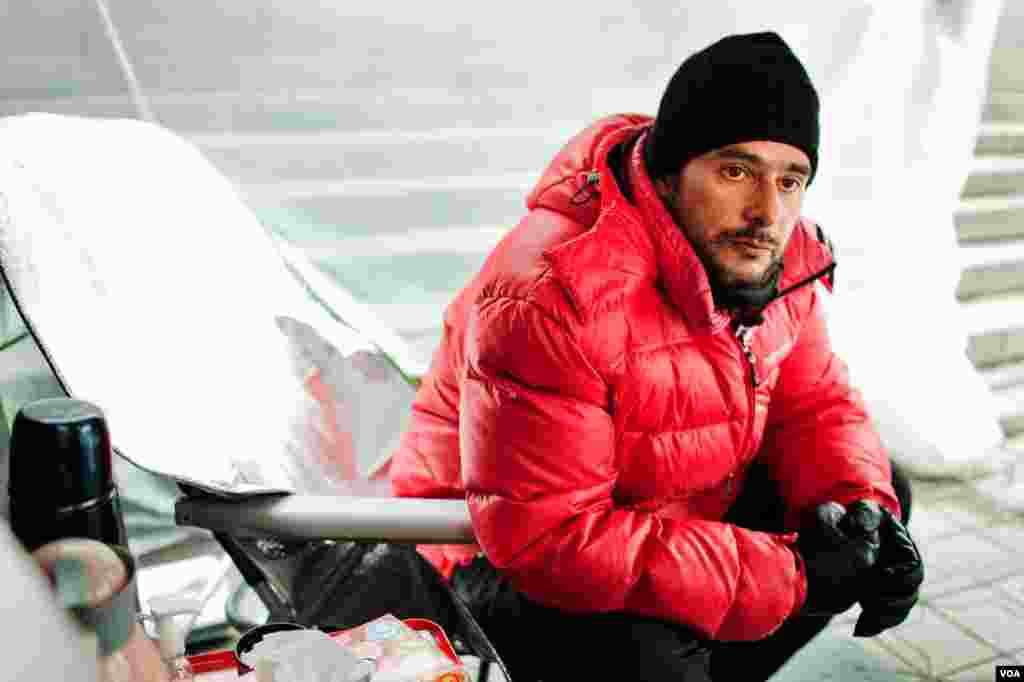
Hovhannisyan has been joined in protesting the results by Andreas Gukasyan, a candidate who spent the election campaign on a hunger strike. He said he went on strike to protest what he calls Armenia’s rigged elections.
The Presidential Election in Armenia
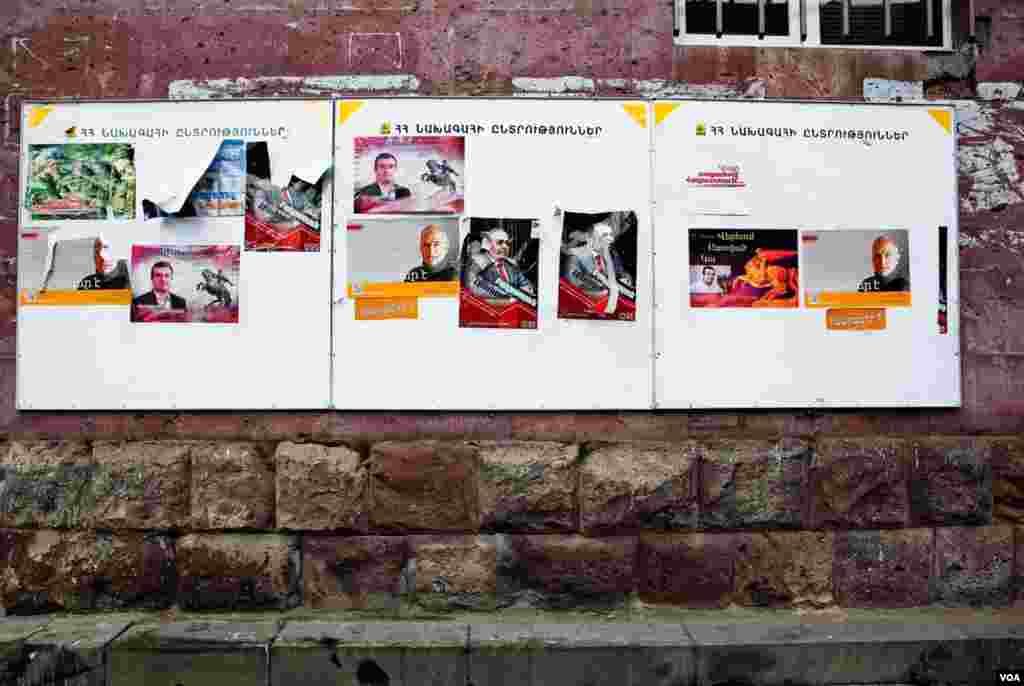
1/9Campaign posters were few and largely limited to official spaces in Yerevan, Armenia, Feb. 16, 2013. (V. Undritz/VOA)
Armenia held presidential elections on February 18, which were won by incumbent Serzh Sargsyan.
Show moreShow less
2/9Presidential candidate and owner of a private radio station Andreas Gukasyan spent the one month long campaign period on a hunger strike, living in a tent in front of the National Academy of Sciences, Yerevan, Armenia, Feb. 16, 2013. (V. Undritz/VOA)
Armenia held presidential elections on February 18, which were won by incumbent Serzh Sargsyan.
Show moreShow less
3/9Andreas Gukasyan charged that elections in post-Soviet Armenia are controlled by the president of the day, buying votes and ordering government employees to turn out the vote for official candidates, Yerevan, Armenia, Feb. 16, 2013. (V. Undritz/VOA)
Armenia held presidential elections on February 18, which were won by incumbent Serzh Sargsyan.
Show moreShow less
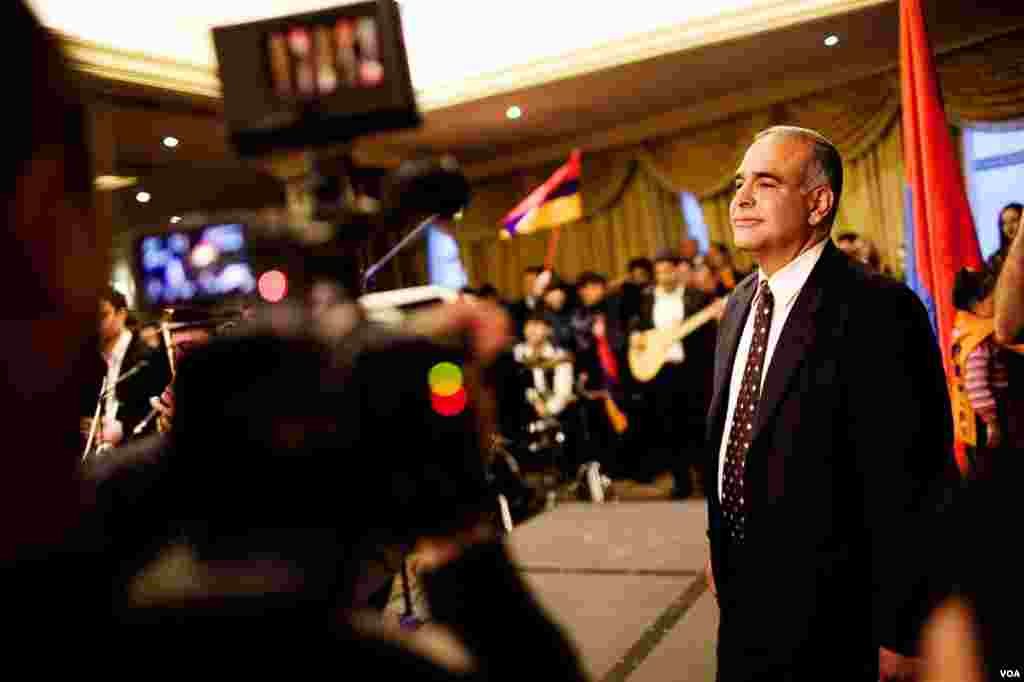
4/9California-born Raffi Hovhannisyan also embarked on a presidential campaign across Armenia, Yerevan, Armenia, Feb. 16, 2013. (V. Undritz/VOA)
Armenia held presidential elections on February 18, which were won by incumbent Serzh Sargsyan.
Show moreShow less
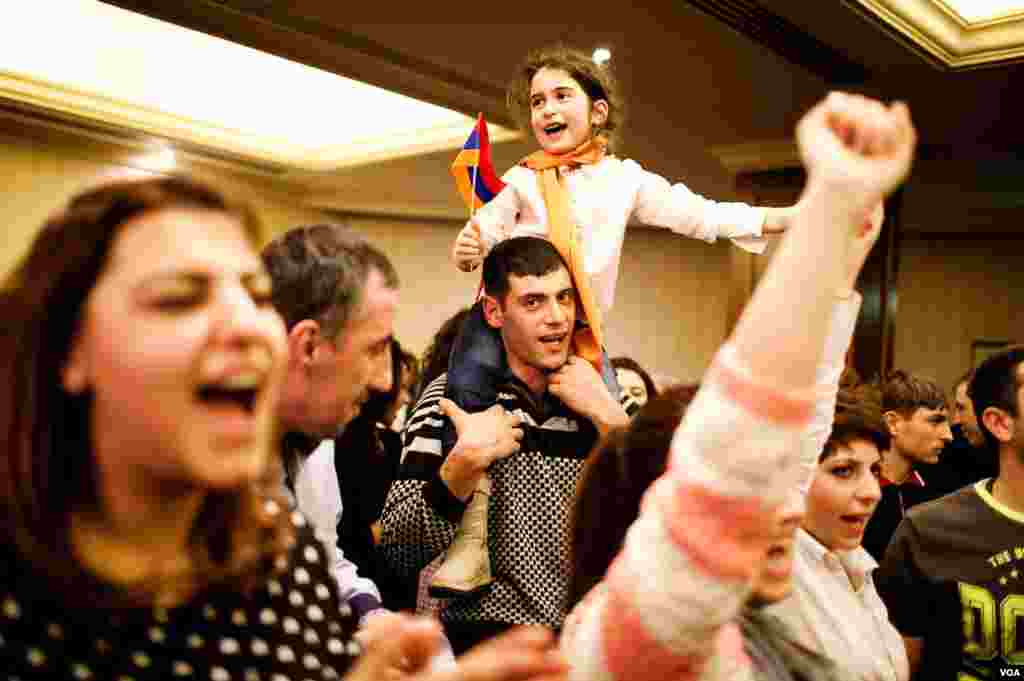
5/9Supporters respond to Hovhannisyan and Armenian rappers at a final pre-election rally in Yerevan, Armenia, Feb. 16, 2013. (V. Undritz/VOA)
Armenia held presidential elections on February 18, which were won by incumbent Serzh Sargsyan.
Show moreShow less
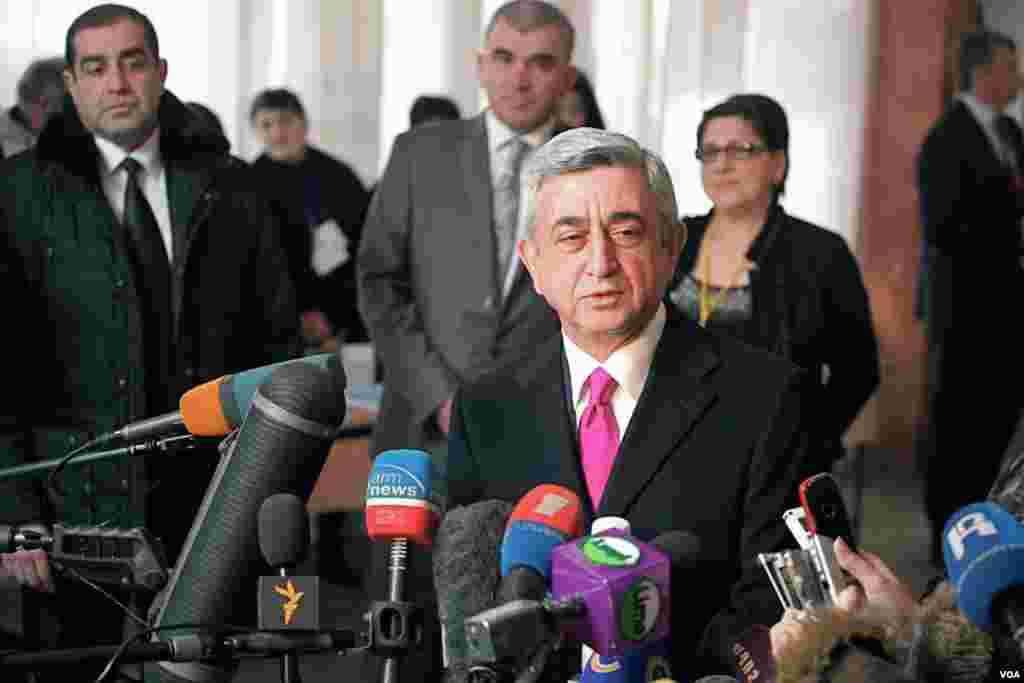
6/9Armenia's President Serzh Sargsyan talks to reporters after voting in Yerevan. (V. Undritz/VOA)
Armenia held presidential elections on February 18, which were won by incumbent Serzh Sargsyan.
Show moreShow less
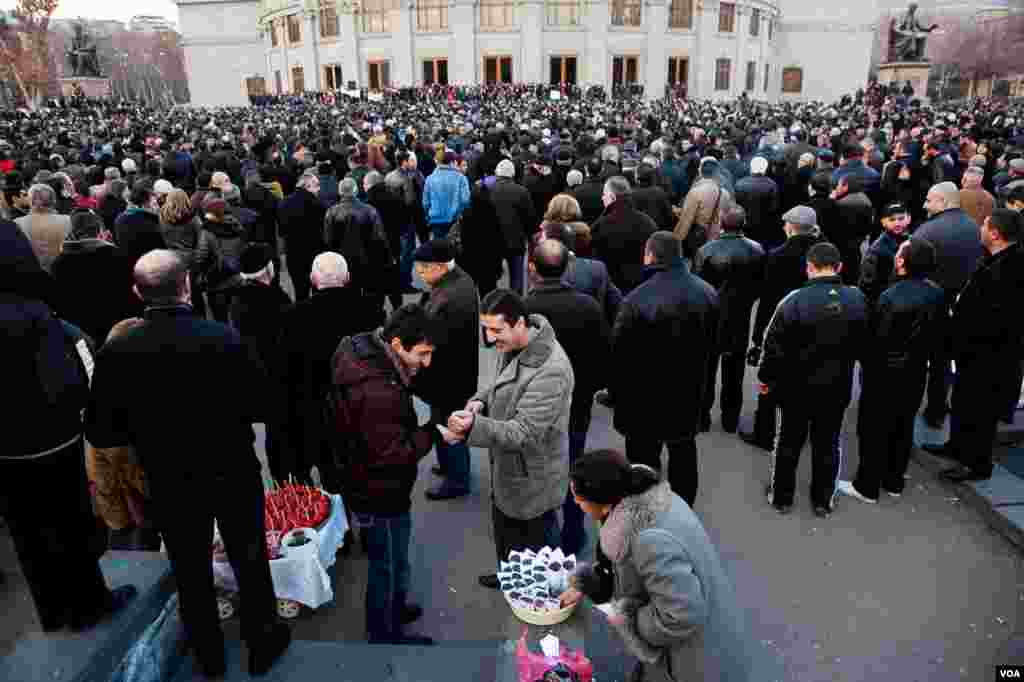
7/9Protesters gathered on Yerevan's Freedom Square the day that the official results were announced: 59 percent for President Serzh Sergsyan, 37 percent for Hovhannisyan, Feb. 20, 2013. (V. Undritz/VOA)
Armenia held presidential elections on February 18, which were won by incumbent Serzh Sargsyan.
Show moreShow less
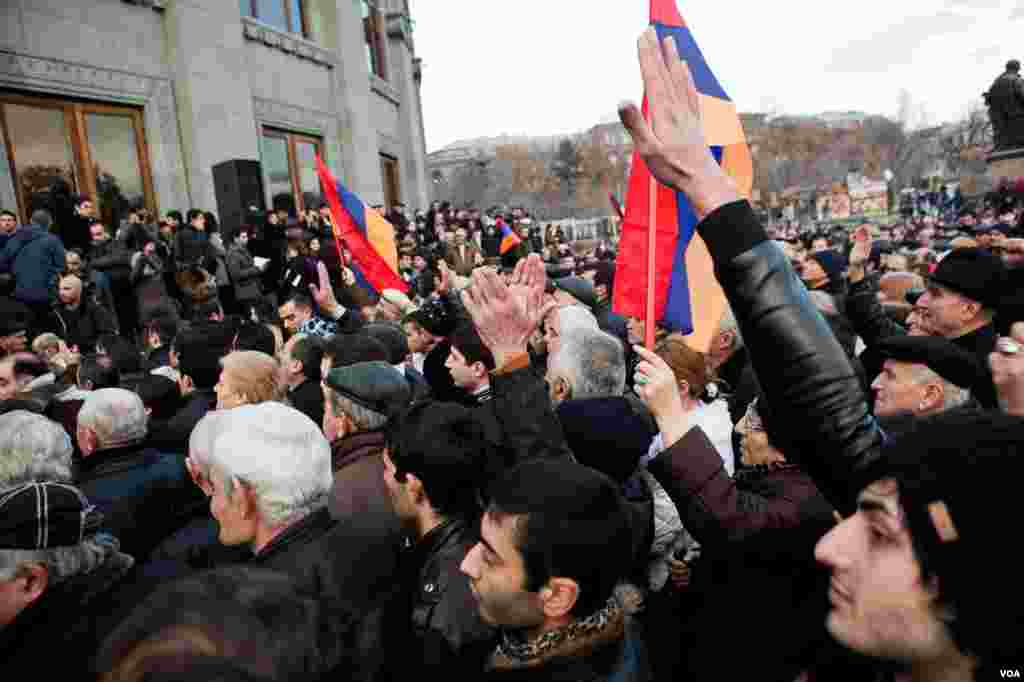
8/9Protesters at Yerevan's Freedom Square the day that official results were announced, Feb. 20, 2013. (V. Undritz/VOA)
Armenia held presidential elections on February 18, which were won by incumbent Serzh Sargsyan.
Show moreShow less
9/9Serzh Sergsyan has promised to obey Armenia's presidential term limits and step down in 2018 when his second term ends. (V. Undritz/VOA)
Armenia held presidential elections on February 18, which were won by incumbent Serzh Sargsyan.
Show moreShow less
Previous slide
Next slide
Deadly past election
Five years ago, post-election protests in the capital, Yerevan, ended with 10 dead in the streets. This time, police and protesters are following a peaceful path. Some see a new spirit of openness that is nurturing democracy.
Richard Giragosian, who runs a think tank in Yerevan, said, “In a general sense, I’m optimistic in the trend now present in Armenia in terms of democratization, more of an orientation Westward.”
When Armenian President Serzh Sargsyan cast his ballot on February 18, he knew the opposition would not win only three percent of the vote - as in some other former Soviet republics. He did get reelected, but with just 59 percent of the vote.
Making progress
Opposition supporters rallied to the California-born Hovhannisyan, who was Armenia’s first foreign minister after independence from the Soviet Union in 1991. He won 37 percent of the vote, twice the amount forecast by polls before the election.
“We are into now our 22nd year of independence, and we have never ever had a transition of authority through free and fair elections. It’s about time that Armenia take the initiative and return democracy, the rule of law, and civil rights to the people of Armenia,” said Hovhannisyan.
Almost 7,000 foreign and Armenian observers watched the voting.
Karin Woldseth, head of a European parliamentary delegation, gave a qualified approval to the vote.
“We have noted deep progress in many areas, such as the media environment, legal framework, freedom of assembly, and freedom of speech,” she said.
Vibrant opposition
As she spoke, protesters interrupted the news conference. They said the European observers were “political tourists” rubber-stamping a fraudulent election.
“They announce that we are one step forward, that we had transparent elections, but it’s a lie. Because our observers are in those stations all day, they are being violated, abused. Their observers are going there for just 15 minutes,” said one protester, Mamikon Hovsepyan:
Since the vote, Hovhannisyan has been touring this mountainous nation, leading protest rallies, and working to unify the political opposition.
“I am committed to bring, with the people of Armenia, a bloodless transfer of power. And I am sure that in five years we will have the first free and fair elections in Armenia,” said Hovhannisyan.
Democracy - disorderly, unpredictable, and with citizen participation - seems to be brewing in post-Soviet Armenia.