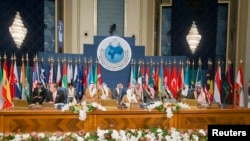
Kuwaiti Emir Sheikh Sabah al-Ahmed al-Sabah (C), U.N. Secretary General Ban Ki-moon (L) and Kuwaiti Foreign Minister Sheikh Sabah Khalid al-Hamad al-Sabah (R) attend the opening session of the Syrian Donors Conference at Bayan Palace Liberation Hall in Ku
KUWAIT CITY —
International donors met in Kuwait City Wednesday to make pledges of new funding to address the humanitarian needs of Syria's civil war.
U.N. Secretary General Ban Ki-moon said that more than nine million Syrians urgently need humanitarian assistance, nearly half of them children.
“Military attacks continue to target schools, health care facilities, and residential areas. Syria once had a strong health infrastructure. Now two out of five hospitals, 40 percent, no longer function,” said Ban.
In its largest ever combined humanitarian appeal, the United Nations is asking for $6.5 billion through the end of this year for food, water, medical care, and shelter. $2.4 billion have already been pledged.
New Humanitarian Assistance Pledges for Syria
New Humanitarian Aid Pledges for Syria
Kuwait - $500 million
Saudi Arabia - $60 million
Qatar - $60 million
US - $380 million
EU - $225 million
Norway - $75 million
Britain - $164 million
Pledges made at the donors' conference in Kuwait on Jan. 15, 2014.
U.N. emergency relief coordinator Valerie Amos said that both government troops and the armed opposition are besieging civilians inside Syria.
“The very fabric of society has unraveled and sectarianism has taken hold. Siege has become a weapon of war with thousands of people blockaded in their communities, running out of supplies, and unable to get basic services,” said Amos.
The Emir of Kuwait, Sheikh Sabah al-Ahmed al-Jaber al-Sabah, opened the conference with a pledge of $500 million. U.S. Secretary of State John Kerry announced $380 million in additional assistance, bringing Washington's humanitarian total since the crisis began to more than $1.7 billion for displaced civilians inside Syria as well as for refugees and host communities in neighboring countries.
“The humanitarian situation in Syria is an outrage that should offend every reasonable conscience. And the anguish of the Syrian people demands our collective action,” said Kerry.
U.S. Secretary of State John Kerry (C) attends the opening session of the Syrian Donors Conference at Bayan Palace Liberation Hall at the Bayan Palace in Kuwait City, Jan. 15, 2014.
More than $177 million in new U.S. assistance for emergency medical care, shelter, and sanitation inside Syria includes counseling and protection programs for vulnerable groups such as women, the elderly, and people with disabilities.
However, it is the humanitarian funding for Lebanon, Jordan, Iraq, Turkey, and Egypt that reflects Washington's broader concerns. Kerry said the strains on nations hosting Syrian refugees risks creating greater instability throughout the region.
U.S. Institute of Peace analyst Steve Heydemann said it is a breakdown challenging security in every direction.
“What originated in Syria as a result of the collapse of state authority is in fact producing the conditions for a broader cascade of state collapse in neighboring countries. And so what we're looking at is the possibility in which the entire state order in the Levant could be coming unglued in ways that could produce many, many years of instability,” said Heydemann, referring to the nations in the eastern Mediterranean region.
Syrian Refugees by Country
Syrian Refugees by Country
Lebanon: 868,970
Jordan: 582,166
Turkey: 571,513
Iraq: 212,918
Egypt: 132,383
Source: UNHCR
With Syrian peace talks planned to be held in Switzerland next week, Kerry said there must be a political solution to prevent the creation of more refugees. He told reporters on this trip, "There's a certain endlessness to this notion that we’re going to keep upping our contribution to more millions of people who have been displaced.”
Kerry also pointed out that Washington is not looking for a policy of simply increased assistance to refugees; the goal is a policy that saves Syria and allows refugees to return home and rebuild their lives.
Images from Syria
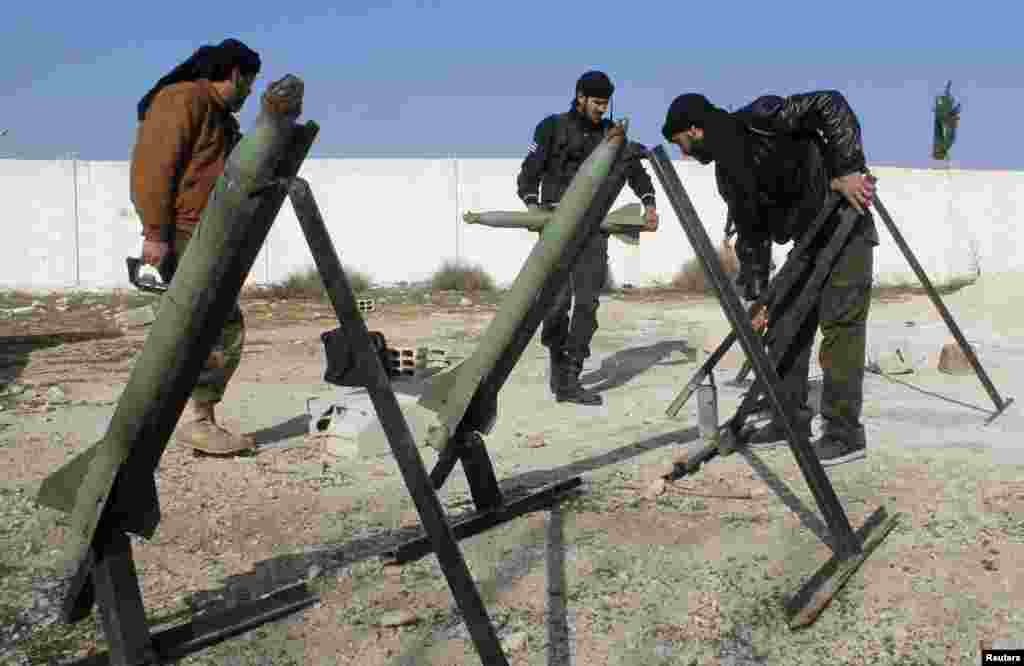
1/10Fighters from the Free Syrian Army's Saif al-Umayyad brigade prepare rockets to be launched towards forces loyal to Syria's President Bashar al-Assad in the eastern Damascus suburb of Ghouta, Jan. 16, 2014.
Show moreShow less
2/10Men ride a motorbike past buildings damaged by what activists said was shelling by forces loyal to Syria's President Bashar al-Assad in Daraya, Jan. 15, 2014.
Show moreShow less
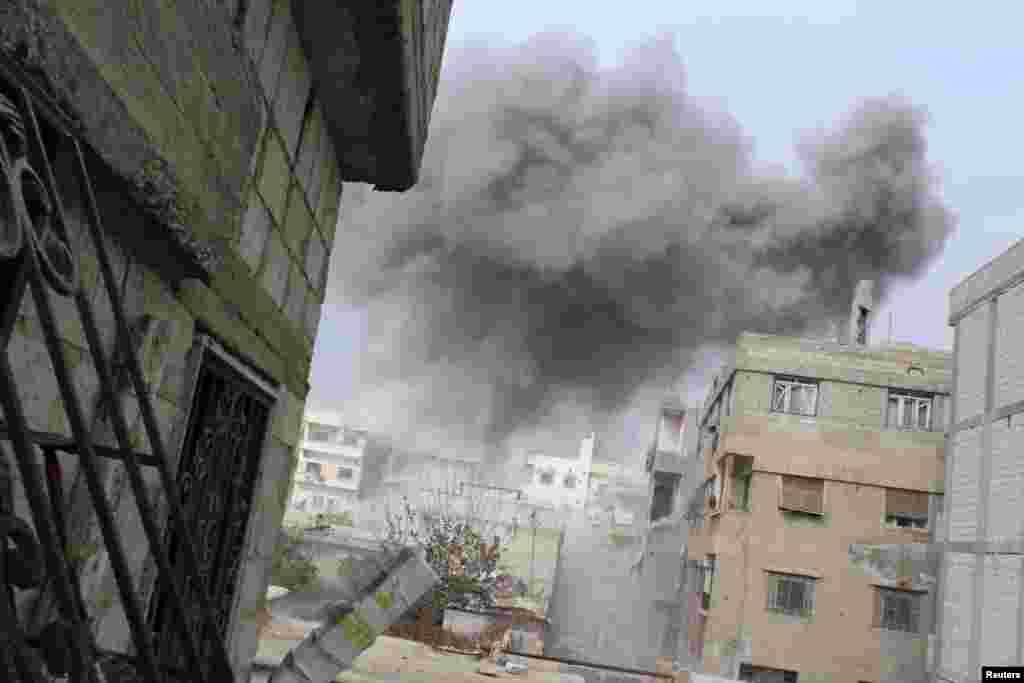
3/10Smoke rises from buildings after what activists said was shelling from forces loyal to Syria's President Bashar al-Assad in the besieged area of Homs, Jan. 15, 2014.
Show moreShow less
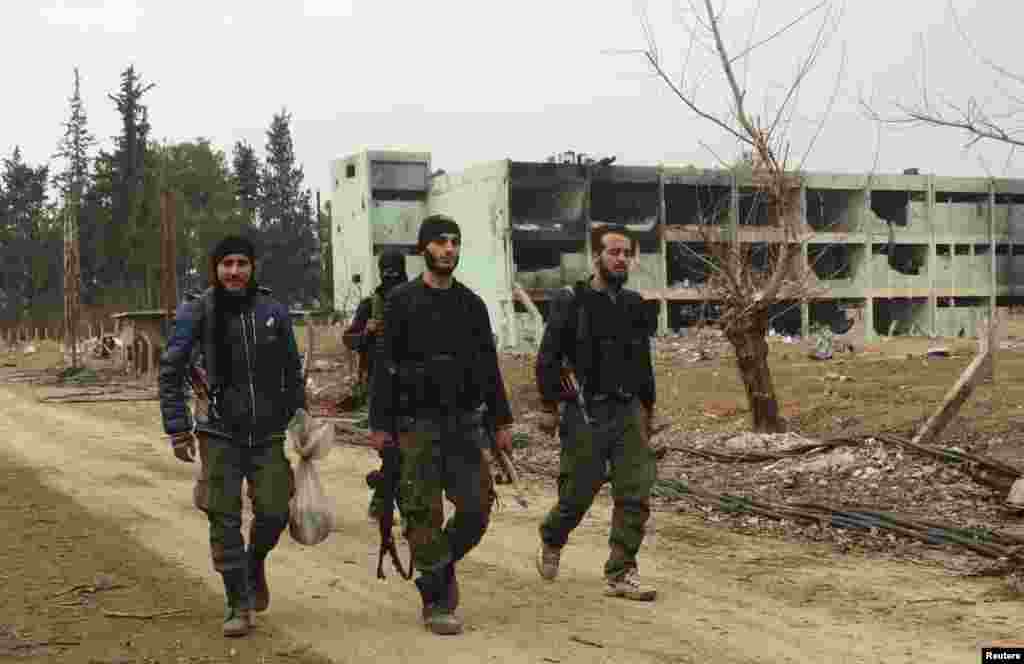
4/10Free Syrian Army fighters walk at the Tameko pharmaceutical factory after the FSA claimed to have taken control of the factory, in eastern al-Ghouta, near Damascus, Jan. 14, 2014.
Show moreShow less
5/10A girl carries her belongings as she walks on rubble at a site hit by what activists said was an airstrike by forces loyal to Syria's President Bashar al-Assad in Arbeen, Jan. 14, 2014.
Show moreShow less
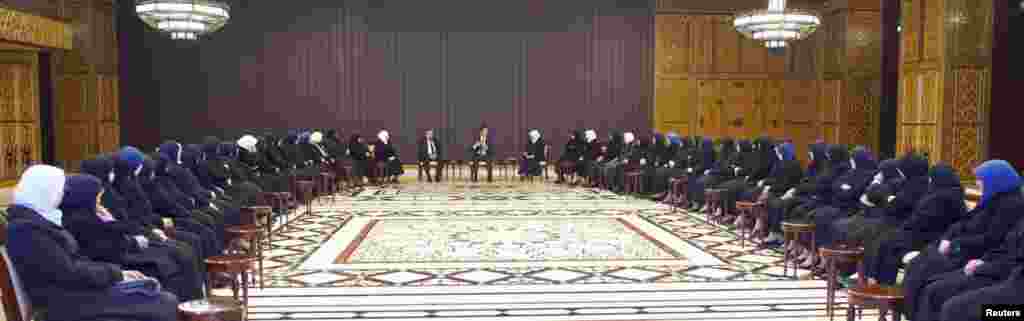
6/10This SANA photo shows Syrian President Bashar al-Assad speaking to female preachers from mosques in Damascus and its countryside and educators of religious high schools and institutes in Damascus, Jan. 14, 2014.
Show moreShow less
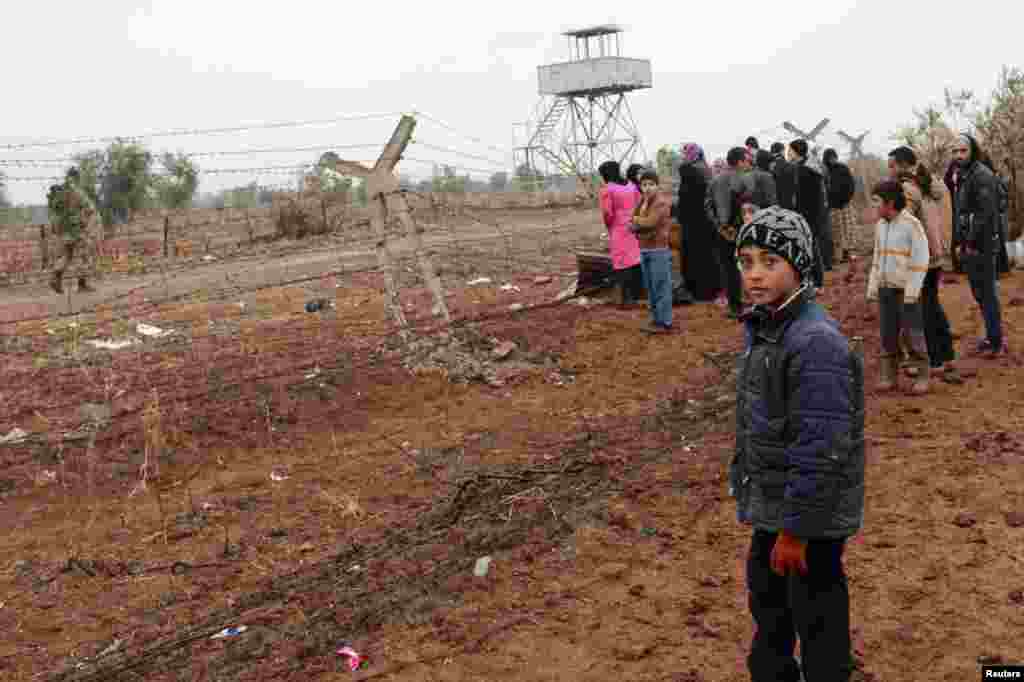
7/10Syrian refugees wait to enter Turkey on the Syrian-Turkish border in Shamm Alqrain village, Jan. 13, 2014.
Show moreShow less
8/10Smoke rises from what activists said were explosive barrels thrown from helicopters on Daria outside Damascus, Jan. 12, 2014.
Show moreShow less
9/10Damaged buildings are pictured in the besieged area of Homs, Jan. 12, 2014.
Show moreShow less
10/10Residents inspect the damage caused by Islamic State in Iraq and the Levant suicide bombers at the Tawhid Brigade and Al-Fateh brigade headquarters in Aleppo, Jan. 12, 2014.