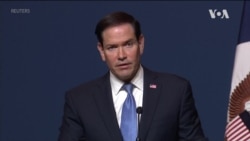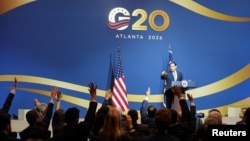
At the G20 Foreign Ministers' Meeting in Atlanta, Secretary of State Marco Rubio answered VOA questions on Saturday, outlining the Trump administration’s foreign policy priorities and addressing a range of key international issues.
In a response to a VOA question about the upcoming top-level G20 meeting in Miami, Secretary Rubio said that the focus of the administration is on global economic growth and bringing the summit back to what he said it is meant be: growing the US and global economies.
“The core of this meeting and the core of what the president's vision has been for G20 is to bring the G20, which is primarily an economic forum, back to its core principle and purpose, and that's what we tried to address in the agenda we outlined today,” he said.
“That doesn't mean that geopolitical issues weren't discussed on the sidelines by different countries, but that's what we focused on in both our agenda and in our engagements.” He added.
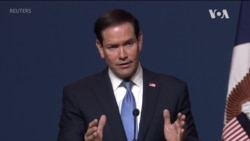

U.S. Secretary of State Rubio also said that President Donald Trump is open to meeting with North Korea leader Kim Jong Un to discuss issues of concern to the U.S. and its ally, South Korea, but stated that no meeting was scheduled.
“I think the president's perspective is if North Korea and Kim Jong Un is prepared to talk with the United States about issues that are of concern to us and concern to our allies like South Korea, he'd be open to doing it,” the top U.S. diplomat said in response to a question from VOA about what concrete steps the administration is taking to bring North Korea back to the negotiating table. Secretary Rubio also said that no meeting was currently scheduled.
“I think if something productive could come from such talks, he'd be open to doing it again.” Rubio said, speaking at a press conference in Atlanta, Georgia, during the G20 meeting.
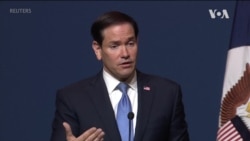
Regarding the conflict between Pakistan and the Taliban rulers in Afghanistan, Rubio told VOA the U.S. shares Pakistan's concerns about terror attacks that Islamabad says originate in Afghanistan and that the Taliban has not done enough to stop them.
“We obviously don't want them to be targeted for terrorism. So, if there's a productive role for us to play, we would play it. We don't necessarily have the closest relationship with the Taliban, as you can imagine,” he said.
“We've heard the concerns that Pakistan has raised, and we've seen some of those attacks that they point to. We're against terrorism, no matter where it emanates from and who it targets,” Rubio added.