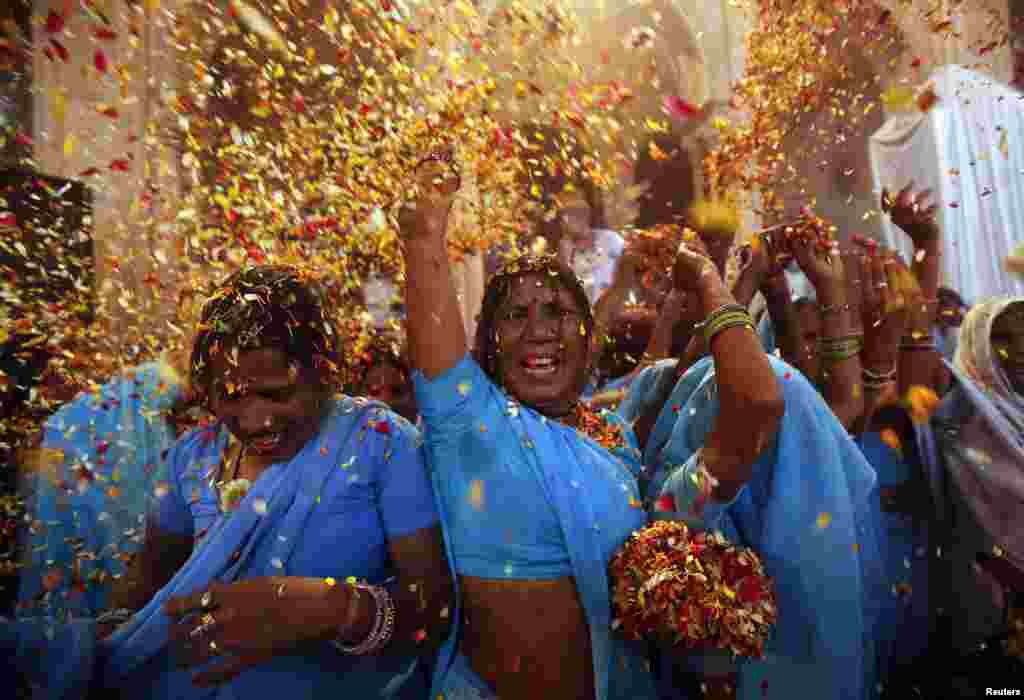
Widows throw flowers into the air during a holi celebration at the Meera Sahavagini ashram in Vrindavan in the northern Indian state of Uttar Pradesh, March 24, 2013.
NEW DELHI —
In India, hundreds of widows participated in a Hindu festival for the first time in decades in a town where many women take shelter after the death of their husbands. It is seen as an important symbol of ending centuries of oppression of widows.
For decades, thousands of widows, who are abandoned by their families, have headed to the pilgrim town of Vrindavan, about 150 kilometers east of New Delhi.
Shunned women
As per tradition that is still followed by some, Hindu widows are considered inauspicious or unlucky. As a result, in many homes, they are treated like outcasts and are ostracized by their family and community and not allowed to participate in any celebration. Many are turned out of their homes.
Thousands of these shunned women leave their towns and villages to live in shelters in Vrindavan, which has come to be known as the city of widows. Life is not easy for these destitute widows. Dressed in white - the color of mourning in India, they are often seen begging.
Breaking tradition
But this year, hundreds of widows in Vrindavan broke centuries of tradition, when led by social activists, they stepped out of their shelters to participate in the festival of Holi. Holi is a riotous celebration when people come out into the streets and throw colored powder and water at each other.
Hindu Widows End Oppressive Practices
1/6Widows celebrate by throwing flowers and colored powder into the air during a Holi celebration March 24, 2013. Holi, also known as the Festival of Colors, heralds the beginning of spring and is celebrated all over India.
Traditionally in Hindu culture, widows are expected to renounce earthly pleasures. For the first time in decades, hundreds of widows participated in a Hindu festival in a northern town where many women become reclusive after the death of their husbands. Their participation in this Hindu festival is seen as an important symbol of resisting centuries of oppression of widows.
Show moreShow less
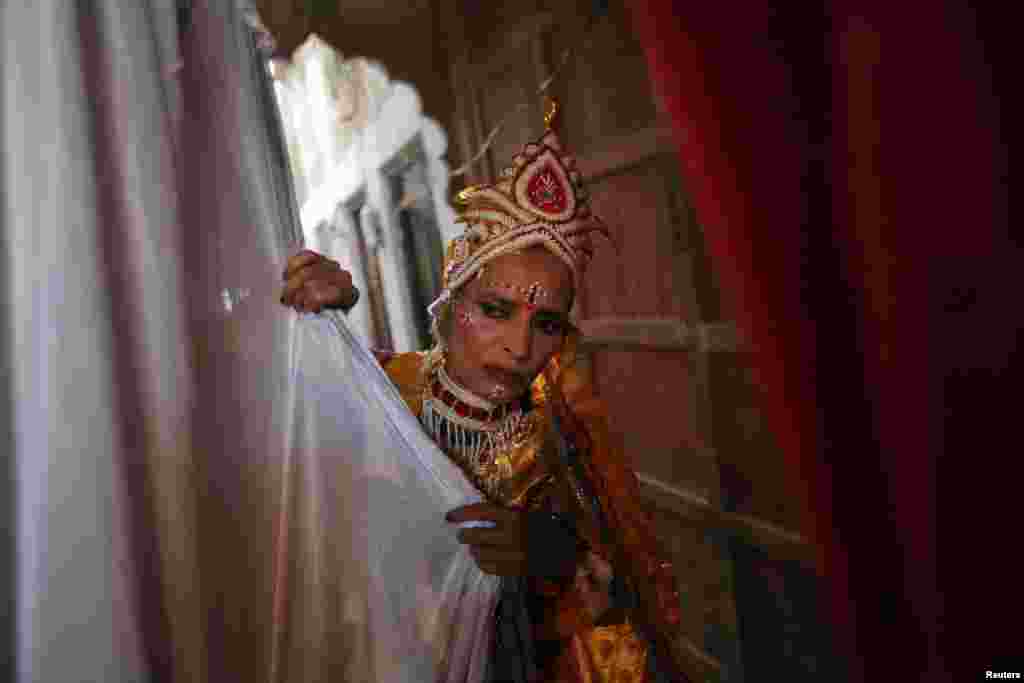
2/6A widow dressed as the Hindu goddess Radha looks out from behind a curtain during a Holi celebration at the Meera Sahavagini ashram in Vrindavan, in the northern Indian state of Uttar Pradesh, March 24, 2013.
Traditionally in Hindu culture, widows are expected to renounce earthly pleasures. For the first time in decades, hundreds of widows participated in a Hindu festival in a northern town where many women become reclusive after the death of their husbands. Their participation in this Hindu festival is seen as an important symbol of resisting centuries of oppression of widows.
Show moreShow less
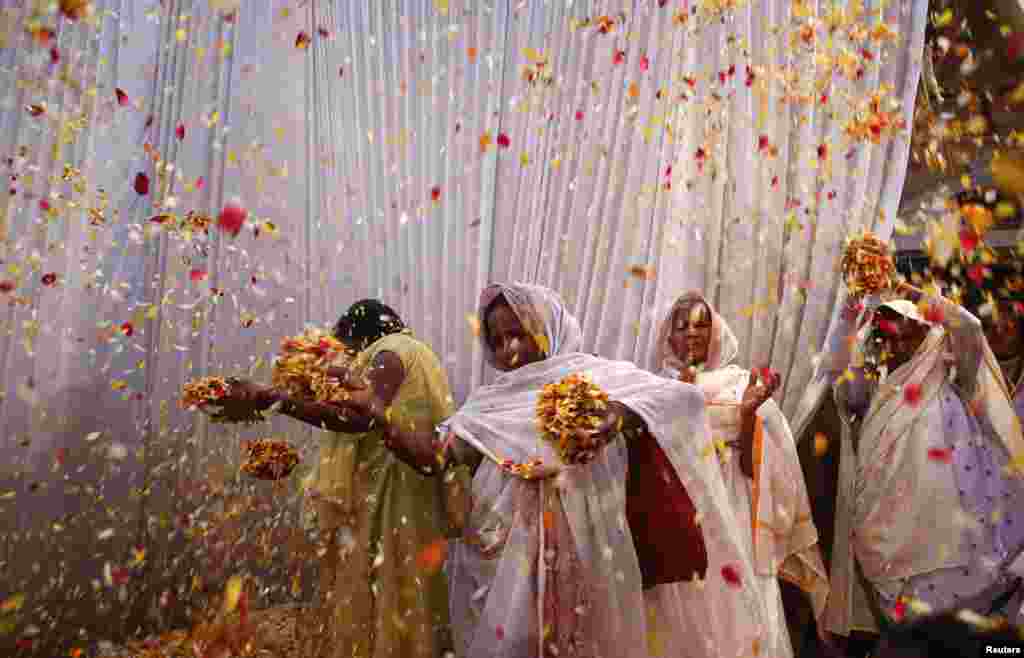
3/6Widows throw flowers into the air during a Holi celebration, March 24, 2013.
Traditionally in Hindu culture, widows are expected to renounce earthly pleasures. For the first time in decades, hundreds of widows participated in a Hindu festival in a northern town where many women become reclusive after the death of their husbands. Their participation in this Hindu festival is seen as an important symbol of resisting centuries of oppression of widows.
Show moreShow less
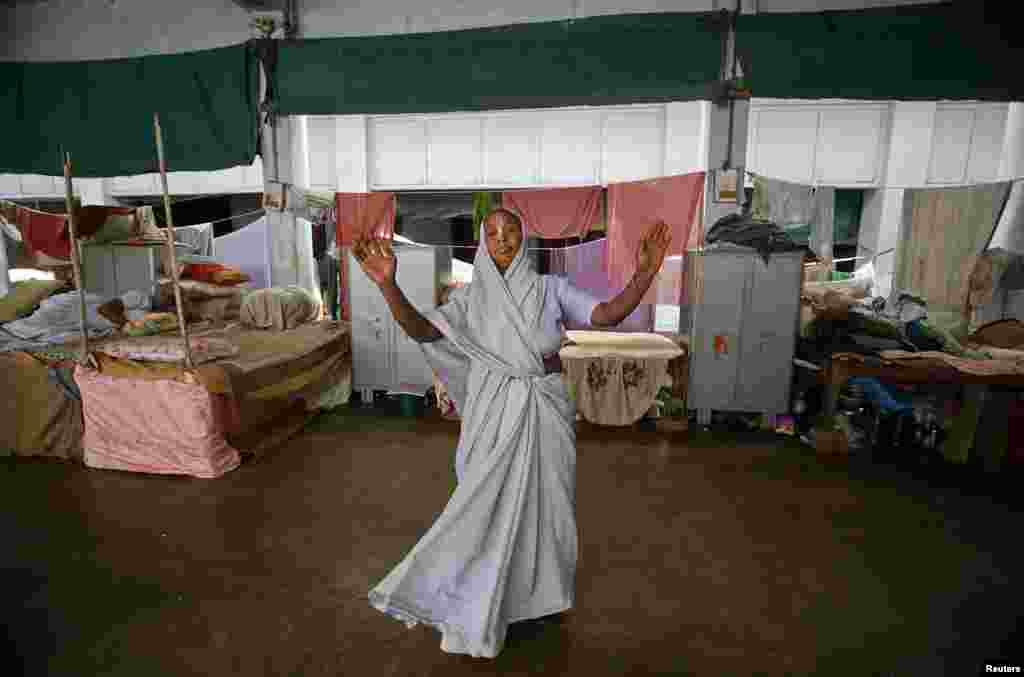
4/6A widow dances in a dormitory during Holi celebrations at the Meera Sahavagini ashram in Vrindavan, Uttar Pradesh, March 24, 2013.
Traditionally in Hindu culture, widows are expected to renounce earthly pleasures. For the first time in decades, hundreds of widows participated in a Hindu festival in a northern town where many women become reclusive after the death of their husbands. Their participation in this Hindu festival is seen as an important symbol of resisting centuries of oppression of widows.
Show moreShow less
5/6A boy covered in colored powder poses with a group of widows during a Holi celebration, March 24, 2013.
Traditionally in Hindu culture, widows are expected to renounce earthly pleasures. For the first time in decades, hundreds of widows participated in a Hindu festival in a northern town where many women become reclusive after the death of their husbands. Their participation in this Hindu festival is seen as an important symbol of resisting centuries of oppression of widows.
Show moreShow less
6/6Widows raise their hands as they throw flowers into the air during a Holi celebration, March 24, 2013.
Traditionally in Hindu culture, widows are expected to renounce earthly pleasures. For the first time in decades, hundreds of widows participated in a Hindu festival in a northern town where many women become reclusive after the death of their husbands. Their participation in this Hindu festival is seen as an important symbol of resisting centuries of oppression of widows.
Show moreShow less
Previous slide
Next slide
Earlier, they could only play ‘Holi’ with god Krishna, the main deity in the holy town. A social reformer from Uttar Pradesh, Shravan Kumar Singh, who played Holi with the widows on Sunday, says they felt old barriers had come crashing down.
Singh says many of the women had tears in their eyes when they came out to take part in the revelry. He says many people in the town also appreciated the efforts to reintegrate them in society.
Celebrations - rehabilitation
The Holi celebrations were organized by Sulabh International, which last year launched a rehabilitation program for widows in five government-run shelters. This involves giving them education, vocational skills, health care facilities and an allowance of $40 a month to ensure that they have enough food.
Bindeshwar Pathak, founder of Sulabh, also joined the celebrations. He says bringing the widows back into the social mainstream has given them a new lease of life. “When I came last, in August 2012, everybody used to say 'no, we want to die now. We don’t want to live more.' Yesterday when we celebrated Holi, they all said, no, no, no, we want to live, they are forgetting the past,” he stated.
Sulabh International began work in Vrindavan last year after the supreme court took note of the poor conditions under which the widows live and stressed the need to ameliorate their plight. The Vrindavan widows have become symbols of centuries of oppression of women who lose their husbands.