


Editor's note: this story was translated from the original VOA Kurdish article.
The Central Bank of Iraq announced that effective Wednesday it has changed the official exchange rate of the Iraqi dinar against the U.S. dollar, citing current economic and financial conditions and a recommendation from the country's Council of Ministers.
Under the new rates, the Central Bank will purchase U.S. dollars from the Ministry of Finance at 1,500 dinars per dollar and sell them to banks at 1,510 dinars. Banks will sell dollars to the public at 1,520 dinars.
Before the decision, the official selling rate to the public was 1,320 dinars per dollar. The increase to 1,520 represents a significant devaluation of the Iraqi currency.
The Central Bank said Iraq's foreign currency reserves remain sufficient to meet demand, including financing foreign trade, the use of bank cards abroad and providing dollars to travelers.
Mazhar Mohammed Salih, financial and economic adviser to the Iraqi prime minister, told VOA that the stability of the dinar depends largely on the availability of foreign currency and Iraq's ability to finance its foreign trade.
"Regional and international conditions, particularly conflicts and tensions in the region and their impact on oil transit through the Strait of Hormuz could affect oil revenues, the general budget and the flow of foreign currency," Salih said.
He said the government's current fiscal, tax, and customs measures are precautionary. Monetary policy will continue to manage the foreign currency market and provide dollars for foreign trade, while fiscal policy will seek to limit the effects of external economic shocks by managing government spending, revenues and taxes.
Addressing concerns about the impact of the weaker dinar on consumers, Salih said the Iraqi government would continue spending on food, medicine, fuel and basic services to reduce the impact of higher prices on citizens' purchasing power.
The decision has drawn opposition from members of the Iraqi parliament. Several lawmakers began collecting signatures seeking to reverse the measure, while parliament postponed its regular agenda on Wednesday to discuss the exchange rate.
Parliament later adjourned its session, and Speaker Mohammed al-Halbousi called on the governor of the Central Bank and the finance minister to appear before lawmakers early Thursday to explain the reasons for the decision and its expected economic and financial consequences.
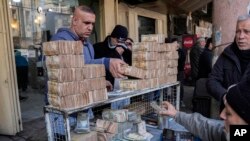
The devaluation also triggered public concern and disruptions in some markets. Some shops, markets and currency exchange offices in Baghdad and several other provinces closed as the market exchange rate reportedly climbed to around 1,800 dinars per dollar.
The Central Bank, however, says adjusting the value of the dinar could provide longer-term benefits to the Iraqi economy by supporting domestic production and local industries, making Iraqi products more competitive, encouraging investment in non-oil sectors and creating new employment opportunities.