


Editor's note: this story was translated from the original VOA Kurdi article.
Jordanian airstrikes targeting Islamic State (ISIS) positions in southern Syria have underscored the continuing threat posed by the militant group, with security analysts warning that regional conflicts, political instability and economic hardship could create conditions for its resurgence.
The strikes, carried out Monday in Syria’s Daraa province, also triggered tensions between Amman and Damascus, raising questions about how neighboring countries can coordinate counterterrorism operations while protecting civilians and respecting national sovereignty.
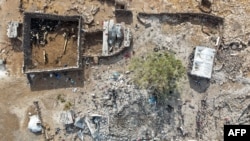
Jordan said its forces killed nearly two dozen ISIS militants and destroyed a major weapons depot. Syrian authorities, however, said seven civilians, including three children, were killed and three others wounded. Damascus condemned the attacks, saying they were conducted without prior coordination.
Seeking to contain the diplomatic fallout, Jordan and Syria agreed late Tuesday to establish a joint security committee to investigate the strikes and strengthen security cooperation.
The agreement followed a telephone conversation between Syrian Foreign Minister Asaad al-Shaibani and Jordanian Foreign Minister Ayman Safadi. According to a joint statement, the committee will examine the attacks and develop mechanisms for intelligence sharing and coordination on the ground.
Jordanian Information Minister Mohammad Momani said preliminary assessments indicated significant damage to ISIS capabilities, describing the organization as a shared security threat that Jordan would not tolerate.
But analysts say military operations alone cannot eliminate the conditions that allow extremist organizations to survive.
Hassan Abu Haniyeh, a Jordanian researcher specializing in Islamist movements, told Voice of America that economic hardship, political instability and restrictions on freedoms can fuel extremism.
He said instability in Syria and Iraq, combined with the conflict involving Iran, Israel and the United States, as well as poverty and unemployment, could create opportunities for extremist recruitment.
Colin P. Clarke, executive director of the Washington-based Soufan Center, warned that ISIS cells remain active across the region and could strengthen in the coming years.
Clarke told VOA he expects the Trump administration to expand intelligence sharing and security cooperation with Jordan, a longstanding U.S. ally.
He charged, “there are clearly some ISIS-linked networks embedded in the region that have reach into Jordan. These networks could grow stronger over time as militants are pushed from certain areas into others. I think the Trump administration will seek to enhance security cooperation and intelligence sharing with the Jordanians, who are already close allies, but I wouldn't expect additional U.S. troops as Washington is drawing down resources from the Middle East.”
He said Syrian President Ahmad al-Sharaa’s government also has an important role in preventing an ISIS resurgence, although its ability to confront the group is constrained by competing security and political challenges.
Rami Abdulrahman, director of the Syrian Observatory for Human Rights, warned that extremist ideology can spread beyond Syria into neighboring Jordan, Iraq and Lebanon.
He told VOA that combating ISIS requires not only security operations but also educational and cultural efforts to counter radicalization.
Iraqi security analyst Fadhil Abu Ragheef described Jordan’s strikes as potentially effective in reducing cross-border militant threats. He said Iraq faces similar risks but has developed stronger counterterrorism capabilities.
Analysts say preventing a wider extremist resurgence will require sustained intelligence cooperation, civilian protection and efforts to address the underlying causes of radicalization.