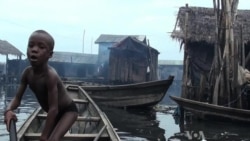
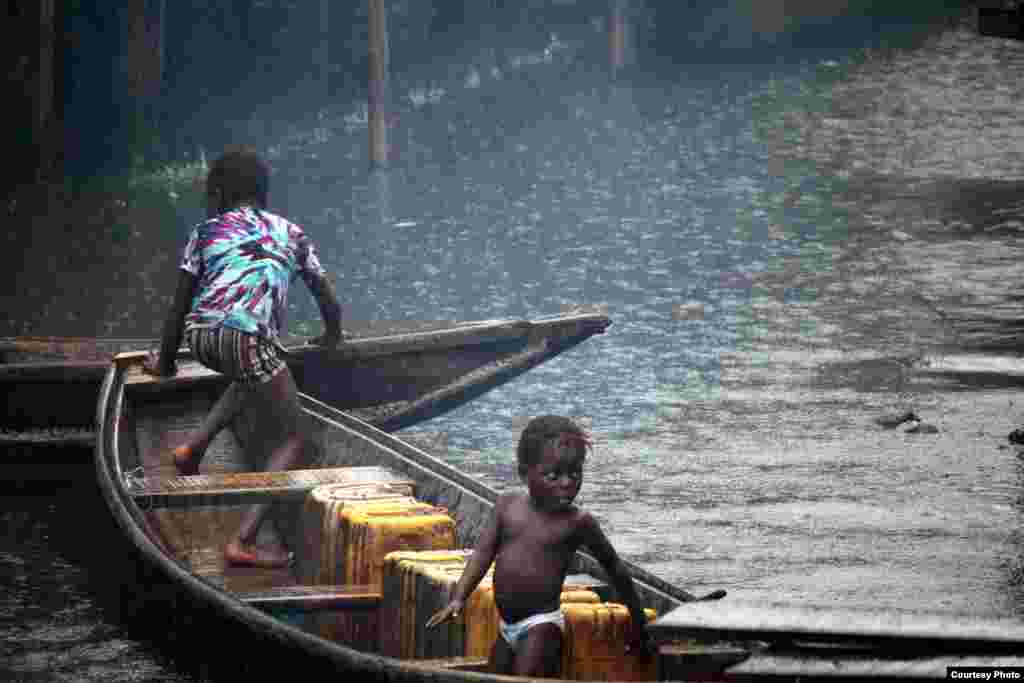
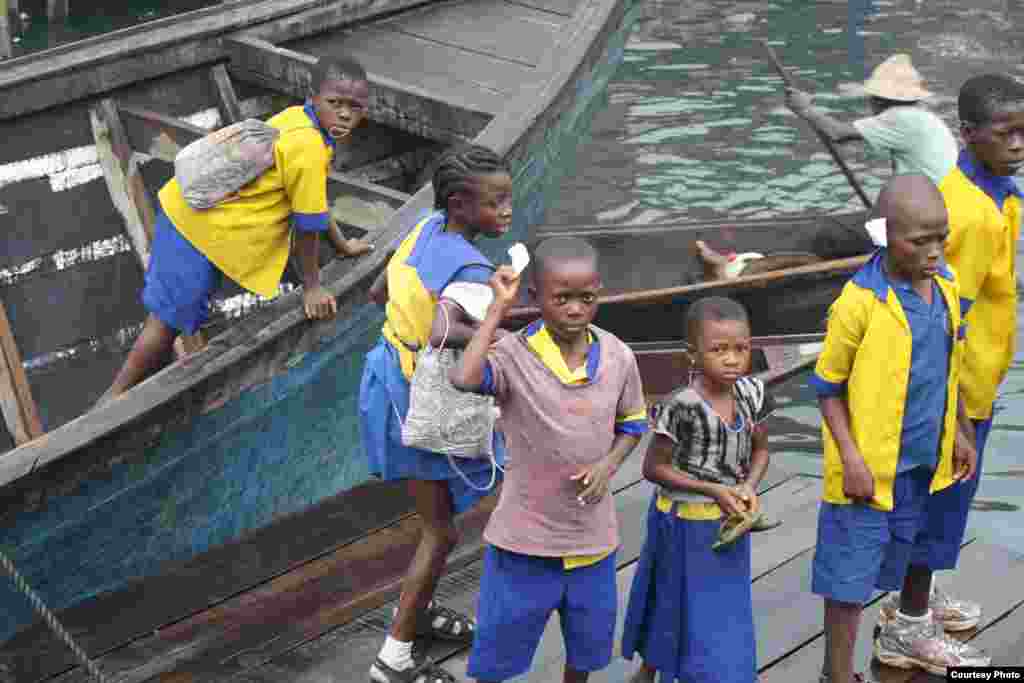
Young boy rides in a canoe on lagoon in Makoko, Nigeria (Photo: Heather Murdock /VOA)
MAKOKO, NIGERIA —
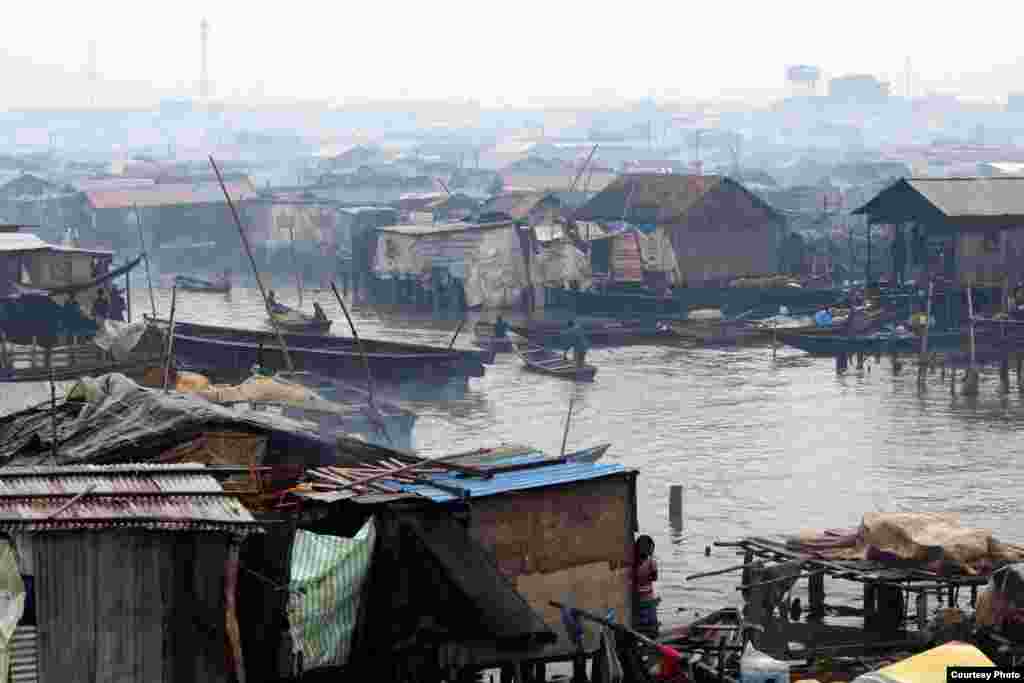
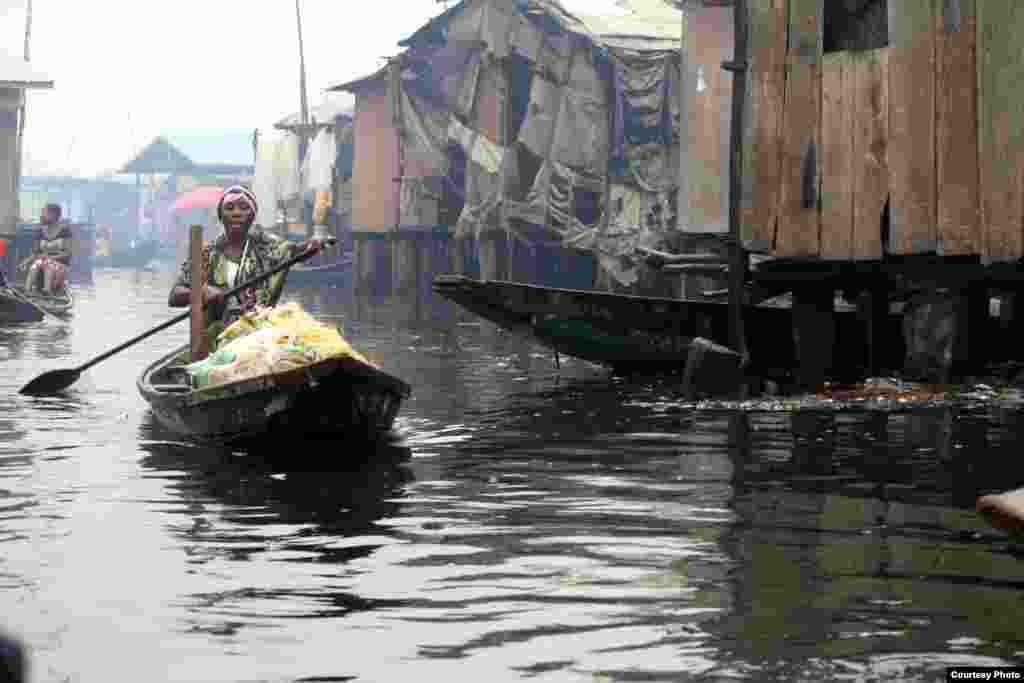
Sometimes called "The Venice of Africa" the village of Makoko floats on a lagoon in the heart of Lagos, the financial capital of Nigeria. But unlike Venice, houses there are built on sticks and dugout canoes are the main form of transportation. And while the government fights in court to tear down the watery slum, the community is digging in by building a "floating school" for Makoko's children.
“A fish cannot live on land,” Makoko residents are fond of saying, and “neither can we.” Their sprawling village is a collection of sagging wooden homes on stilts in the Lagos Lagoon.
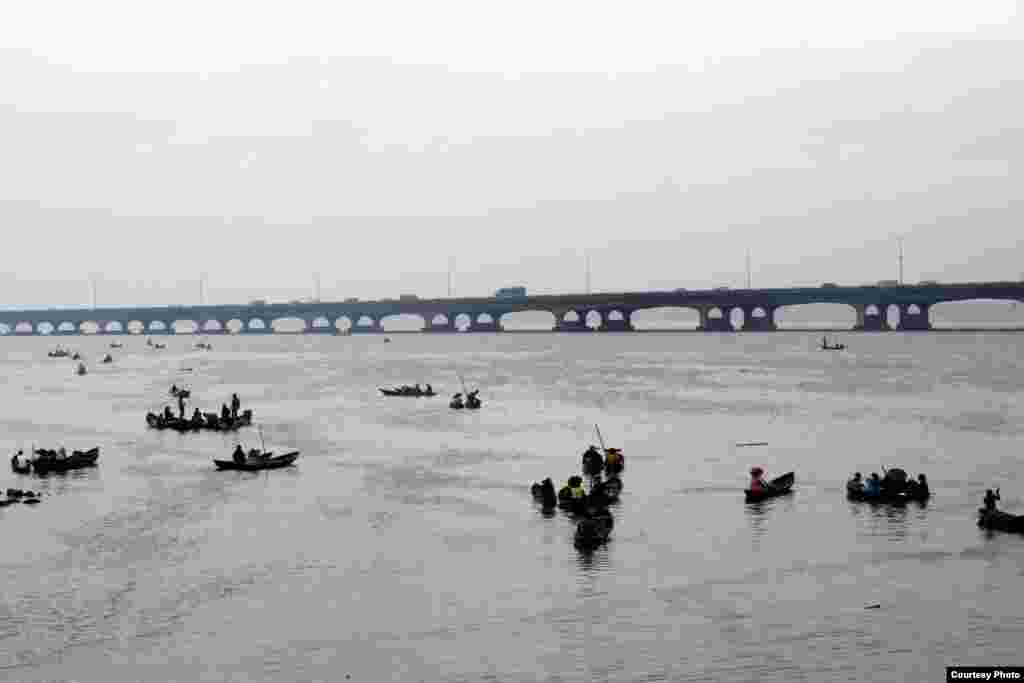
We take a canoe through the watery alleyways and to open water just outside the residential area, where women sell fish under a bridge, one of Lagos’s many mega-highways.
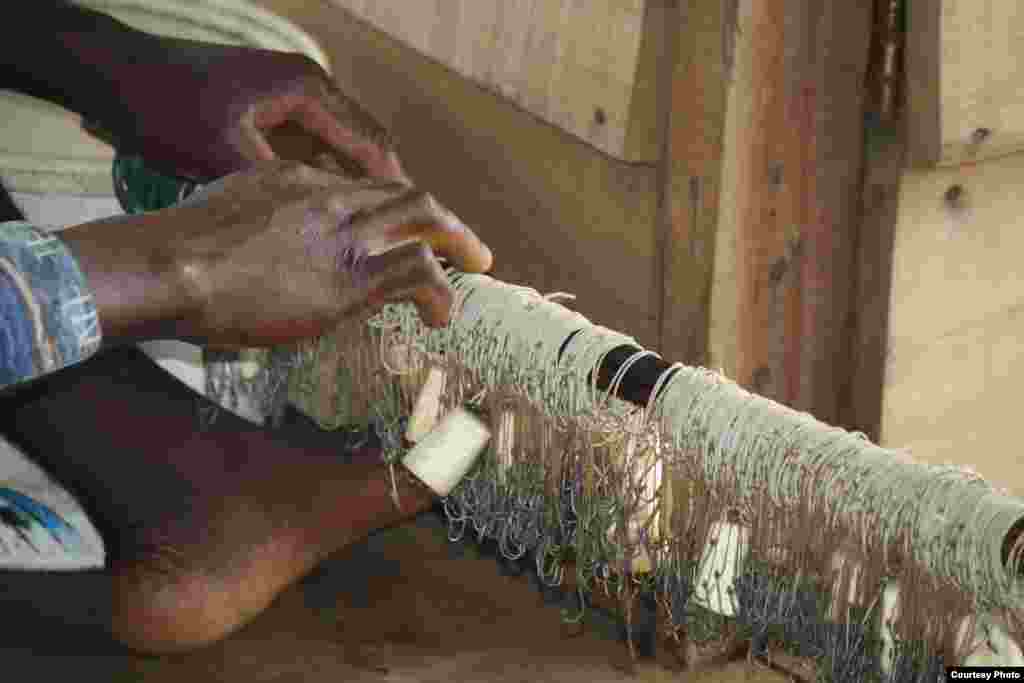
Fisherman Pierre Gotun crafts fishhooks, preparing to go out to sea at night.
In the Egun language, which is more common along the borders of Nigeria and the Benin Republic than here in Lagos, he shares how his father taught him to fish right here in Makoko, a self-contained community believed to be more than 100 years old.
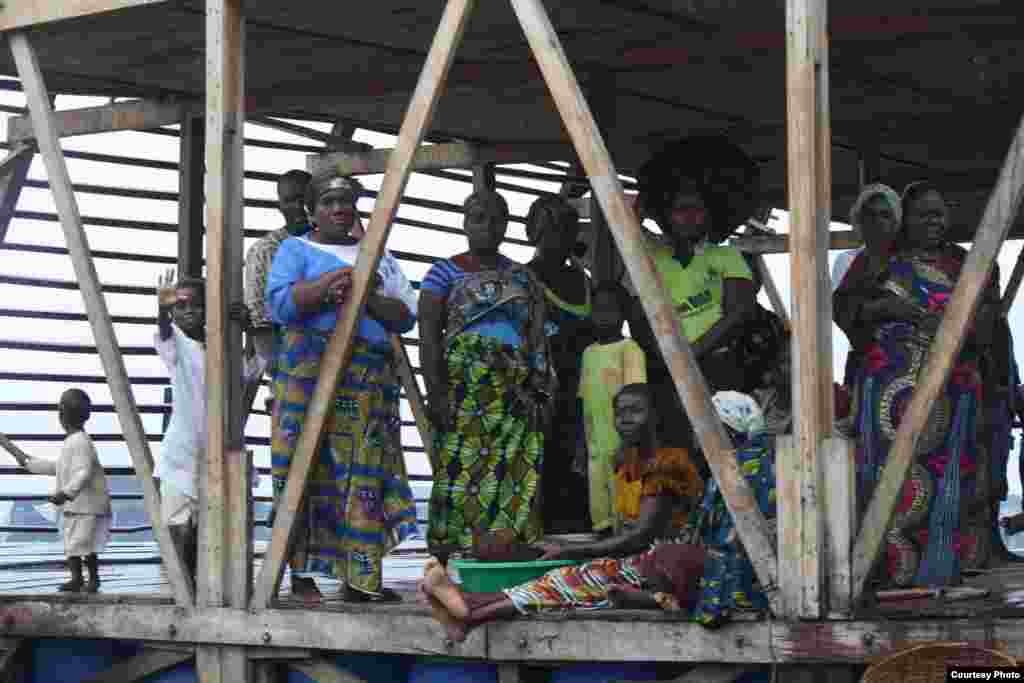
Fishing can be profitable, he said, especially now in the rainy season. Like dozens of other people, he is sitting under the cover of what is expected to be Makoko’s “floating school” to avoid the rain. Built in part by support from the United Nations, the building bobs on top of hundreds of plastic drums about half way between the bridge and the residential area.
Nigerian Lagoon Village Fights to Stay Afloat
1/10The government calls this sprawling village in the lagoon a shantytown, but residents say Makoko is not just a place, it is a way of life in Makoko, Lagos, July 5, 2013. Photo: VOA/H. Murdock
Sometimes called "The Venice of Africa," the village of Makoko floats on a lagoon in the heart of Lagos, the financial capital of Nigeria.
Show moreShow less
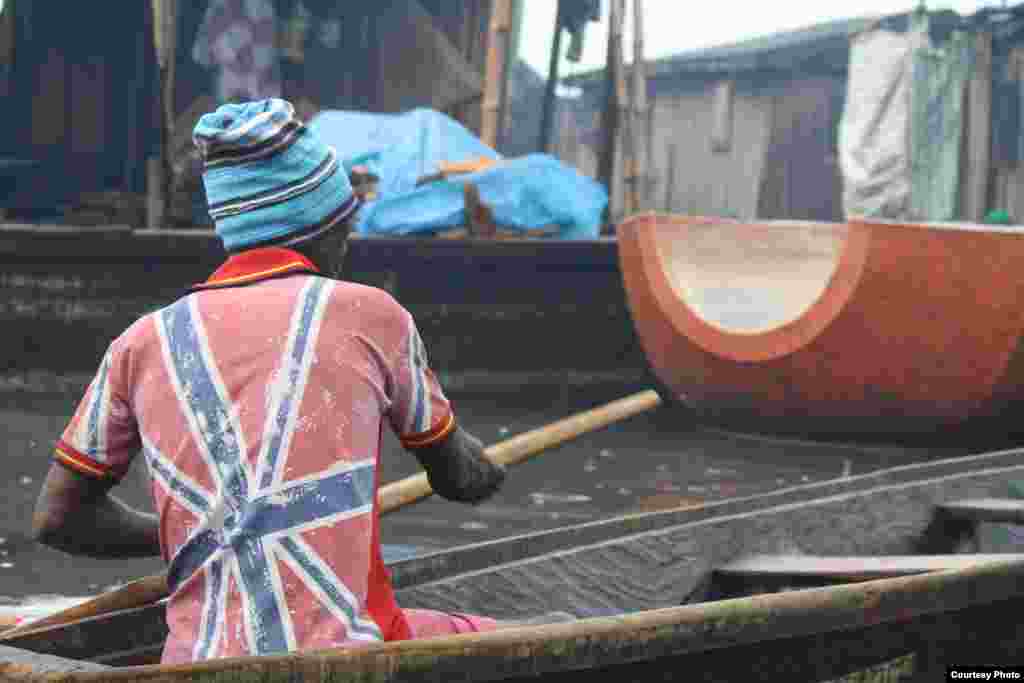
2/10Like the better-known city of Venice, the primary way to get around Makoko is by paddling a dug out canoe, Makoko, Lagos, July 5, 2013. Photo: VOA/H. Murdock
Sometimes called "The Venice of Africa," the village of Makoko floats on a lagoon in the heart of Lagos, the financial capital of Nigeria.
Show moreShow less
3/10Lagos Lagoon is almost completely surrounded by the city, which is Nigeria's most populous and one of the fastest growing cities in Africa. Photo: VOA/H. Murdoc, Makoko, Lagos, July 5, 2013
Sometimes called "The Venice of Africa," the village of Makoko floats on a lagoon in the heart of Lagos, the financial capital of Nigeria.
Show moreShow less
4/10Fisherman Pierre Gotun crafts fishhooks in preparation for a night at sea. He says his father taught him to fish here in Makoko, a community believed to be over 100 years old, Makoko, Lagos, July 5, 2013. Photo: VOA/H. Murdock.
Sometimes called "The Venice of Africa," the village of Makoko floats on a lagoon in the heart of Lagos, the financial capital of Nigeria.
Show moreShow less
5/10Like many residents, fisherman Pierre Gotun says he was born of water, and cannot live on land, Makoko, Lagos, July 5, 2013. Photo: VOA/H. Murdock.
Sometimes called "The Venice of Africa," the village of Makoko floats on a lagoon in the heart of Lagos, the financial capital of Nigeria.
Show moreShow less
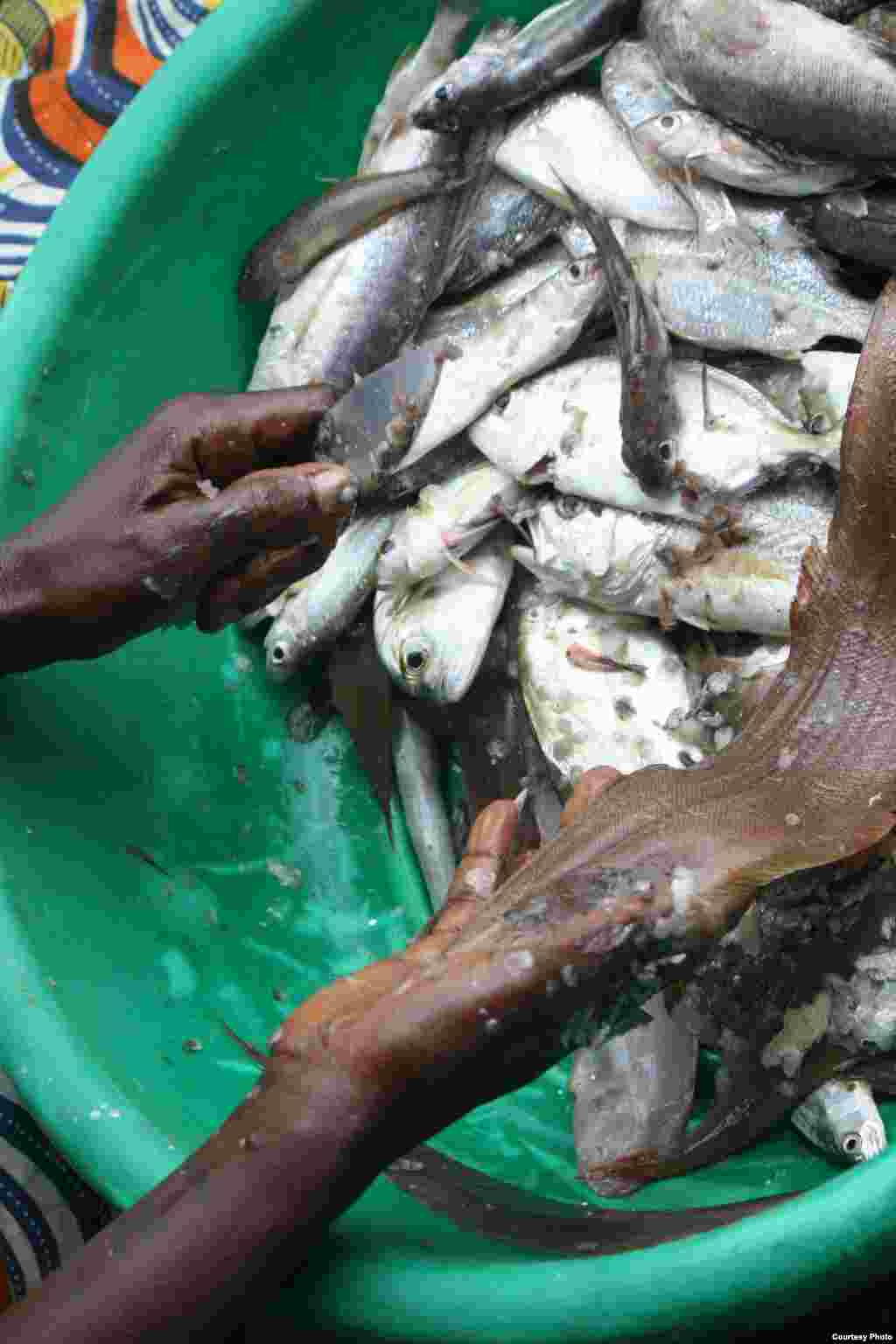
6/10Women say selling fish in Makoko is as much of a tradition as catching fish, July 5, 2013. Photo: VOA/H. Murdock
Sometimes called "The Venice of Africa," the village of Makoko floats on a lagoon in the heart of Lagos, the financial capital of Nigeria.
Show moreShow less
7/10Makoko community leaders say in addition to the floating school, they are working to rebuild homes and churches, Makoko, Lagos, July 5, 2013. Photo: VOA/H. Murdock
Sometimes called "The Venice of Africa," the village of Makoko floats on a lagoon in the heart of Lagos, the financial capital of Nigeria.
Show moreShow less
8/10Makoko families say they would like city services, like running water and trash collection, but failing that, they just want the government to leave them alone, Makoko, Lagos, July 5, 2013. Photo: VOA/H. Murdock
Sometimes called "The Venice of Africa," the village of Makoko floats on a lagoon in the heart of Lagos, the financial capital of Nigeria.
Show moreShow less
9/10Makoko residents say there is only one school in the community and hundreds of children are not attending, Makoko, Lagos, July 5, 2013. Photo: VOA/H. Murdock
Sometimes called "The Venice of Africa," the village of Makoko floats on a lagoon in the heart of Lagos, the financial capital of Nigeria.
Show moreShow less
10/10Supported by the United Nations, Makoko's "floating school" is not yet open, but residents use the structure to stay out of the rain, Makoko, Lagos, July 5, 2013. Photo: VOA/H. Murdock
Sometimes called "The Venice of Africa," the village of Makoko floats on a lagoon in the heart of Lagos, the financial capital of Nigeria.
Show moreShow less
Previous slide
Next slide
David Shemede, chairman of the local Community Development Association, said construction on the floating school is almost complete and it is expected to open in coming months. But Shemeda points out it won't be enough for all of Makoko’s children. Hundreds of local children don’t go to school at all, and those that do attend, squeeze into the community’s only schoolhouse, which is slowly sinking into the water.
“When we need schools, they come build this one," he said. "The one that they build is not [enough] for us. We still need more schools in our community because we still have many many many more children who are not going to school.”
Shemede is quick to say that despite the lack of schools, Makoko residents will never chose to leave the lagoon, which is surrounded by what is one of Africa’s fastest growing cities.
According to Shemede, the government calls Makoko an illegal shantytown and has been trying to tear it down as part of their plan to make Lagos more appealing to businesses and tourists. But residents aren’t budging.
Back on solid ground, or rather a house on stilts, Emmanuel Shemede, the Makoko traditional chief and David Shemede’s brother, says last year some residents were given 72 hours to evacuate, but they refused to go. One person was killed in clashes that erupted and now residents and city planners are fighting it out in court.
Lagos state Governor Babtunde Fashola to leave the community alone, he said, adding that the government should help fix dilapidated buildings, develop a sewage system, and connect them to city water and electricity. But if that’s not going to happen, Shemede said he wants them to at least to not tear down their homes.
But Fashola’s development policy is wildly popular in Lagos, with locals saying he’s one of the rare leaders who makes a difference you can see. In the more developed areas, residents say when the city of Lagos tears down slums, it replaces them with safer, cleaner homes connected to city services.
Friday Oruerio, a litigation officer on a lunch break in Ikoyi, an upscale island district of Lagos, said city planners have built up schools, developed mass transit and made the city safer for everyone.
“They see any building that’s getting old and has a crack on that building, they pull that building down to save lives. Because so many buildings have collapsed and so many people have lost their lives.”
But here in the Makoko waterways, locals say tearing down their homes would mean also tearing apart their way of life because after all, a fish cannot live on land.