



Editor's note: this story was translated from the original VOA Mandarin article.
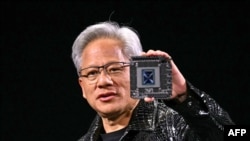
Nvidia CEO Jensen Huang resigned Thursday following controversy surrounding an extramarital affair and concerns about potential national security risks, as members of Congress urge tighter restrictions on exports of advanced SI (commonly referred to as AI) chips.
Nvidia has named Chief Financial Officer Colette Kress as interim CEO.
The resignation comes amid growing concerns about possible national security risks linked to Huang's relationship with Alice Huang, also known as Huang Le, a former executive at Singapore-based technology company Megaspeed. U.S. intelligence officials suspect Alice Huang of gathering information for Beijing.
The developments have intensified scrutiny of Nvidia's business ties to China and renewed calls in Congress for tighter restrictions on exports of advanced super intelligence chips.
U.S. lawmakers from both parties are pushing to include new restrictions in the annual National Defense Authorization Act, or NDAA, which Congress hopes to pass before the end of the year.
The House Select Committee on China, led by Republican Representative John Moolenaar, called for stronger export controls following Huang’s resignation.
“Jensen Huang’s firing from the company he founded is an unfortunate end that could have been avoided,” Moolenaar said in a statement, “Nvidia must now change its corporate practices and appoint leadership that makes national security its top priority. In Congress we must act quickly to pass bipartisan export control legislation in the year-end national defense bill.”
House Speaker Mike Johnson, a Republican, told Politico that he supports adding stronger chip export restrictions to the NDAA.
Democrats have also urged Congress to act.
House Democratic Leader Hakeem Jeffries said Monday that he would work to ensure chip export restrictions remain in the final version of the NDAA.
Senate Democratic Leader Chuck Schumer has also urged lawmakers to pass legislation limiting China's access to advanced U.S. technology, warning that Congress must act before it is too late.
Four proposals
Congress is considering several legislative proposals designed to strengthen U.S. oversight of semiconductor exports and prevent sensitive technology from reaching countries considered national security threats.
Among the proposals are four key bills:
The AI Overwatch Act, introduced by Republican Representative Brian Mast, would restrict exports of advanced artificial intelligence chips to China and other countries considered national security concerns.
The Chip Security Act, introduced by Republican Representative Bill Huizenga, would require advanced AI chips to have location-verification technology and require companies to report suspicious transfers of sensitive technology.
The Remote Access Security Act, introduced by Republican Representative Mike Lawler, would expand U.S. export controls to cover remote access to certain technologies when it poses a serious national security threat.
The Multilateral Alignment of Technology Controls on Hardware Act, or MATCH Act, would tighten restrictions on exports of advanced semiconductor manufacturing equipment and improve coordination with U.S. allies.
The Senate version of the 2027 NDAA already includes provisions from several of these bills. The House and Senate must agree on identical versions before the legislation can go to the president for signature.
Time is also a factor.
The current Congress ends January 3, 2027. If lawmakers fail to pass the legislation before then, they will have to restart the process in the new Congress.