Hajj Pilgrims Risk Health with Unlicensed Head Shaves
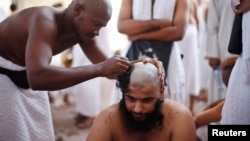
A Muslim pilgrim has his head shaved after casting pebbles at a pillar that symbolizes Satan during the annual hajj pilgrimage, on the first day of Eid al-Adha in Mina, near the holy city of Mecca, Oct. 15, 2013.
MENA, SAUDI ARABIA —
Every year hundreds of part-time, unlicensed barbers flock to the holy city of Mena to shave the heads of pilgrims observing the last step in performing the hajj as desired by the Prophet Mohammad.
“I'm shaving my head because this is what the Prophet asked us to do, and it's really hot now, so having a shaved head isn't a bad idea,” said Yemeni Mohamed Hassan, as he crouched on the ground under a barber's razor.
“We are on hajj, so God will cause no harm to us,” he said, wiping dripping blood from his head with his hands.
The barbers wield the same razor on dozens of men, exponentially increasing the chances of spreading sickness and disease among this year's estimated two million pilgrims on hajj, which started on Monday.
It's a practice the Saudi Health Ministry has been trying to stamp out for years. The barbers avoid arrest by maintaining they are relatives of their clients, and claiming not to receive compensation for their service.
This year, in addition to bringing in licensed barbers from around the country and putting up posters as usual, the authorities have flooded television and radio with warnings of the potential health hazards.
It's a tough sell. The owner of a licensed shop in Mena said with many of the pilgrims on a tight budget, at least 60 percent go to the unofficial barbers or shave themselves.
“I can't afford to pay anything over 10 riyals [$2.7] and the barbers that the government approves here are expensive,” said Salam Assem, a factory worker from Egypt.
No solid data
Saudi Health Ministry officials say it is difficult to know how many pilgrims contract diseases because of razor-sharing because they return to their home countries after their visits, complicating data collection and coordination. But the concerns are very real.
“Sharing razors can be incredibly dangerous,” said Amin al-Mahdi, physician manager of a hospital in Mena during hajj.
“Through open wounds, viruses like HIV, hepatitis C and B in addition to malaria can be transferred from one person to another. And even through dirty hands there's a risk of getting mange and other skin infections,” he said.
Such infections are only part of the health risks associated with the physically demanding hajj.
A 2008 study by the Journal of Infection and Public Health detailed a long list of what it called “extreme stressors” during the hajj - heat, sun exposure, thirst, crowding, traffic congestion, steep inclines and rough ground underfoot.
Health experts say countries that send large numbers of pilgrims can help by warning their citizens of the dangers before they visit.
Abdel Rahman Rajab, a student from Jeddah, said taking the risk of shaving on the streets was not worth it.
“I came to a licensed barber because at least I know the razor he's using is new, and he took it out of the packet in front of my eyes,” he said. “I paid 50 riyals for a shave: It's a lot of money but it's better than getting a dangerous virus.”
Muslims Mark Eid al-Adha
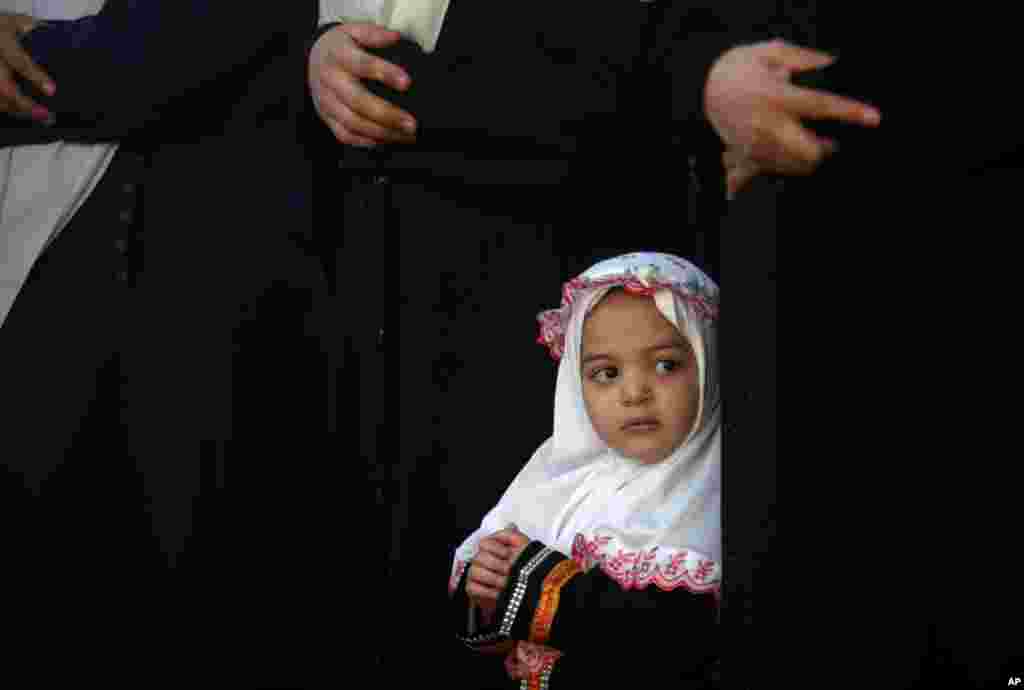
1/8A Muslim girl holds a balloon during a morning prayer marking the Eid al-Adha holiday on a street in Jakarta, Indonesia, Oct. 15, 2013.
Show moreShow less
2/8Muslims travel on the roof of a train as they head to their homes ahead of Eid al-Adha as others wait at a railway station in Dhaka, Bangladesh, Oct. 15, 2013.
Show moreShow less
3/8Members of the Afghan guard of honor perform Eid al-Adha prayers outside a mosque at the presidential palace in Kabul, Afghanistan, Oct 15, 2013.
Show moreShow less
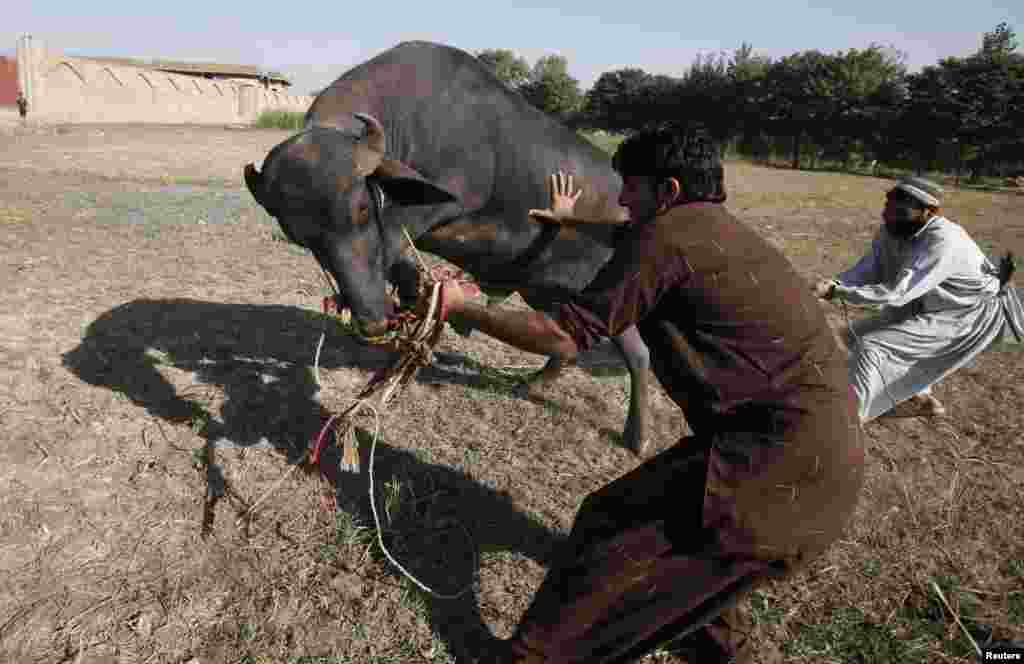
4/8Afghan men prepare to slaughter a buffalo during Eid al-Adha at Kacha Garhi Afghan refugee camp, located in the outskirts of Peshawar, Pakistan, Oct. 15, 2013.
Show moreShow less
5/8Yaman o'quvchi qizlari hukumat tomonidan mukofot olmoqda
Show moreShow less
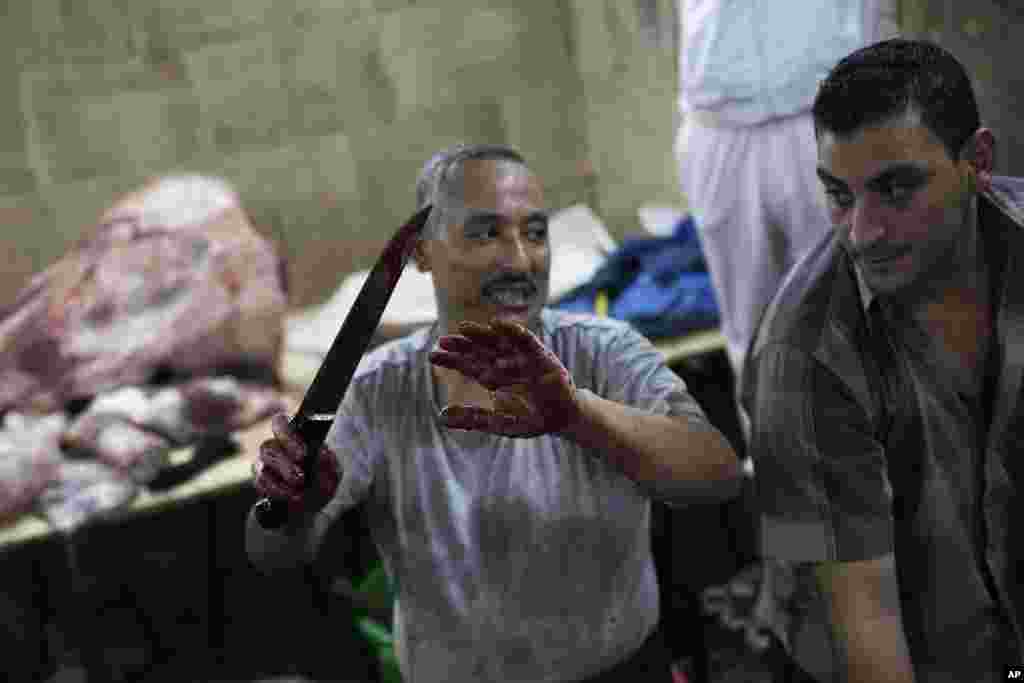
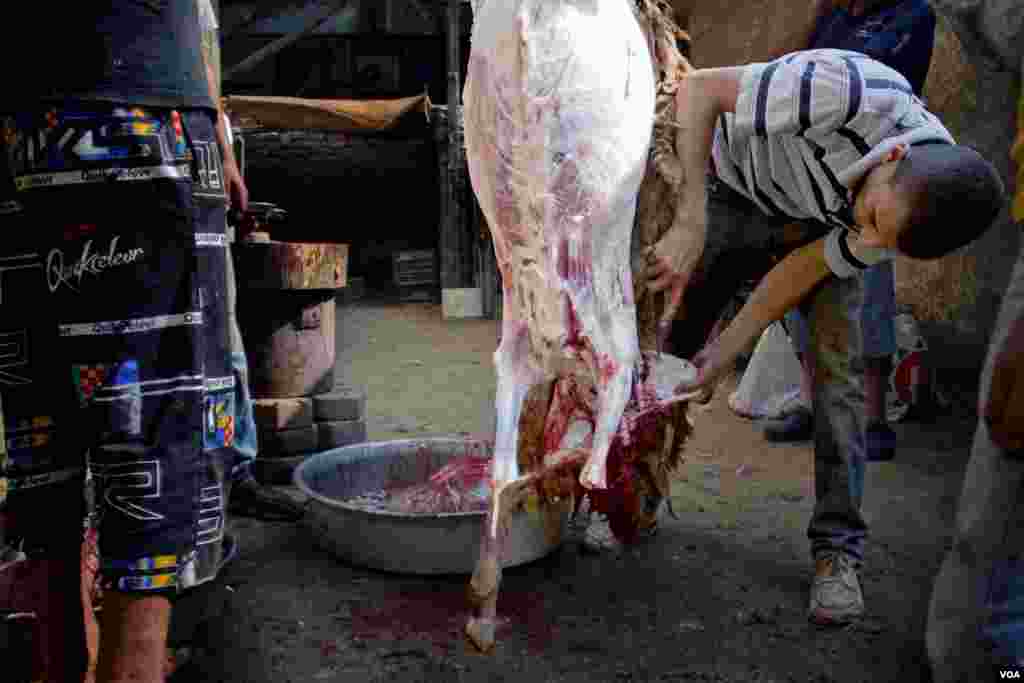
6/8Butcher Hossam Hassan cuts lamb during Eid Al-Adha rituals in Maadi, Cairo, Oct. 15, 2013. (Hamada Elrasam for VOA)
Show moreShow less
7/8A macaw stands in the window ledge of an apartment, waiting to be fed by the apartment owner, in Caracas, Venezuela.
Show moreShow less
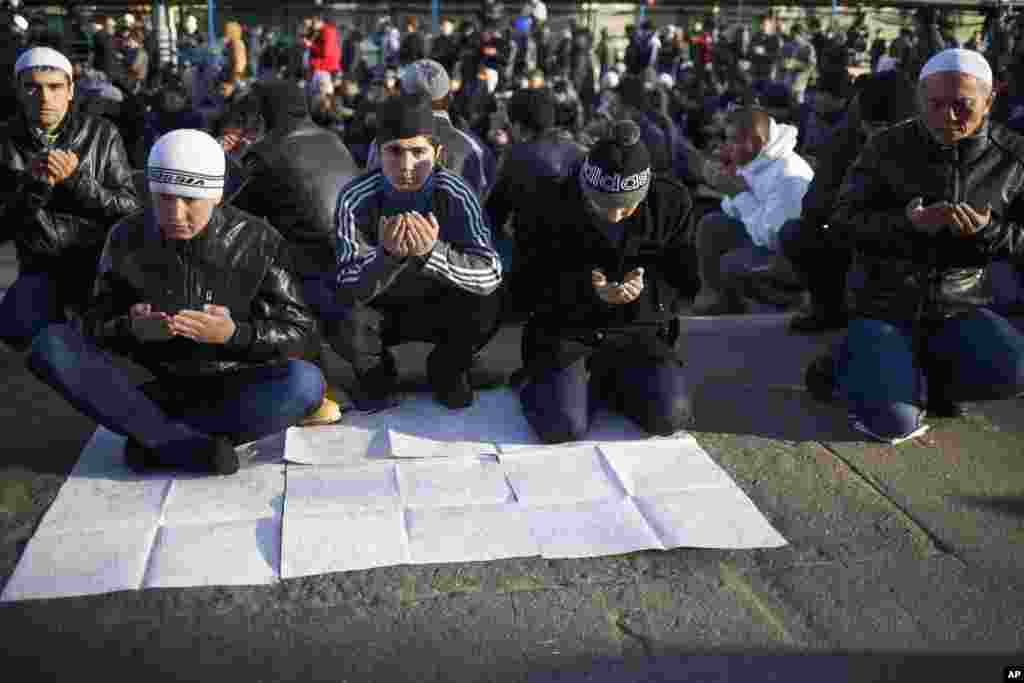
8/8Muslims pray outside Moscow's main mosque during celebrations of Eid al-Adha, Oct. 15, 2013.
Reuters is a news agency founded in 1851 and owned by the Thomson Reuters Corporation based in Toronto, Canada. One of the world's largest wire services, it provides financial news as well as international coverage in over 16 languages to more than 1000 newspapers and 750 broadcasters around the globe.