


Editor's note: this story was translated from the original VOA Kurdish article.
A Syrian Kurdish leader says efforts to integrate their autonomous administration and military forces into the Syrian state have made progress, but uncertainty over Kurdish rights and implementation of agreements continues to raise concerns.
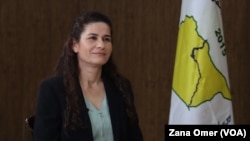
Speaking at the Middle East Research Institute (MERI) in Erbil, Syrian Kurdish leader Ilham Ahmad said the integration process had helped restore connections between Syrian cities, reopen border crossings and allow displaced people to return home.
“The integration of the Syrian Democratic Forces into the Syrian army has progressed well so far,” Ahmad said, adding that the process had brought a degree of stability.
Damascus and the Kurdish-led Syrian Democratic Forces (SDF) reached an integration agreement in January following military pressure and U.S.- and French-mediated negotiations. SDF commander Mazloum Abdi announced in August the dissolution of the force as an independent military organization.
Ahmad said a presidential decree recognizing Kurdish identity, culture and language was a significant achievement, but practical measures, particularly Kurdish-language education, remained unresolved.
“Despite the achievements made so far, the integration process remains in a testing phase,” she said, calling on Damascus to establish clear implementation procedures.
She also warned of setbacks in women's rights under the transition.
The Syrian transitional government, led by Syrian President Ahmed al-Sharaa, has reaffirmed its commitment to the integration process, saying it seeks to open a new chapter after decades of Kurdish persecution under former President Bashar al-Assad.
In late August, al-Sharaa issued Decree No. 164, appointing SDF commander Mazloum Abdi as an adviser to the presidency on Kurdish affairs, a move signaling Damascus' willingness to accommodate Kurdish representation in the new government.
Meanwhile, Kurdish authorities face growing pressure from families of missing SDF fighters.
In Kobani, relatives staged a sit-in Monday demanding information about fighters missing during clashes with Syrian government forces. Local figures put the number missing at about 80.
“This is enough, this is inhumane. We want to know what happened to our children,” Zahida Darwesh, whose son disappeared 10 months ago, told VOA Kurdish.
Another parent, Sileman Temo, said the fighters had sacrificed years battling Islamic State and the former Syrian government.