


Editor's note: this story was translated from the original VOA Dari article.
The head of the United Nations Development Program (UNDP) says that the ban on girls’ education in Afghanistan is “totally unacceptable” and represents a “very poor” development policy.
In an interview with Foreign Policy last week, UNDP head Alexander De Croo said that in Afghanistan where “half of the population’s talent is not being used,” failing to tap that potential is “just really poor policy” given the ‘gigantic’ needs in the country.
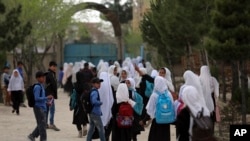
After returning to power in 2021, the Taliban imposed repressive restrictions on women, barring them from secondary and university education, working in government agencies and non-government organizations, going to public parks, beauty salons and gyms, and traveling long distances without a close male relative.
In 2021, some Taliban officials said that the decision to ban girls’ secondary education was temporary; however, girls have not been allowed to go to school in Afghanistan since then.
The U.N. reported in August that the Taliban ban excluded an estimated 2.4 million girls from secondary education.
Human Rights Watch in August reported that the Taliban’s ‘draconian’ policies made Afghanistan “one of the world’s gravest human rights crises, particularly for women and girls.”
The Taliban have not changed their position on girls’ education and women’s rights despite the international pressure on the group.
De Croo said that his organization had “very difficult conversations” with the group about the issue, but “we do not think turning our back on Afghanistan today is a good idea.”
He added that Afghanistan faces multiple challenges, including a 20% economic contraction, natural disasters, conflicts with neighboring countries and the return of refugees.
“If we turn out back on it, you can almost guarantee that we will bear the consequences five, 10 years down the road,” added De Coor.