


Editor's note: this story was translated from the original VOA Dari article.
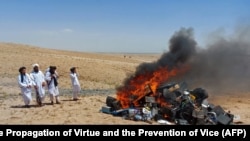
The Taliban in Afghanistan's eastern Khost province have destroyed 650 musical instruments and music-related items confiscated during a months-long crackdown on musical instruments, highlighting the continued enforcement of the group's nationwide ban on music.
According to a statement posted on X by Mustaghfir Gurbaz, who identifies himself as a Taliban spokesperson in Khost, officials from the Department for the Promotion of Virtue and Prevention of Vice burned the items that were seized during operations across the province.
Music ban reshapes Afghan cultural life
Since returning to power in August 2021, the Taliban have prohibited most forms of music, allowing only certain types of religious vocal chanting. The ban is enforced by the Ministry for the Promotion of Virtue and Prevention of Vice.
"Music is forbidden in Islam," ministry spokesman Saif ul Islam Khyber told the Associated Press, arguing that it promotes immoral behavior and distracts people from religious obligations, though many Islamic scholars disagree.
The restrictions have dramatically altered Afghanistan's cultural landscape. Once vibrant music districts, including Kabul's historic Kucha-e-Kharabat neighborhood, have seen music shops replaced by grocery stores, clothing vendors, and household goods businesses.
Many musicians fled Afghanistan following the Taliban takeover, while others hid or smuggled instruments abroad to prevent them from being confiscated or destroyed.
The destruction is Khost is not the first large-scale Taliban campaign against music. In 2024, the group's morality authorities reported seizing and destroying more than 21,000 musical instruments nationwide, an action widely condemned by cultural organizations and musicians as a major blow to Afghanistan's artistic and cultural heritage.
In 2024, Dr. Ahmad Sarmast, founder and director of the Afghanistan National Institute of Music (ANIM), described the campaign as an attack on the country's cultural identity.
"The Taliban's actions are not only an attack on musical instruments, but an assault on the spirit of freedom, creativity, and the vibrant cultural legacy of Afghanistan,” Sarmast said in a statement two years ago. “They have tried to silence the voice of a nation, but music cannot be erased from the hearts and minds of the Afghan people."
ANIM, which relocated from Kabul to Lisbon after the Taliban returned to power in Afghanistan in 2021, continues to support displaced Afghan musicians and preserve the country's musical traditions.
Musicians continue in secret
Despite the ban, some Afghan musicians continue to practice their craft secretly.
In a recent Associated Press report, one rubab player speaking anonymously said he continues to play in secret.
"As long as I am alive, I will continue to play," he said. "Perhaps I will do so in secret, but I will not allow the rubab to be silent." The lute-like instrument is widely regarded as Afghanistan's national instrument.
The musician said the ban has devastated his livelihood. Before the Taliban takeover, he taught music and operated a traditional instrument shop. Today, he works as a day laborer and earns only a fraction of his former income.
He also expressed concern that Afghanistan's centuries-old musical traditions risk disappearing if younger generations are unable to learn and perform.
Cultural heritage at risk
For many Afghan musicians, music represents more than entertainment. It is a family tradition passed from one generation to the next.
The anonymous rubab player said he learned from his father and intends to teach his eldest son despite the risks, viewing music as an essential part of Afghanistan's cultural identity.
Observers say the destruction of musical instruments by the Taliban highlights the tension between the group's religious policies and efforts by many Afghans to preserve the country's artistic and cultural heritage.
As authorities continue enforcing the music ban, musicians across Afghanistan face a difficult choice: abandon their profession, leave the country, or continue practicing in secret while risking arrest and punishment.