


Editor's note: this story was translated from the original VOA Pashto article.
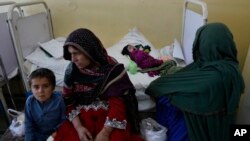
Afghanistan faces a “serious and widespread” malnutrition problem, where more than 3.7 million children under the age of five face severe malnutrition, says a Kabul-based World Health Organization official.
“The number has increased this year to 3.7 million, and it is projected to increase even further in 2027,” said Ahmad Shakir Nasiry, national professional officer for nutrition for WHO in Kabul.
UNICEF reported last month that the malnutrition situation has worsened in Afghanistan, where about 1 million children, among the 3.7 million, are “with life-threatening severe acute malnutrition.”
The crisis “disproportionately affects the youngest and most vulnerable,” said Tajudeen Oyewale, UNICEF Representative in Afghanistan, in a statement, as four out of five children suffering from acute malnutrition are under the age of two.
Nasiri said that the malnutrition problem exists throughout the country, but conditions are particularly severe in the provinces of Helmand, Kandahar, Zabul, Paktika, Daikundi, Uruzgan, Kunduz, and Baghlan.
He said poverty and poor diets are the main causes of malnutrition.
“The most important causes are poverty and deprivation, poor diets, and particularly a lack of access to balanced, high-quality food,” Nasiri added.
In addition to economic problems and food insecurity, WHO stated that disease outbreaks, climate change, and access to health and nutrition services are compounding the situation.
Nasiri noted that malnutrition affects more than just children, with more than 1 million pregnant and breastfeeding women also facing malnutrition. “A malnourished mother gives birth to a vulnerable child, and the effects can extend to future generations,” he said.
Nasiri said measures should be taken to strengthen prevention alongside treatment so that children can be diagnosed and treated early.
“My most important recommendation is to preserve and strengthen Afghanistan’s health system, because it depends on international assistance,” said Nasiri.
He warned that delays in funding health programs, however, would increase both human and financial costs in the country in the future.