



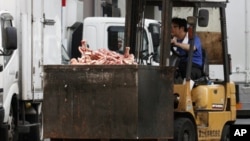
Japan's government says it is a serious matter that beef contaminated with radioactive cesium has reached the domestic market.
But officials are also calling it an isolated incident, while vowing to increase inspections of food in wake of the country's nuclear crisis.
Officials in Fukushima prefecture, where three reactors crippled by the March 11th earthquake and tsunami suffered meltdowns, are now acknowledging they are unable to totally prevent potentially contaminated food from reaching the marketplace.
That comes after confirmation by the central government that some beef from contaminated cattle in Fukushima has apparently been consumed.
Officials say inspections prevented some radioactive meat from reaching the market. But Noriyuki Shikata, a spokesman for the prime minister's office, acknowledges that other contaminated cuts of beef slipped through.
"The fact that these contaminated meats that exceeded our regulation limit was distributed to the market was very unfortunate," said Shikata. "And from the government point of view we will be working on strengthening the monitoring in close collaboration with the municipalities and, of course, the government ministries in charge."
A senior technical officer at the health ministry, Toshitaka Higashira, told reporters Wednesday the contaminated beef that was sold to shoppers and restaurants originated from six cattle on one farm in Fukushima prefecture.
"The beef has been shipped to 11 prefectures throughout Japan and the total amount distributed on the market was 1,400 kilograms," said Higashira.
The contaminated beef that was intercepted measured six times the allowable limit of radioactive cesium. Authorities say they presume the beef that was sold had the same radiation levels, which they say is not dangerous because only small portions would have been consumed.
Officials blame a single rancher who ignored orders not to feed cattle rice straw which may have been exposed to radiation following explosions at the Fukushima-1 nuclear power plant in March.
The damaged reactors have yet to be brought to a cold shutdown state. They continue to spew radiation into the atmosphere. Government officials say the levels detected continue to be relatively high to the northwest of the nuclear facility, but levels have remained steady since mid-April.
Since the natural disaster four months ago, which severely damaged the nuclear plant, a number of food products in northeastern Japan have been contaminated with levels exceeding legal limits. Beef is the newest item on the list which also includes milk, vegetables, fish and tea leaves.
At supermarkets here in Tokyo where items from the affected region are carried and certified safe to eat, they have been discounted but do not appear to be selling well.