


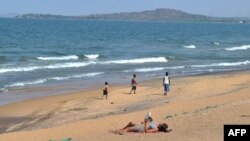
BLANTYRE — Border experts from Malawi and Tanzania are meeting to try to resolve a decades-long dispute over ownership of Lake Malawi. The dispute flared again after Malawi's government conferred rights to a British company to explore for oil.
The meeting in Malawi's Mzuzu City is a follow-up to a meeting between the two countries' foreign-affairs ministers last month in Dar es Salaam, in which they recommended the issue be discussed by border experts.
In his opening remarks, Malawi’s Minister of Foreign Affairs and International Cooperation, Ephram Mganda Chiume, said people of Malawi and Tanzania have confidence that the issue will be solved amicably without physical conflict.
He advised two sides to avoid statements that can undermine the discussions.
“Once the experts have finalized their discussions, they will come with the report, which I hope, with concrete recommendations," said Chiume. "They will submit the report to us on Saturday. We will have an input, we two, and submit our reports to the heads of state; President Joyce Banda [of Malawi] and Jakaya Kikwete of Tanzania.”
Tanzania delegation leader Selassie Mayunga said he is optimistic talks will be friendly.
“What I can say is that the remarks from the minister of foreign affairs, honorable Chiume, clearly was very good because it gives us guidance on how to conduct our discussion in regards to international boundary between Tanzania and Malawi along Lake Nyasa," said Mayunga. "We are expecting that the discussion will be in brotherly and sisterly manner.”
The dispute escalated last year when Malawi’s late president Bingu wa Mutharika granted British company Surestream Petroleum rights to explore the lake for oil and gas. Surestream is conducting an environmental impact assessment.
The move infuriated Tanzania, which claims 50 percent of the lake. The government in Arusha is demanding a halt to all exploration activities until the question of ownership is resolved.
Malawi bases its claim of ownership of the entire lake to an 1890 treaty between former colonial powers Britain and Germany. It says the treaty was later reaffirmed by the Organization of African Unity as Malawi was gaining its independence in the early 1960s.
Tanzania rejects colonial-era agreements as permanent and argues most international law supports sharing common bodies of water by bordering nations.
The meeting in Malawi's Mzuzu City is a follow-up to a meeting between the two countries' foreign-affairs ministers last month in Dar es Salaam, in which they recommended the issue be discussed by border experts.
In his opening remarks, Malawi’s Minister of Foreign Affairs and International Cooperation, Ephram Mganda Chiume, said people of Malawi and Tanzania have confidence that the issue will be solved amicably without physical conflict.
He advised two sides to avoid statements that can undermine the discussions.
“Once the experts have finalized their discussions, they will come with the report, which I hope, with concrete recommendations," said Chiume. "They will submit the report to us on Saturday. We will have an input, we two, and submit our reports to the heads of state; President Joyce Banda [of Malawi] and Jakaya Kikwete of Tanzania.”
Tanzania delegation leader Selassie Mayunga said he is optimistic talks will be friendly.
“What I can say is that the remarks from the minister of foreign affairs, honorable Chiume, clearly was very good because it gives us guidance on how to conduct our discussion in regards to international boundary between Tanzania and Malawi along Lake Nyasa," said Mayunga. "We are expecting that the discussion will be in brotherly and sisterly manner.”
The dispute escalated last year when Malawi’s late president Bingu wa Mutharika granted British company Surestream Petroleum rights to explore the lake for oil and gas. Surestream is conducting an environmental impact assessment.
The move infuriated Tanzania, which claims 50 percent of the lake. The government in Arusha is demanding a halt to all exploration activities until the question of ownership is resolved.
Malawi bases its claim of ownership of the entire lake to an 1890 treaty between former colonial powers Britain and Germany. It says the treaty was later reaffirmed by the Organization of African Unity as Malawi was gaining its independence in the early 1960s.
Tanzania rejects colonial-era agreements as permanent and argues most international law supports sharing common bodies of water by bordering nations.