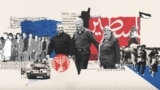



Egypt announced the dismissals of about 600 police officers on Wednesday in an apparent bid to meet the demands of protesters who regrouped last week.
Separately, the interim government announced a delay of up to two months in parliamentary elections that were scheduled for September.
Protests in Tahrir Square
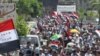
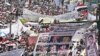
The announcements come after thousands of activists began staging protests across the country on Friday, including some who vowed to stay in Cairo's Tahrir Square until their demands were met.
Demonstrators have been urging the government to speed up the pace of reforms with actions that include purging and prosecuting police officers and government officials from former President Hosni Mubarak's era.
The Interior Ministry said Wednesday that 37 of the police officers being let go are accused of killing protesters during the anti-government uprising that led to Mr. Mubarak's February resignation.
Meanwhile, the election delay may be a bid to meet the demands of some protesters who said they needed more time to prepare candidates.
Egypt's military-appointed Prime Minister Essam Sharaf offered several concessions to the protesters in recent days. Tuesday, he accepted the resignation of Deputy Prime Minister Yahya el-Gamal, after reformists said he should be removed.
He also pledged Monday to reshuffle his Cabinet within a week.
Media watchdog criticism
|
Mohamed Abdel Dayem, Committee to Protect Journalists, speaks to Susan Yackee about Egypt’s military leaders’ decision to reconstitute the country’s information ministry.
|
In a separate development Wednesday, a media watchdog group criticized Egypt's reinstatement of its information ministry, saying the move is a "setback for media freedom" in the country.
The Committee to Protect Journalists said in a statement that the ministry is not suitable for reforming Egypt's media industry because of its history as an arm of former President Mubarak's government.
The information ministry was seen as a propaganda tool for Mr. Mubarak, and was abolished shortly after he stepped down in February.
Some information for this report was provided by AP, AFP and Reuters.