Egyptian President: 'Thugs' Organizing to Create Disorder
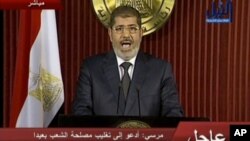
In this image made from video, Egyptian President Mohammed Morsi delivers a televised statement in Cairo, Egypt, Thursday, Dec. 6, 2012.
Egyptian President Mohamed Morsi, speaking on national television Thursday amid anti-government protests gripping Cairo, says he will not tolerate killings or sabotage, and says many "thugs" are organizing to create disorder across the country.
Morsi expressed sorrow about those killed and injured in the violence, while insisting that dialogue is the only solution to the country's constitutional crisis.
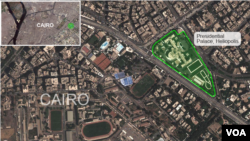
Location of presidential palace in Cairo CLICK TO ENLARGE
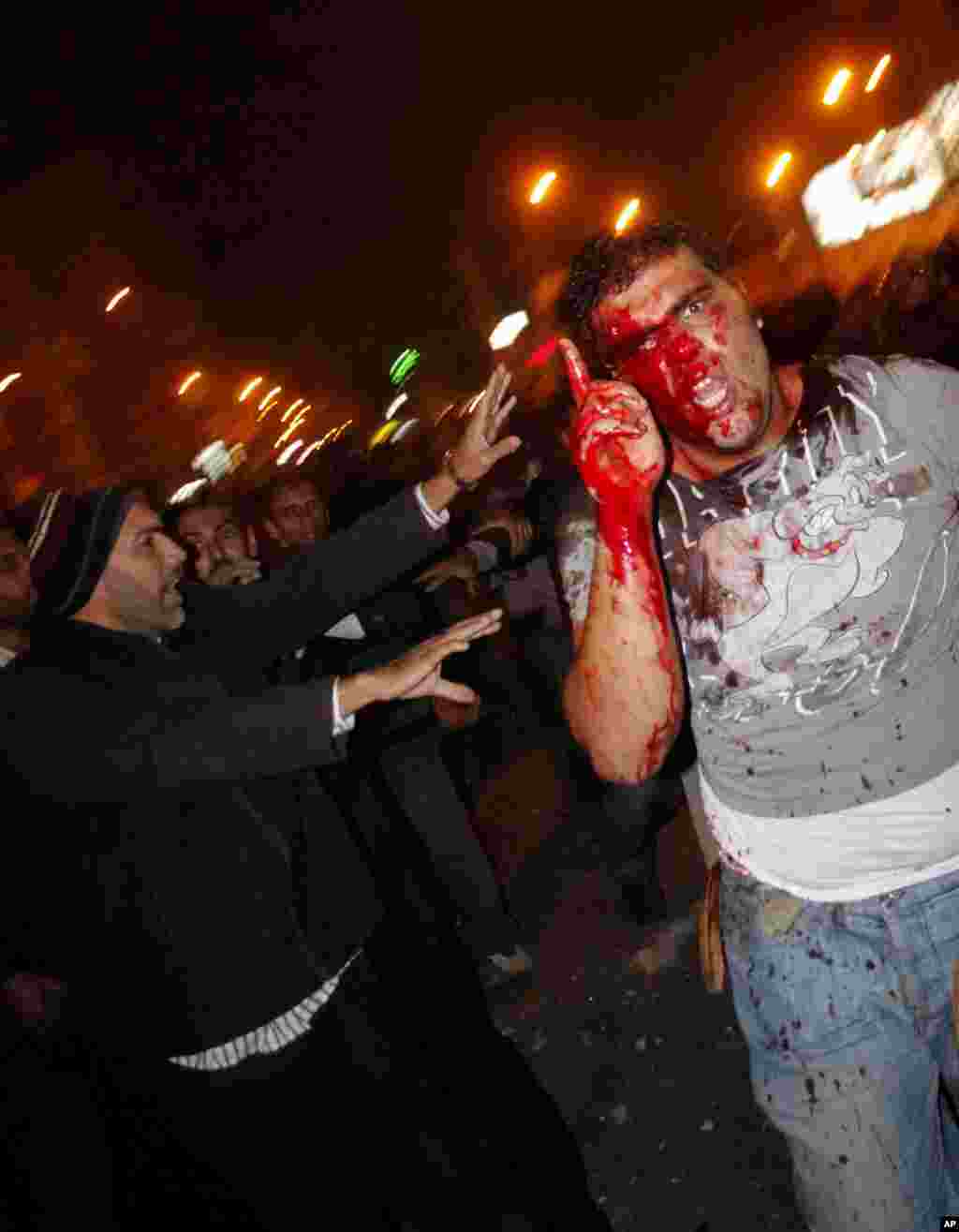
The president said seven people were killed outside the presidential palace in overnight violence, with more than 700 others injured. He said 80 people have been arrested for crimes including the use of firearms, and he described some of the detainees as "hired for money."
Morsi refused to rescind the November 22 presidential decrees giving him near absolute power, saying the measures were necessary for him to "safeguard the homeland and protect stability."
The president also announced the start on Saturday of what he called a "comprehensive and productive" dialogue with opposition leaders, aimed at averting more violence ahead of a constitutional referendum set for December 15. If voters reject the country's new constitution, which critics say was drafted solely by Islamist Morsi supporters, the president said he will form a new advisory panel to write a new draft.
But he rejected opposition calls to scrap the referendum, saying it will take place as planned.
Egyptian Protesters Converge on Presidential Palace
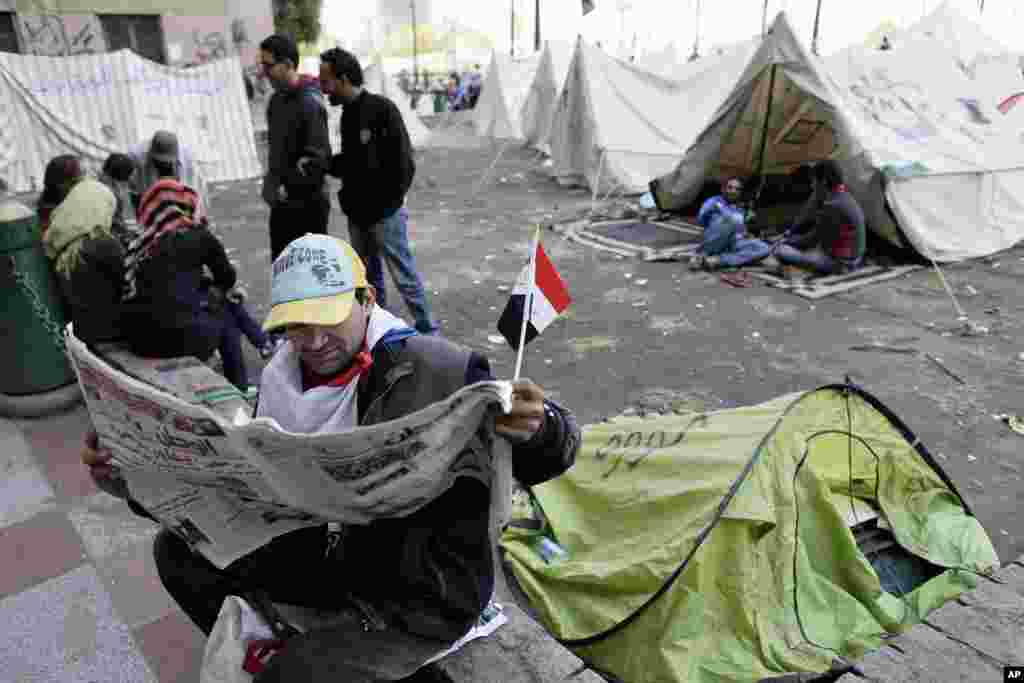
1/11An Egyptian protester reads the newspaper as others sit next to their tents in Tahrir Square in Cairo, December 9, 2012
Opponents and supporters of Egyptian President Mohamed Morsi have taken to the streets of Cairo for another day of protests.
Show moreShow less
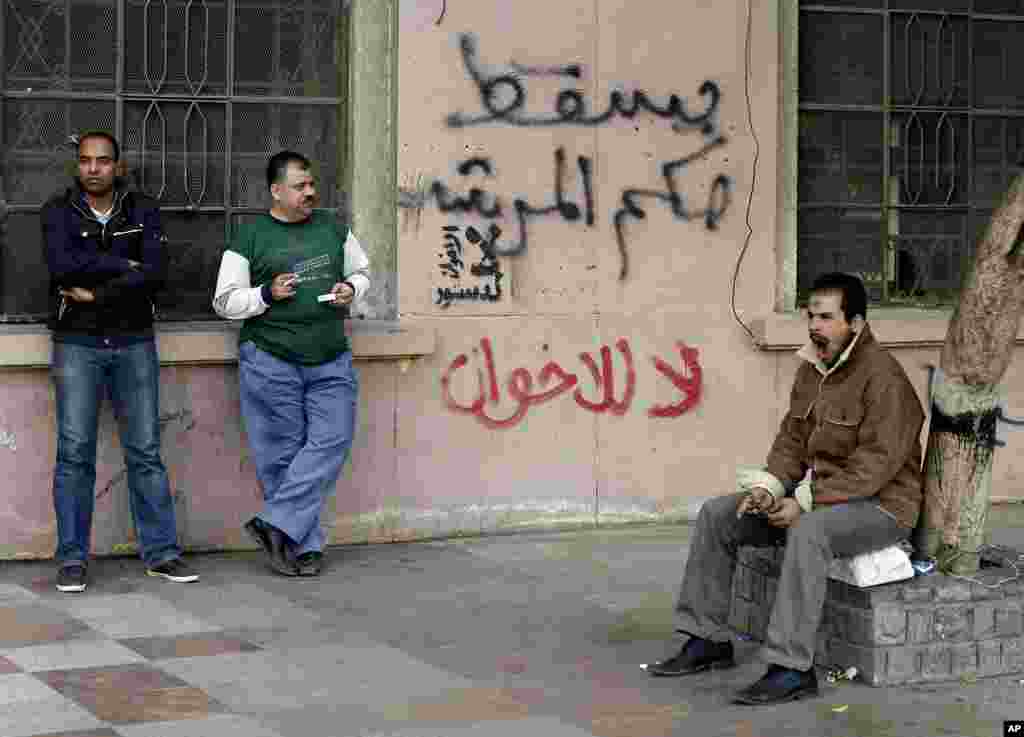
2/11Egyptian men stand near writing on a wall in Arabic that reads down with the leader's rule, no to the Muslim Brotherhood in Tahrir Square in Cairo, December 9, 2012.
Opponents and supporters of Egyptian President Mohamed Morsi have taken to the streets of Cairo for another day of protests.
Show moreShow less
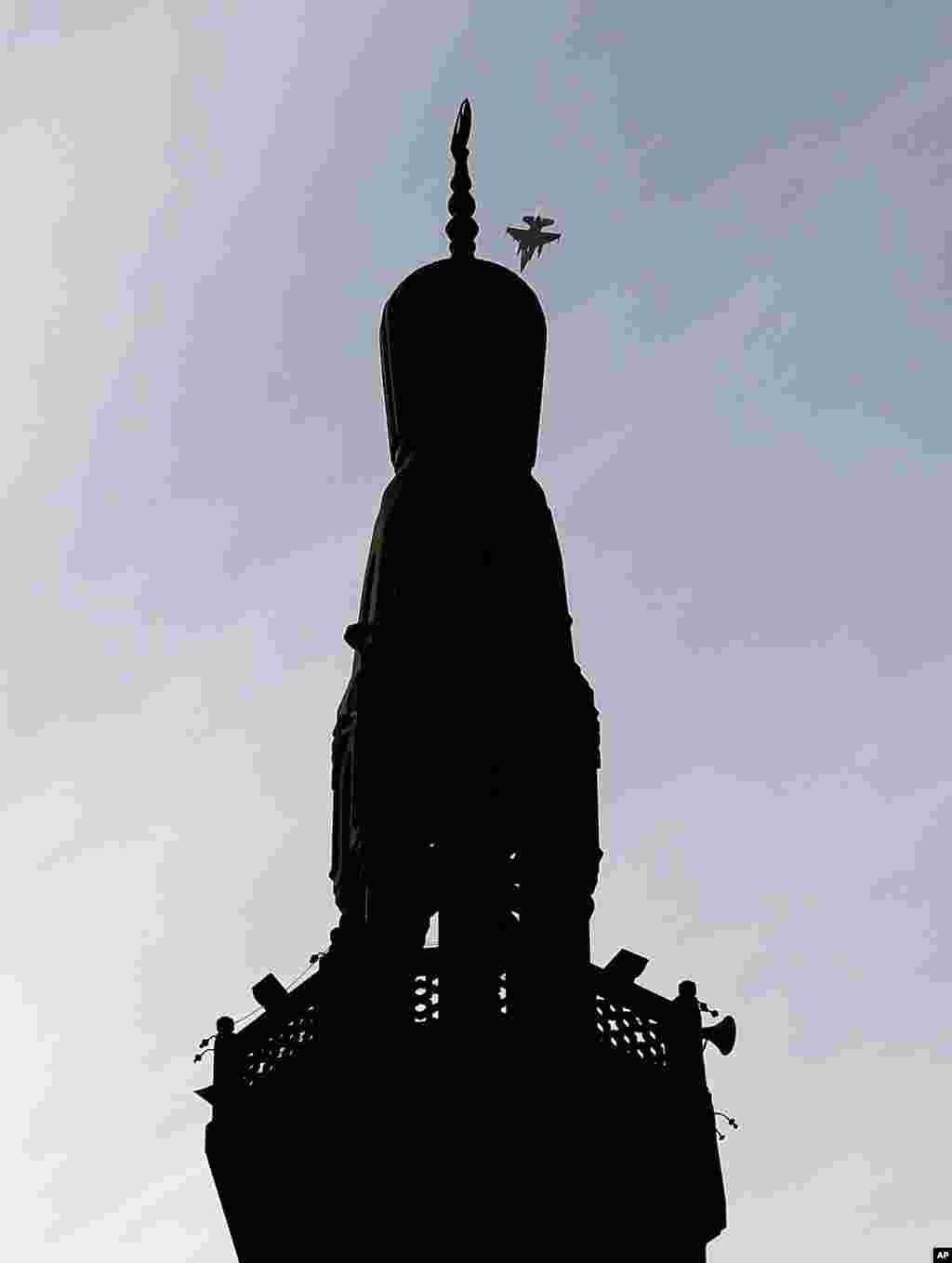
3/11An Egyptian jet fighter flys over Tahrir Square as protesters gather, not pictured, in Cairo, December 9, 2012.
Opponents and supporters of Egyptian President Mohamed Morsi have taken to the streets of Cairo for another day of protests.
Show moreShow less
4/11Anti-Mursi protesters walk near a military tank in front of the presidential palace in Cairo, Egypt, December 8, 2012.
Opponents and supporters of Egyptian President Mohamed Morsi have taken to the streets of Cairo for another day of protests.
Show moreShow less
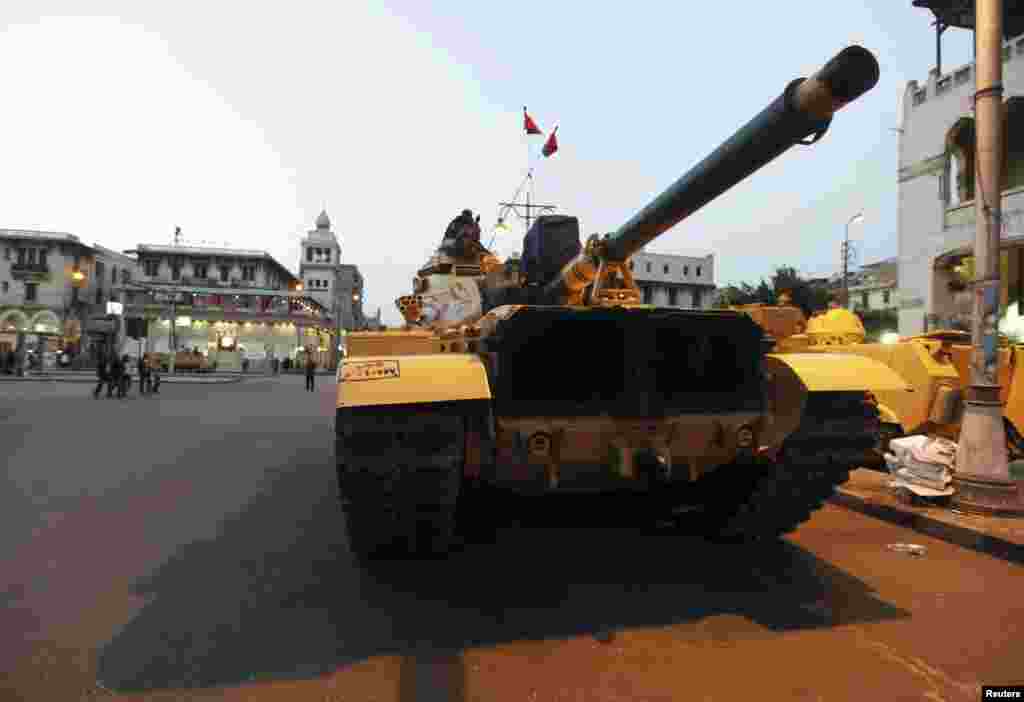
5/11Supporters of the Muslim Brotherhood welcome tanks arriving outside the Egyptian presidential palace in Cairo, December 6, 2012.
Opponents and supporters of Egyptian President Mohamed Morsi have taken to the streets of Cairo for another day of protests.
Show moreShow less
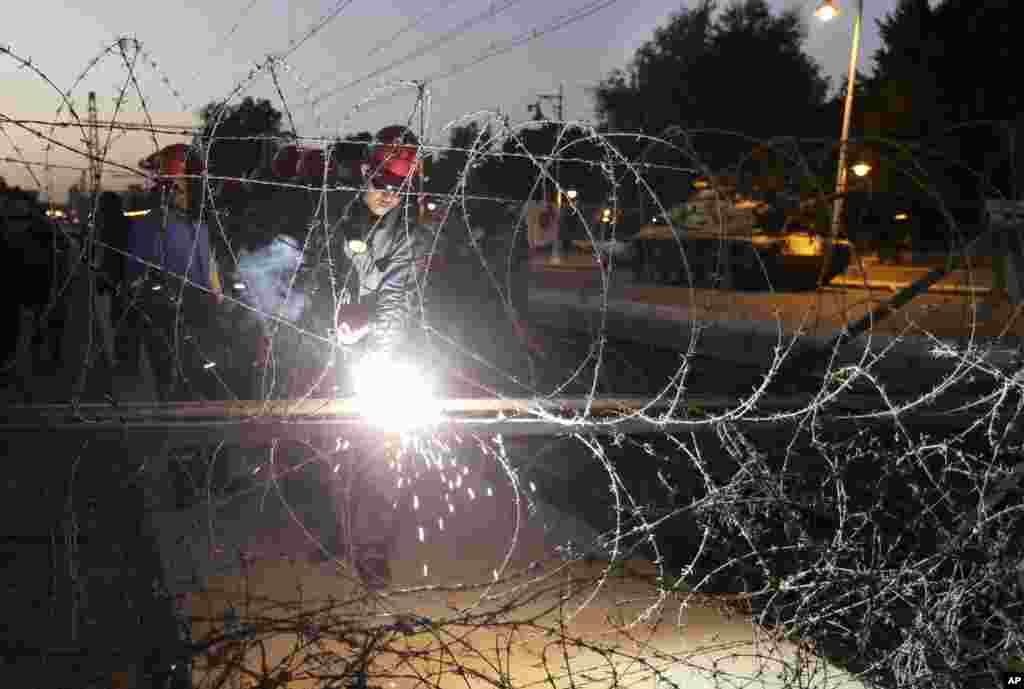
6/11Egyptian Army soldiers install barbed wire outside the presidential palace to secure the site of overnight clashes between supporters and opponents of President Mohamed Morsi in Cairo, Egypt, Dec. 6, 2012
Opponents and supporters of Egyptian President Mohamed Morsi have taken to the streets of Cairo for another day of protests.
Show moreShow less
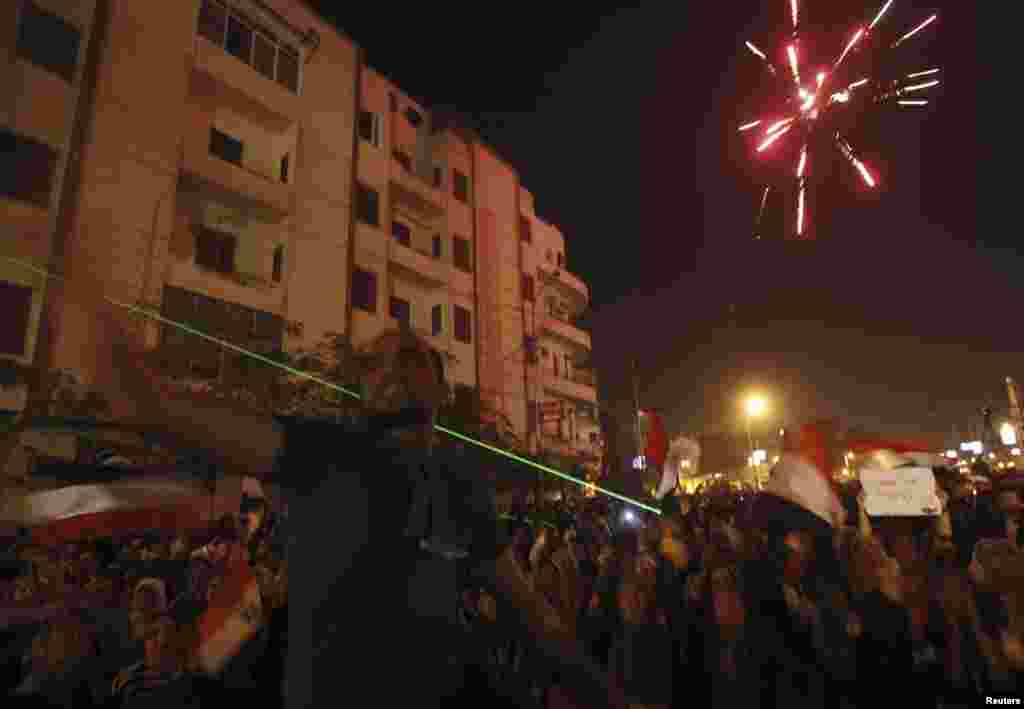
7/11Anti-Morsi protesters set off fireworks and shine laser pointers on a road leading to the presidential palace in Cairo, Egypt, December 6, 2012.
Opponents and supporters of Egyptian President Mohamed Morsi have taken to the streets of Cairo for another day of protests.
Show moreShow less
8/11Protesters gather during clashes between supporters and opponents of Egyptian President Mohamed Morsi outside the presidential palace in Cairo, Egypt, December 5, 2012.
Opponents and supporters of Egyptian President Mohamed Morsi have taken to the streets of Cairo for another day of protests.
Show moreShow less
9/11A wounded protester reacts during clashes between supporters and opponents of Egyptian President Mohamed Morsi outside the presidential palace in Cairo, December 5, 2012.
Opponents and supporters of Egyptian President Mohamed Morsi have taken to the streets of Cairo for another day of protests.
Show moreShow less
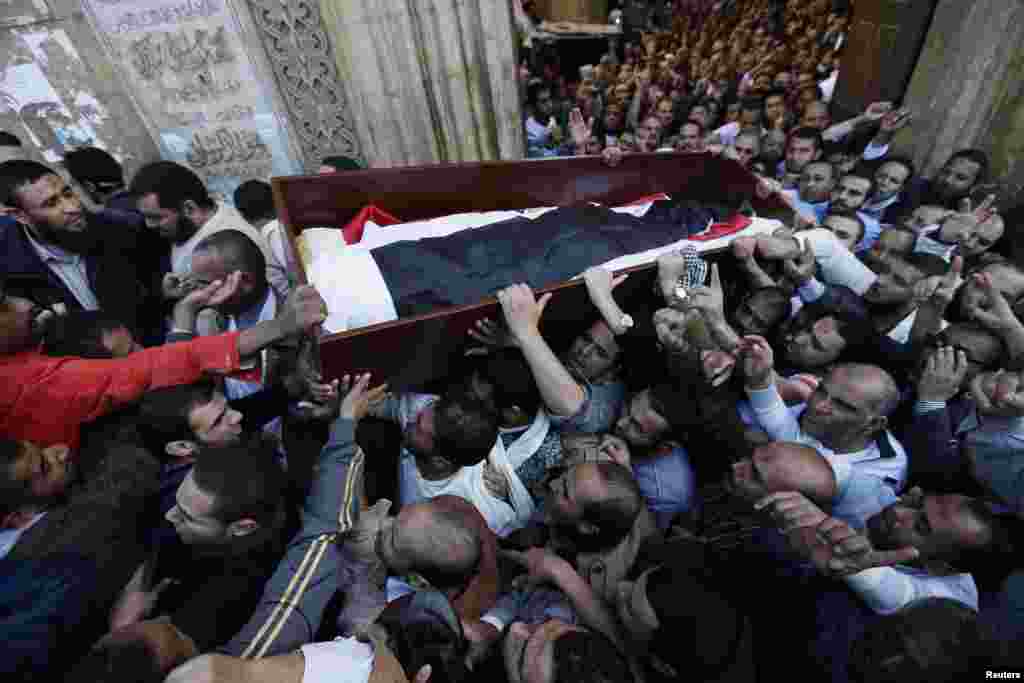
10/11Supporters of the Muslim Brotherhood and Egyptian President Mohamed Morsi carry a body of one of six victims killed during Wednesday's clashes, Al Azhar mosque, Cairo, Egypt, December 7, 2012.
Opponents and supporters of Egyptian President Mohamed Morsi have taken to the streets of Cairo for another day of protests.
Show moreShow less
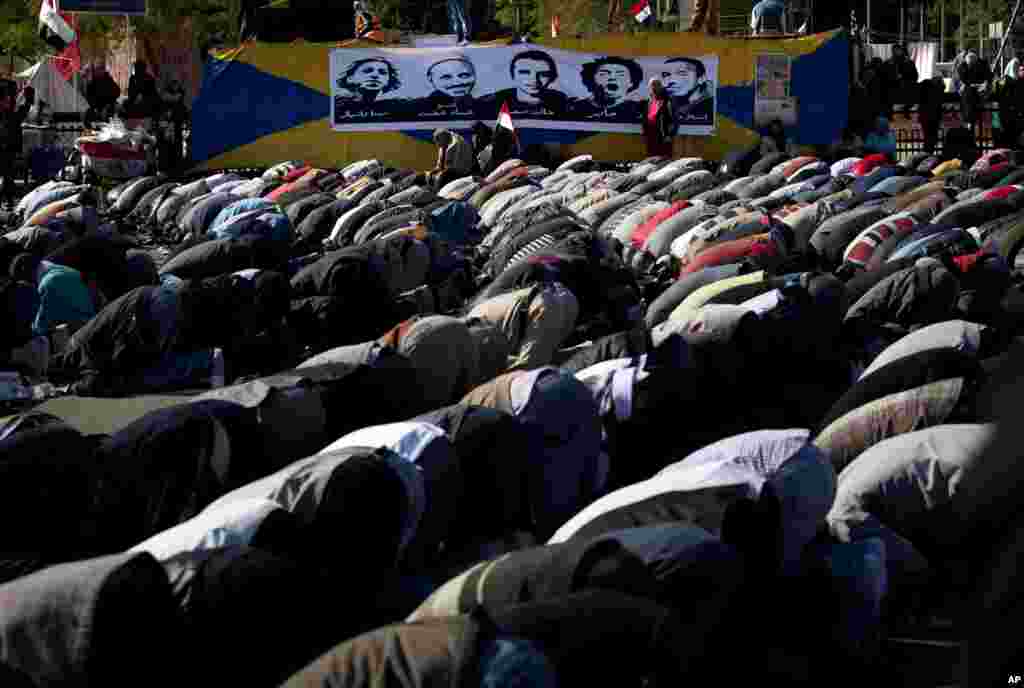
11/11Protesters opposing president Mohamed Morsi attend Friday prayers beneath a poster depicting protesters killed in the Egyptian revolution, Tahrir Square, Cairo, Egypt, December 7, 2012.
Opponents and supporters of Egyptian President Mohamed Morsi have taken to the streets of Cairo for another day of protests.
Show moreShow less
Previous slide
Next slide
Earlier Thursday, opposition leaders called for further demonstrations against the country's new draft constitution, which sparked the latest violence. Hours later, Morsi's Muslim Brotherhood supporters said protesters set fire to Brotherhood headquarters in the city. Authorities said the damage was minimal and that riot police managed to drive protesters from the site.
The leader of the umbrella opposition coalition, Mohammed ElBaradei, told supporters Wednesday that he and his colleagues would not negotiate with the president until he withdraws the draft constitution and cancels the December 15 referendum.
The Voice of America provides news and information in more than 40 languages to an estimated weekly audience of over 326 million people. Stories with the VOA News byline are the work of multiple VOA journalists and may contain information from wire service reports.